
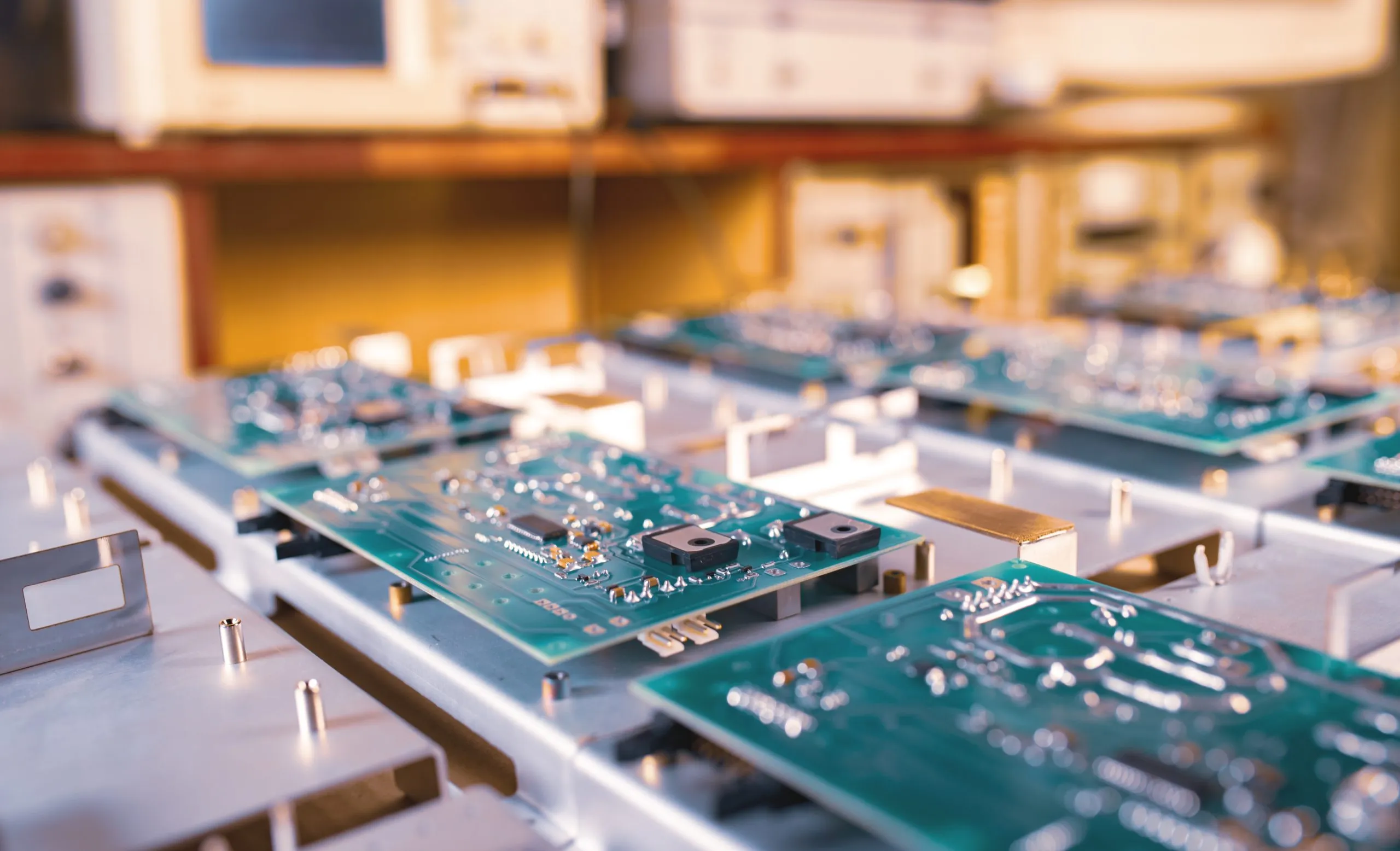
Turkey’s semiconductor manufacturing market is entering a strategic growth phase as the country seeks to reduce import dependence, support domestic electronics production, and position itself as a near-shoring hub between Europe, Asia, and the Middle East. The Turkey semiconductor market is estimated at USD 3.52 billion in 2025 and projected to reach USD 4.42 billion by 2030, growing at a 4.61% CAGR. Longer term, demand from automotive electronics, defense systems, industrial automation, white goods, and AI-enabled infrastructure is expected to keep the market on an expansion path through 2035.
Key Market Drivers Shaping Turkey’s Semiconductor Manufacturing Growth
Rising Demand from Automotive and EV Supply Chains
Turkey’s large automotive manufacturing base is one of the strongest demand anchors for semiconductors. Automotive is the country’s leading export sector, with industry exports taking a 13% share of Turkey’s total exports, according to the Automotive Manufacturers Association. As vehicles shift toward electrification, advanced driver assistance, connected infotainment, battery management, and power electronics, chip content per vehicle is rising. Investments by EV and battery manufacturers are also encouraging local sources of power semiconductors, sensors, and microcontrollers.
Defense Electronics and Strategic Autonomy
Defense is another high-value demand driver. Turkey’s defense electronics firms require chips for radar, communication systems, drones, electronic warfare, navigation, and missile-defense platforms. Aselsan, one of Turkey’s leading defense technology companies, is investing USD 1.5 billion in a new technology base expected to more than double its production capacity. This supports long-term semiconductor demand, especially for secure, domestically controlled chip design and production.
Near-Shoring and Supply Chain Diversification
Global manufacturers are diversifying semiconductor supply chains after pandemic-era shortages and geopolitical disruptions. Turkey benefits from its customs-union linkage with Europe, industrial zones, skilled engineering base, and proximity to European end-markets. This makes it a candidate for assembly, testing, specialty chips, and mature-node manufacturing rather than immediate competition with Taiwan, South Korea, or the U.S. in leading-edge nodes.
Government Support Driving Semiconductor Development in Turkey
Turkey is actively targeting semiconductors under its high-technology industrial strategy. The HIT-30 High-Tech Incentive Program includes a broader USD 30 billion incentive package and a reported USD 5 billion allocation for semiconductor chip factory investment. The 2030 Industry and Technology Strategy also identify semiconductors, AI, EVs, renewable energy, and defense technologies as priority sectors for technological independence and industrial competitiveness.
Key Players and Emerging Opportunities in Turkey’s Semiconductor Market
The market is still developing and is led by a mix of state-backed research institutions, defense electronics firms, and emerging design companies. Key names include TÜBİTAK BİLGEM, Aselsan, YongaTek, and industrial groups such as Arçelik, particularly around microcontrollers and application-specific chips. Turkey is unlikely to become a leading-edge foundry hub in the near term, but it can compete in mature-node chips, power electronics, MEMS, packaging, testing, and defense-grade semiconductor applications.
Key Obstacles to Turkey’s Semiconductor Manufacturing Growth
Limited Mass-Production Infrastructure
Turkey has chip R&D and prototype capabilities, but mass-production capacity remains limited. TÜBİTAK has acknowledged that while chips are produced in laboratories, the country lacks full-scale mass-production infrastructure. Building fabs requires multibillion-dollar capital investment, stable utilities, cleanroom expertise, and long payback periods.
Global Competition and Talent Constraints
Turkey faces competition from the EU, U.S., China, South Korea, Taiwan, India, and Southeast Asia, all of which are expanding semiconductor incentives. The EU has targeted more than EUR 43 billion in semiconductor support by 2030. Turkey must also expand its pool of semiconductor process engineers, materials specialists, and equipment technicians.
Future Outlook
By 2035, Turkey’s semiconductor manufacturing market is expected to be more integrated into regional electronics and defense supply chains. Growth will likely focus on mature-node production, power semiconductors, automotive chips, sensors, secure defense electronics, chip design, and outsourced assembly and testing. If Turkey converts incentives into operational fabs and attracts international technology partners, it could become a credible regional semiconductor hub. However, success will depend on execution: stable policy support, reliable energy, skilled labor development, and the ability to specialize rather than compete directly with advanced-node leaders.
Consultants at Nexdigm, in their latest publication “Turkey Semiconductor Manufacturing Market Outlook to 2035,” analyze the sector by System Type (Foundry Services, Wafer Fabrication, Semiconductor Packaging, Assembly Services), By Platform Type (Silicon-Based Platforms, Gallium Arsenide Platforms, Compound Semiconductors), and By Fitment Type (On-Premise Solutions, Cloud Solutions, Integrated Solutions). Nexdigm suggests that businesses should tailor their strategies to align with the evolving demands of the semiconductor market, focusing on areas such as automotive chip production, defense electronics, and supply chain diversification. This approach will enable companies to capitalize on emerging growth opportunities while addressing potential challenges like infrastructure limitations and global competition.
To take the next step, simply visit our Request a Consultation page and share your requirements with us.
Harsh Mittal
+91-8422857704