

While electrification discussions often focus on batteries, charging infrastructure, and electric motors, another major shift is taking place within vehicle architectures: the evolution of transmission systems. For decades, transmissions were among the most complex and value-intensive elements of the powertrain. Today, as electric vehicles (EVs) gain momentum and vehicle platforms become increasingly simplified, the role of transmissions is being fundamentally redefined.
A comprehensive Transmission system market assessment reveals that transmission demand is not disappearing. Instead, it is shifting from conventional multi-speed systems toward integrated, lightweight, and electrification-compatible drivetrain solutions. From a Nexdigm perspective, this transition represents both a challenge and a significant opportunity for stakeholders across the automotive value chain.
Understanding the Evolution of Transmission Systems
For years, transmission systems have played a critical role in converting engine power into efficient vehicle movement. However, as powertrain technologies evolve from internal combustion engines to hybrid and electric platforms, the design, complexity, and value contribution of transmissions are changing significantly. To understand how demand is shifting, it is important to first examine the traditional transmission market and the role these systems have historically played within the automotive value chain.
The Traditional Transmission Market
For conventional internal combustion engine (ICE) vehicles, transmissions remain essential. Common transmission systems include:
- Manual transmissions
- Automatic transmissions
- Dual-clutch transmissions (DCTs)
- Continuously variable transmissions (CVTs)
These systems optimize engine efficiency and ensure smooth power delivery across varying speeds and driving conditions. However, the market is changing as:
- Fuel efficiency requirements increase
- Emission standards tighten
- Vehicle electrification expands
- Consumer demand evolves
As a result, transmission manufacturers must balance current demand with future technology investments.
Nexdigm Perspective
At Nexdigm, we see many suppliers facing a dual challenge: protecting existing transmission revenues while preparing for future drivetrain architectures. Leading organizations are focusing on:
- Product Portfolio Diversification: Expanding beyond traditional transmission products into hybrid and EV-compatible technologies.
- Manufacturing Optimization: Improving efficiency and reducing production costs to maintain competitiveness.
- Technology Upgrades: Enhancing transmission systems to meet fuel efficiency and emissions requirements.
- Strategic Market Positioning: Aligning investments with emerging drivetrain trends rather than relying solely on mature product categories.
A forward-looking Transmission system market assessment highlights the importance of balancing short-term profitability with long-term transformation planning.
Hybrid Vehicles: Creating a Bridge Market
Hybrid vehicles occupy a unique space between conventional and fully electric powertrains. Unlike EVs, hybrids still require:
- Engine power management
- Electric motor integration
- Specialized transmission systems
- Power-split technologies
This creates continued demand for advanced transmission solutions.
Why Hybrid Demand Matters
Consumers increasingly view hybrids as a practical path toward electrification because they offer:
- Improved fuel economy
- Lower emissions
- Familiar driving experiences
- Reduced charging dependency
As hybrid adoption grows, transmission suppliers gain valuable opportunities to expand into electrified mobility without abandoning traditional expertise.
Nexdigm’s Support
From a Nexdigm standpoint, hybrid platforms represent one of the most attractive near-to-medium-term opportunities within the automotive transmission ecosystem. Organizations should evaluate:
- Hybrid-Specific Product Development: Tailoring transmission technologies to meet hybrid powertrain requirements.
- Engineering Synergies: Leveraging existing transmission expertise while integrating electric propulsion technologies.
- Geographic Demand Variations: Many regions are expected to witness sustained hybrid growth before achieving large-scale EV penetration.
- Revenue Stability: Hybrid demand can provide a smoother transition as the industry shifts toward full electrification.
This makes hybrid platforms an important consideration in any modern Transmission system market assessment.
The Rise of EV Platforms and Drivetrain Simplification
Electric vehicles are profoundly changing the role of transmissions. Unlike ICE vehicles, EVs typically use:
- Single-speed reduction gear systems
- Integrated e-drive units
- Compact drivetrain architectures
- Electronic power management systems
Because electric motors deliver immediate torque across a broad operating range, multiple gear shifts become largely unnecessary.
The Impact on Transmission Complexity
The transition results in:
- Fewer moving parts
- Simplified drivetrain designs
- Lower maintenance requirements
- Reduced system weight
- Improved efficiency
While transmission complexity decreases, engineering precision becomes increasingly important.
Nexdigm’s Support
At Nexdigm, our automotive market evaluations suggest that future value creation will come less from transmission complexity and more from system performance. Manufacturers should focus on:
- Reduction Gear Technologies: These systems play a vital role in EV efficiency and power delivery.
- Precision Manufacturing: Tighter tolerances and higher performance standards create opportunities for specialized suppliers.
- Lightweight Engineering: Weight reduction directly supports vehicle range and performance goals.
- Advanced Materials: New material innovations can improve efficiency and durability across electrified drivetrains.
This strategic realignment is creating new growth opportunities across the transmission value chain. These developments highlight a fundamental shift in the transmission ecosystem, making it essential to understand how demand is changing across traditional, hybrid, and electric vehicle platforms.
How Is Transmission Demand Changing?
The straightforward answer is: Transmission demand is evolving from complex mechanical systems toward simpler, highly integrated drivetrain technologies. As vehicle platforms electrify:
- Traditional multi-speed transmissions face demand pressure.
- Hybrid vehicles continue to require specialized transmission solutions.
- EVs create demand for reduction gears and integrated drive units.
- System integration becomes more important than standalone component manufacturing.
The following demand patterns highlight the need for a strategic assessment of technology investments, product portfolios, and long-term growth opportunities across the transmission value chain. Here’s when Nexdigm’s strategic approach becomes important.
Navigating Transmission Market Opportunities with Nexdigm
Nexdigm’s strategic approach involves use of market analysis that indicates the future competitive advantages delivered integrated solutions. Key focus areas of this approach include:
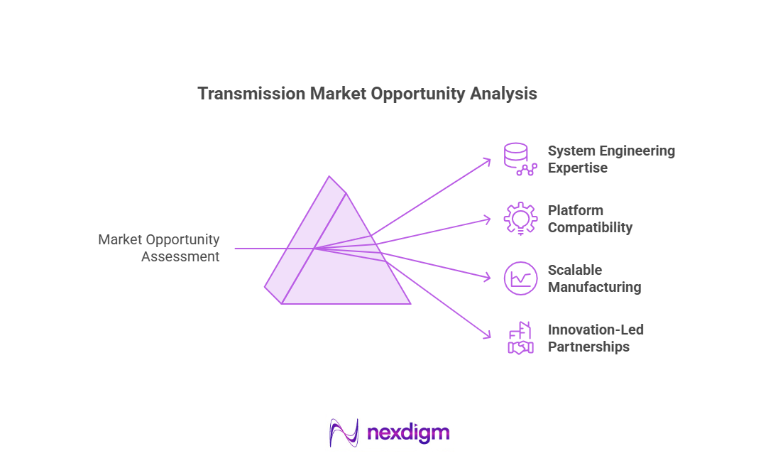
- System Engineering Expertise: Combining mechanical, electrical, and software capabilities.
- Platform Compatibility: Designing solutions that support multiple vehicle architectures.
- Scalable Manufacturing: Meeting growing demand while maintaining quality standards.
- Innovation-Led Partnerships: Collaborating closely with OEMs throughout the product development process.
These capabilities are becoming essential as vehicle platforms continue to evolve. As transmission technologies become increasingly performance-driven, Nexdigm helps organizations identify emerging opportunities and develop growth strategies.
Nexdigm’s Case
Nexdigm supported an automotive player in assessing transmission demand as single-speed gearboxes reached over 70% of India’s EV transmission volumes in 2026. The study evaluated platform simplification, e-axle integration, and localization, identifying attractive opportunities.
To take the next step, simply visit our Request a Consultation page and share your requirements with us.
Harsh Mittal
+91-8422857704