

Transport pricing directly influences logistics expenditure, distribution efficiency, and overall supply chain competitiveness. In India, logistics costs were estimated at ₹24.01 lakh crore, equivalent to 7.97% of GDP, for FY 2023–24, according to the DPIIT-NCAER assessment. Fuel accounts for 42.1% of road transport costs, making it a significant component of freight pricing.
ICRA’s May 2026 analysis also reported that average truck freight rates across selected routes were 7% higher than in February 2026. These variations highlight why businesses need greater visibility into transport vendor quotations. Transport vendor pricing intelligence helps organizations compare freight rates, understand cost components, and evaluate the commercial competitiveness of logistics providers.
Understanding the Factors Behind Transport Pricing
Transport vendor pricing depends on several interconnected factors, including shipment distance, vehicle type, cargo characteristics, fuel consumption, toll charges, and route conditions. Pricing can also vary with load utilisation, delivery timelines, seasonal demand, and return-trip availability. Consequently, comparing vendor quotations solely on the basis of total freight charges may overlook important cost differences and commercial considerations.
Areas That Shape Freight Cost Comparisons
Freight cost comparisons should consider more than the quoted rate. Businesses need to assess route distance, transit conditions, tolls, congestion, and return-load availability. Fuel surcharges, vehicle maintenance, and driver expenses also affect operating costs. Commercial terms, including payment schedules, minimum commitments, detention charges, and penalties, can further change the total cost and competitiveness of each transport vendor in daily operations.
How Nexdigm Builds Transport Vendor Pricing Intelligence
Nexdigm’s market research and procurement intelligence capabilities can help businesses develop a clearer understanding of transport vendor pricing. Our assessment examines supplier quotations, market rate variations, route-level cost structures, and commercial practices to identify differences across logistics providers. This enables organizations to evaluate vendor competitiveness using broader market insights rather than relying only on submitted quotations.
Nexdigm’s Research Helping to Look Beyond Freight Rates
Experts at Nexdigm can examine transport pricing through multiple commercial and operational dimensions. These dimensions are:
- Vendor Rate Positioning: Compare supplier quotations with prevailing market pricing to understand where vendors stand competitively.
- Route-Level Cost Variations: Identify differences in transportation costs across important routes, regions, and distribution corridors.
- Pricing Structure Analysis: Examine how fuel adjustments, tolls, handling charges, and additional fees influence total freight expenditure.
- Supplier Commercial Practices: Understand differences in payment terms, rate revision mechanisms, contract duration, and service-related charges.
These insights help procurement teams identify pricing inconsistencies, assess supplier competitiveness, and understand opportunities for more effective transport sourcing.
Nexdigm’s Pricing Insights Offering Procurement Improvements
Nexdigm’s transport vendor pricing intelligence can support businesses in translating market comparisons into practical procurement actions. Our research initiative help organizations with:
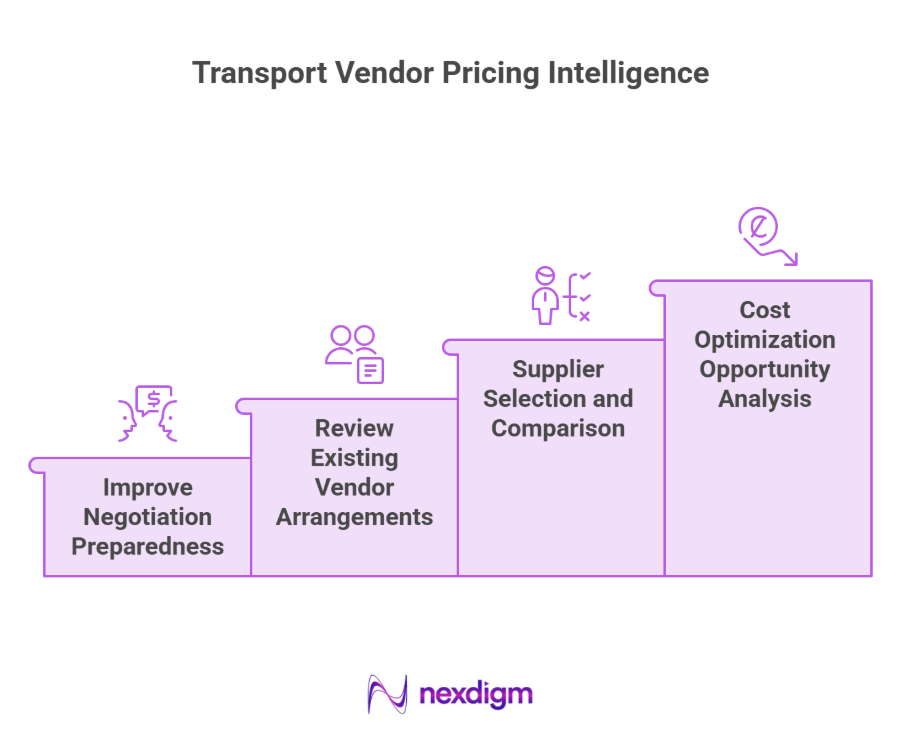
- Improving Negotiation Preparedness: Use market intelligence to support discussions around freight rates, surcharges, and contractual conditions.
- Reviewing Existing Vendor Arrangements: Identify pricing differences and evaluate whether current transportation agreements remain commercially competitive.
- Strengthening Supplier Selection: Compare vendors on pricing, route coverage, service capabilities, and commercial flexibility.
- Identifying Cost Optimization Opportunities: Explore alternative routes, supplier combinations, and pricing structures that may improve transportation economics.
By connecting vendor intelligence with procurement priorities, Nexdigm can help businesses make more informed transport sourcing decisions.
Nexdigm’s Case
A manufacturing company wanted to review freight expenditure across its regional distribution network. Nexdigm’s assessment compared vendor quotations, route costs, fuel adjustments, and contractual terms. It identified 13% potential freight cost optimization, 8% potential savings through route-level adjustments, 10% scope for improving vehicle load utilization, and 15% potential reduction in unplanned surcharge exposure.
To take the next step, simply visit our Request a Consultation page and share your requirements with us.
Harsh Mittal
+91-8422857704