
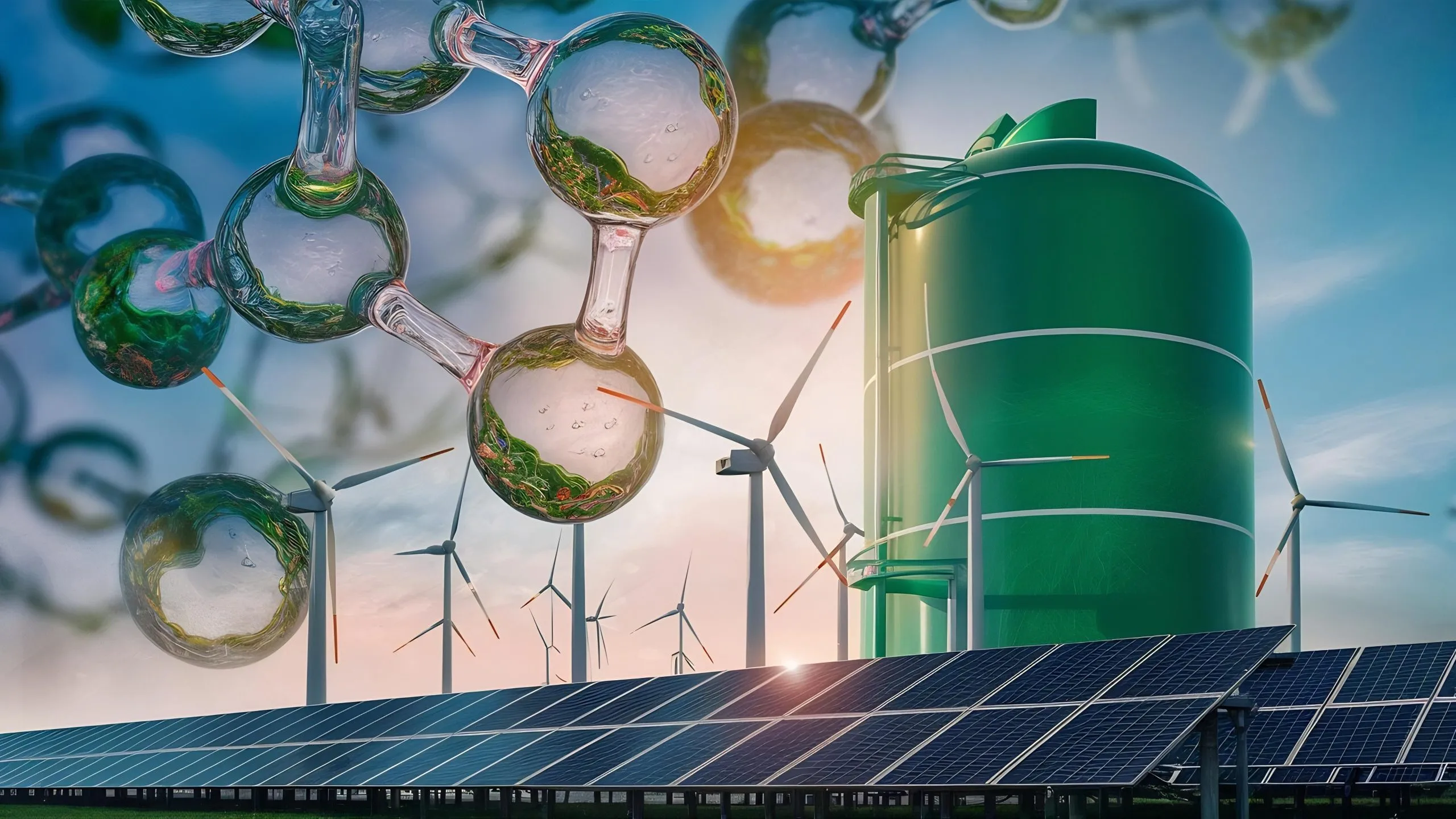
Turkey has spent years dealing with one persistent issue in energy – heavy dependence on imported fuel. That reality is now pushing the country to look more seriously at green hydrogen. Backed by rising renewable power generation and closer trade ties with Europe, Turkey is gradually building a foundation for hydrogen production that could reshape parts of its industrial sector over the next decade. As of 2026, solar and wind installations across regions such as Central Anatolia and the Aegean coast are expanding at a steady pace. These renewable projects are no longer viewed only as electricity assets. In practice, many are being evaluated for their potential to support electrolysis-based hydrogen production. At the same time, European buyers searching for low-carbon fuel suppliers are paying closer attention to Turkey because of its geographic advantage and existing energy transport infrastructure.
What’s Driving the Green Hydrogen Market in Turkey?
Expansion of Renewable Energy Capacity
One of Turkey’s strongest advantages lies in its renewable energy potential. The country has favorable wind corridors and long sunlight hours, particularly in southern and western provinces. Over the last few years, renewable electricity prices have become far more competitive, making green hydrogen projects less financially unrealistic than they appeared a decade ago. Several energy developers are already exploring hybrid projects where solar farms directly power electrolyzers. This matters because electricity remains the single largest cost component in green hydrogen production. A common challenge on the ground, though, is grid congestion in certain renewable-heavy regions, which means infrastructure upgrades will need to keep pace with new hydrogen investments.
Industrial Pressure to Cut Carbon Emissions
Turkish manufacturers are under growing pressure to clean up production processes, especially those exporting to the European Union. Sectors such as steel, refining, and fertilizers face increasing scrutiny due to carbon regulations linked to the EU Carbon Border Adjustment Mechanism. For many exporters, reducing emissions is no longer a branding exercise. It is becoming a commercial necessity. Green hydrogen is attracting attention because it offers an alternative to natural gas and coal in industrial operations that are otherwise difficult to decarbonize. Steel producers, in particular, are studying hydrogen-based processes to avoid future carbon costs. Still, adoption will not happen overnight. Retrofitting industrial facilities requires large capital commitments, and some manufacturers remain cautious until hydrogen prices become more predictable.
Europe’s Search for Alternative Hydrogen Suppliers
Turkey’s location gives it a practical edge that many emerging hydrogen producers do not have. Existing gas pipeline routes connecting Turkey with Europe could eventually support hydrogen blending or transport with modifications. Ports along the Mediterranean and Aegean regions also create opportunities for ammonia exports, which many analysts see as a more realistic near-term solution for shipping hydrogen internationally. European governments and energy firms have already started forming partnerships across the Mediterranean region to secure future clean fuel supplies. Turkey naturally enters those discussions because transport distances are shorter compared to suppliers in Latin America or Australia. That said, competition will be intense, especially as North African countries pursue similar ambitions with lower renewable generation costs in some cases.
Government-Led Hydrogen Initiatives
Turkey’s government has begun incorporating hydrogen into broader energy transition planning, though the policy framework still feels early-stage compared to countries such as Germany or Japan. Pilot programs tied to renewable energy zones and industrial decarbonization are slowly emerging. Public institutions are also collaborating with European organizations on research projects involving hydrogen storage and transport technologies. In recent years, policymakers have shown greater interest in reducing long-term energy import bills rather than relying solely on conventional fuel contracts. That shift partly explains why hydrogen discussions have become more serious in Ankara.
Market Competition
The market remains relatively small but interest is spreading across energy producers, refiners, and engineering firms. Companies such as Tüpraş and Enerjisa Üretim are exploring low-carbon fuel opportunities, while international players including Siemens Energy are likely to play a role through technology partnerships. At this stage, many projects are still in feasibility or pilot phases. Financing remains selective, and investors are paying close attention to long-term offtake agreements before committing capital.
High Production Costs and Infrastructure Constraints
The biggest obstacle for Turkey’s green hydrogen sector remains economics. Electrolyzers, storage systems, and transport infrastructure all require heavy upfront investment. Even with cheaper renewable electricity, hydrogen produced through electrolysis still struggles to compete with conventional hydrogen derived from natural gas. Transport infrastructure is another weak point. Turkey has extensive gas networks, but converting pipelines for hydrogen use is technically complex and expensive. Without reliable storage and transport systems, scaling production beyond pilot projects may take longer than many early forecasts suggested.
Turkey Expands Renewable Projects to Support Future Hydrogen Exports
Turkey’s renewable energy sector has seen fresh momentum in 2026, with several new wind and solar agreements expected to strengthen the country’s long-term green hydrogen ambitions. Recently, Chinese turbine manufacturer Goldwind signed a cooperation agreement for a 43.5 MW hybrid wind and battery storage project in western Turkey. Industry observers believe projects like these could support future hydrogen production by supplying stable renewable electricity to electrolyzer facilities. At the same time, Turkish energy stakeholders are actively discussing hydrogen export opportunities with European partners as demand for low-carbon fuels continues to rise across the EU market.
Future Outlook
Turkey’s green hydrogen market will likely develop gradually rather than through sudden large-scale expansion. Over the next decade, growth will depend heavily on renewable power additions, industrial demand from export-oriented sectors, and cooperation with European buyers seeking cleaner fuel imports. By 2035, hydrogen hubs linked to solar and wind clusters could become more common, particularly near industrial zones and port cities. The market may not become a global leader overnight, but Turkey has a realistic opportunity to become a relevant regional supplier if infrastructure planning and industrial adoption move at a practical pace.
Consultants at Nexdigm, in their latest publication “Turkey Green Hydrogen Market Outlook to 2035,” analyzed the market by Technology (Alkaline Electrolysis, PEM Electrolysis, Solid Oxide Electrolysis), By Application (Refining, Fertilizers, Steel Production, Power Generation, Transportation), and By End User (Industrial, Energy Utilities, Mobility, Export Markets). Nexdigm believes that businesses should prioritize strategic renewable energy partnerships, investments in electrolyzer efficiency, and cross-border hydrogen export infrastructure while leveraging Turkey’s geographic advantage as a gateway between Europe and Asia.
To take the next step, simply visit our Request a Consultation page and share your requirements with us.
Harsh Mittal
+91-8422857704