
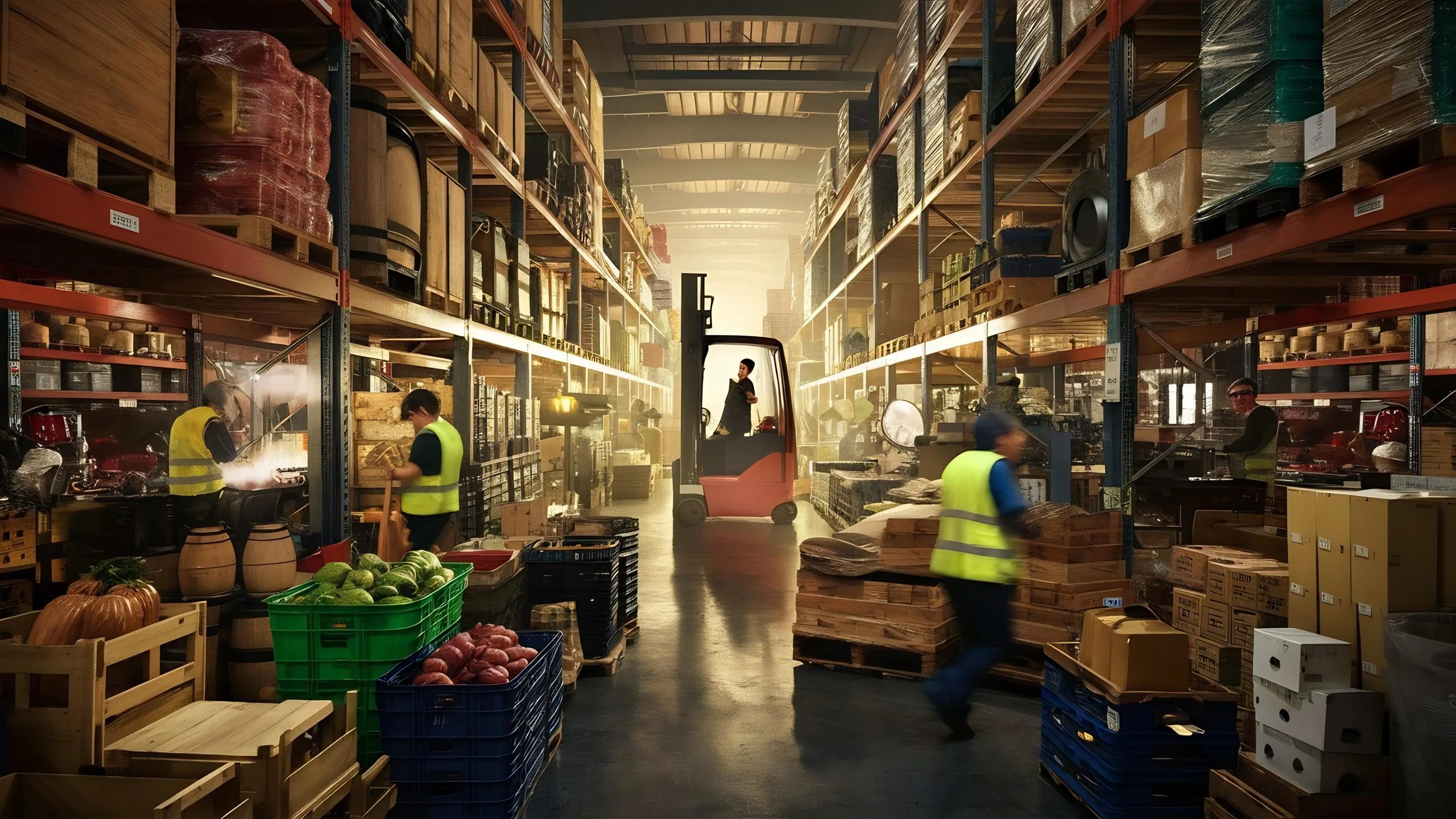
Turkey is seen as a growing warehouse market in relation to the total logistics system, due to high trade volumes and a good position in-between Asia and Europe. Turkey’s logistics industry is currently worth around $100 billion and is projected to be steady growing. The warehousing sector represents multi billion dollars worth business (approx. USD 6.1 billion) based on growing demand for the manufacturing, retail and e-commerce sectors, and it is expected to develop into a significantly different sector by 2035 as supply chains develop and trades increase.
Major Growth Catalysts Shaping Turkey’s Warehousing Industry
E-commerce Expansion and Changing Consumer Behavior
The high increase in e-commerce volume is one of the key reasons that are driving warehouse demand in Turkey. Last year e-commerce turnover exceeded $40 billion and it continues to raise the need for fulfillment centers, last-mile hubs and urban warehouses, pushing for further investment into automated warehouses and micro fulfillment centers, because of growing delivery speed expectations. Courier and parcel services are another fastest growing segment in logistics
Strategic Geographic Location and Trade Connectivity
Being located on the intersection of Europe, Asia and the Middle East, the markets of 1.3 billion people are within reach from Turkey with a flight time up to 4 hours. This factor makes the country an important center for transshipment and distribution, raising the demand for bulk storage areas and bonded warehouses. Growing activity in the transit lines-both rail and multimodality-is also increasing this demand.
Industrial and Manufacturing Growth
Almost 25 percent of Turkey’s GDP stems from manufacturing and serves as the largest determinant of demand for warehousing and logistics. Top manufacturing segments like automotive, textile and electronics industry rely on efficient warehousing and inventory management facilities and infrastructure. Increasing levels of exports, combined with nearshoring practices has further pushed the demand for unified warehousing and distribution centers in industrial clusters, namely Istanbul, Ankara and Izmir.
Government Policies and Infrastructure Investments Supporting Warehousing Growth
The Turkish government has taken various measures to increase the efficiency of logistics and digital transformation in this sector. Some recent policy changes include; new regulations on the use of new tracking methods and data analytics to improve transparency and decrease the delay in logistics operations. Furthermore, increasing investments in rail networks, port development, and multimodal transport system reinforce Turkey as a regional logistics hub and have indirectly stimulated the demand for contemporary warehousing facilities.
Market Structure and Key Players in Turkey’s Warehousing Industry
Highly fragmented market dominated by international and local companies: DHL Supply Chain, CEVA Logistics, Ekol Logistics, Netlog Logistics, DB Schenker are a few examples of the leading international companies operating in the market. Over 1,700 warehousing companies are registered in Turkey. This reflects a very crowded and diverse sector where cooperation (partnerships), acquisition or adoption of technology is the most popular business strategy that aims at increase storage capacity and service competence of companies.
Key Challenges Impacting Growth of Turkey’s Warehousing Market
Rising Operational Costs and Inflation
The continuing high cost of fuel, along with the rise of inflationary pressure will prove difficult for logistics and warehousing companies to deal with. Added to this is the effect of fluctuations in the exchange rate, increasing the cost to operate businesses and influencing prices.
Infrastructure Gaps and Fragmentation
Although advances have been made, these discrepancies in infrastructure and disjointed supply chain management can result in a lack of efficiency. Smaller players tend not to have access to the best technologies which restrict their potential for development and optimization.
Future Outlook
By 2035, Turkey warehousing market is predicted to witness a constant increase in line with logistics sector which is expected to grow at a CAGR of 4-5% over the coming years. Further incorporation of automation, AI, IoT in warehousing will increase productivity while bringing down the expenses. Growing investments in cold storage, urban logistics, smart warehousing will add to a mixed market landscape. Being a key global gateway of trade, warehousing will also act as an important contributor to resilience.
Consultants at Nexdigm, in their latest publication “Turkey Warehousing Market Outlook to 2035,” analyze the sector by System Type (Automated Storage and Retrieval Systems, Conventional Warehousing Systems, Cold Storage Systems, Mezzanine Floor Systems), By Platform Type (On-premise Platforms, Cloud-based Platforms, Hybrid Platforms), and By Fitment Type (Standalone Systems, Integrated Systems, Custom-built Solutions). Nexdigm suggests that businesses should adopt a forward-looking approach by investing in scalable warehousing infrastructure, integrating advanced technologies such as automation and warehouse management systems, and strategically positioning facilities near key trade corridors to capitalize on Turkey’s growing e-commerce demand and expanding role as a regional logistics hub, while also focusing on cost optimization and operational efficiency to remain competitive in a dynamic market environment.
To take the next step, simply visit our Request a Consultation page and share your requirements with us.
Harsh Mittal
+91-8422857704
[email protected]