
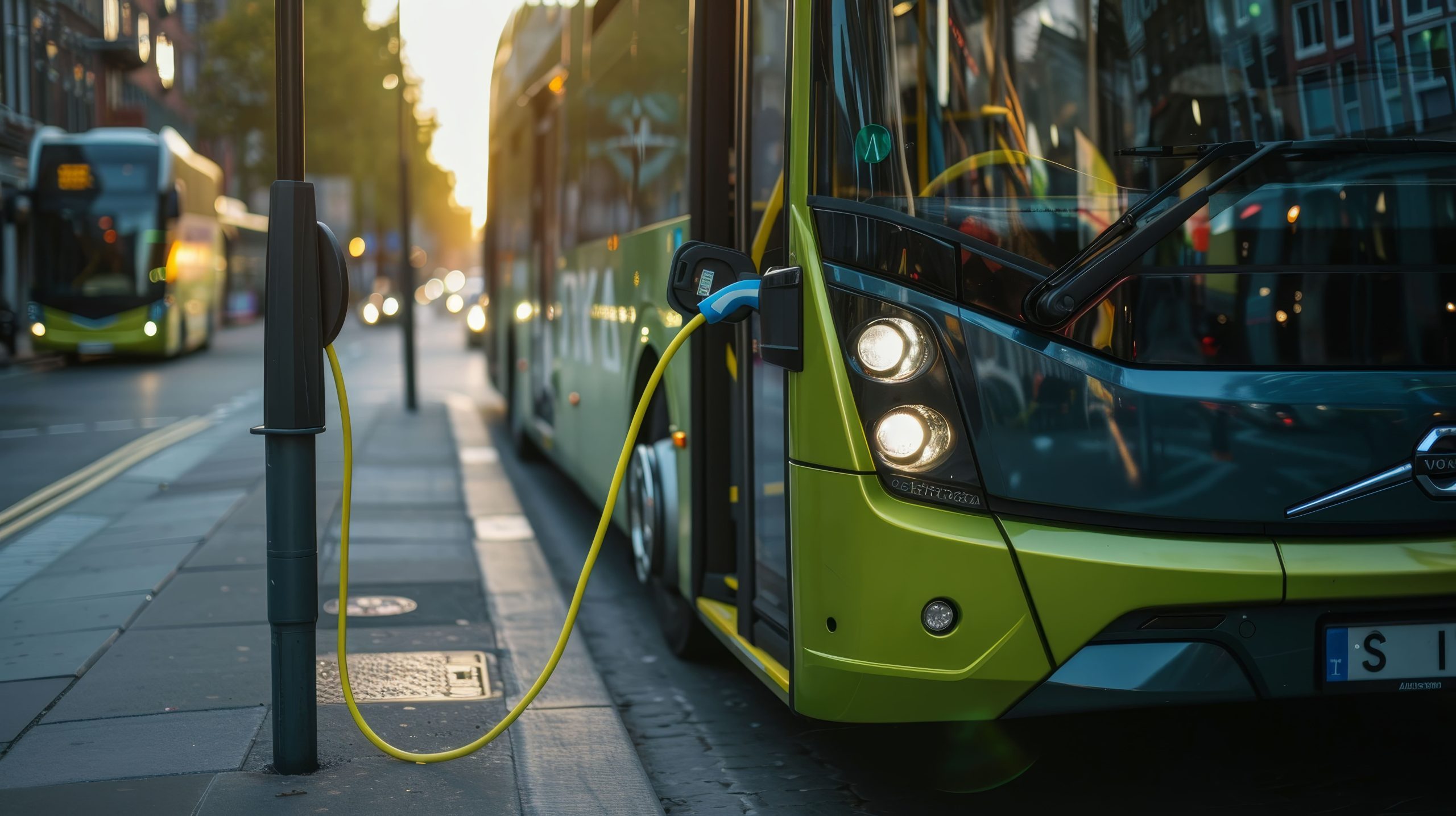
The UAE electric bus market is moving from pilot-stage ambition to something far more tangible. Public transport authorities across the country are under pressure to clean up urban mobility, and buses are one of the most visible places to start. As of 2026, adoption is still at an early stage, but the direction is clear. Dubai has already introduced electric buses on select routes, while Abu Dhabi has been testing greener transit models as part of broader decarbonization efforts. In a market long shaped by diesel, air-conditioning load, and harsh operating conditions, the shift will not be instant. Still, the momentum is real, and by 2035 electric buses are likely to be far more common on UAE roads than they are today.
What’s Driving the Electric Bus Market in the UAE?
Decarbonization Goals and Cleaner Urban Mobility
One of the clearest demand drivers is the UAE’s push to decarbonize transport. Road mobility remains a major source of urban emissions, and city authorities can no longer treat bus electrification as a symbolic sustainability move. In Dubai especially, public transport is being asked to do more – carry more passengers, connect more neighborhoods, and do it with a lower environmental footprint. Electric buses fit that brief, particularly on fixed urban routes where charging and scheduling are easier to manage.
Rising Public Transport Usage and Fleet Modernization
There is also a practical side to this shift. Public transport usage in the UAE has steadily improved, especially in Dubai where buses play an important role in first-mile and last-mile connectivity. As route networks expand, fleet operators are looking beyond just fuel savings. Electric buses are quieter, smoother to operate, and in many cases easier to maintain over the vehicle lifecycle. For passengers, that translates into a better onboard experience. For operators, it means fewer moving parts and potentially lower long-term maintenance headaches.
Better Suitability for High-Temperature Operating Conditions
A more underrated factor is that the technology itself is finally becoming more relevant for Gulf conditions. A few years ago, battery performance in extreme heat was a legitimate concern. It still is, to a degree. But manufacturers have made visible progress in thermal management, battery cooling, and route-specific optimization. In practice, this matters more than headline range figures. A bus that can reliably run through a hot Dubai afternoon without performance loss is far more valuable than one that looks impressive only on paper.
Government-Led Initiatives
Government agencies are doing most of the heavy lifting in this market, and that is unlikely to change anytime soon. The UAE electric bus segment is not being built by consumer demand or private fleet experimentation alone. It is largely being shaped through transport authority procurement, sustainability mandates, and urban mobility planning. Dubai’s Roads and Transport Authority has already taken visible steps through electric and low-emission bus procurement, while Abu Dhabi has been evaluating green bus programs under broader smart transport initiatives. These projects matter not just because they add vehicles to the road, but because they force supporting infrastructure to develop around them – charging stations, depot upgrades, technician training, and digital fleet monitoring systems. Without that backbone, electric bus adoption stays stuck in the pilot phase.
Market Competition
Competition in the UAE electric bus market is still fairly narrow, but it is getting more interesting. Chinese manufacturers have an early advantage, largely because they offer cost-competitive products and tend to move quickly when transit authorities open tenders. Yutong and Zhongtong have already gained attention in the region for this reason. That said, price alone will not decide this market. Buyers in the UAE are not just looking for buses; they are buying reliability in extreme heat, after-sales support, battery durability, and confidence that spare parts will actually be available five years down the line. European manufacturers and established global bus suppliers still have room to compete if they can prove stronger lifecycle value rather than just premium branding.
High Upfront Costs and Charging Readiness
The biggest hurdle remains cost. Electric buses still come with a much higher upfront price than diesel or CNG alternatives, and the bus itself is only part of the bill. Charging infrastructure, depot redesign, grid upgrades, software integration, and staff retraining all add up quickly. On the ground, charging readiness is where many projects become more complicated than expected. A fleet might look viable on paper, but route timing, charging turnaround, and power availability can quickly expose operational gaps. That is especially true for longer routes or buses running extended daily shifts. So while the economics may improve over time, the transition is not as simple as replacing one vehicle with another.
Future Outlook
The long-term picture remains positive, even if the rollout is likely to be uneven. By 2035, electric buses should have a much firmer place in the UAE’s public transport mix, particularly in Dubai and Abu Dhabi where policy support and infrastructure investment are strongest. Adoption will likely spread first through urban transit, airport shuttle fleets, tourism corridors, and institutional transport rather than every segment all at once. There is also a good chance the market will become more technically diverse over time. Battery-electric buses are likely to dominate city routes, but hydrogen-powered alternatives may find a place in longer-distance or heavier-duty operations where charging constraints are harder to solve. The UAE may never be the largest electric bus market by volume, but it could become one of the most watched examples of how zero-emission transit works in hot-climate cities.
Consultants at Nexdigm, in their latest publication “UAE Electric Bus Market Outlook to 2035”, analyze the market by Propulsion Type (Battery Electric Bus, Hydrogen Fuel Cell Bus), By Bus Length (Below 9m, 9-12m, Above 12m), By Application (Urban Public Transit, Airport Shuttle, Institutional Transport, Tourism & Smart Mobility), and By End User (Government Transport Authorities, Private Fleet Operators, Institutions). Nexdigm believes businesses should focus on hot-climate vehicle performance, charging partnerships, and long-term service capability if they want to stay relevant in this market.
To take the next step, simply visit our Request a Consultation page and share your requirements with us.
Harsh Mittal
+91-8422857704