
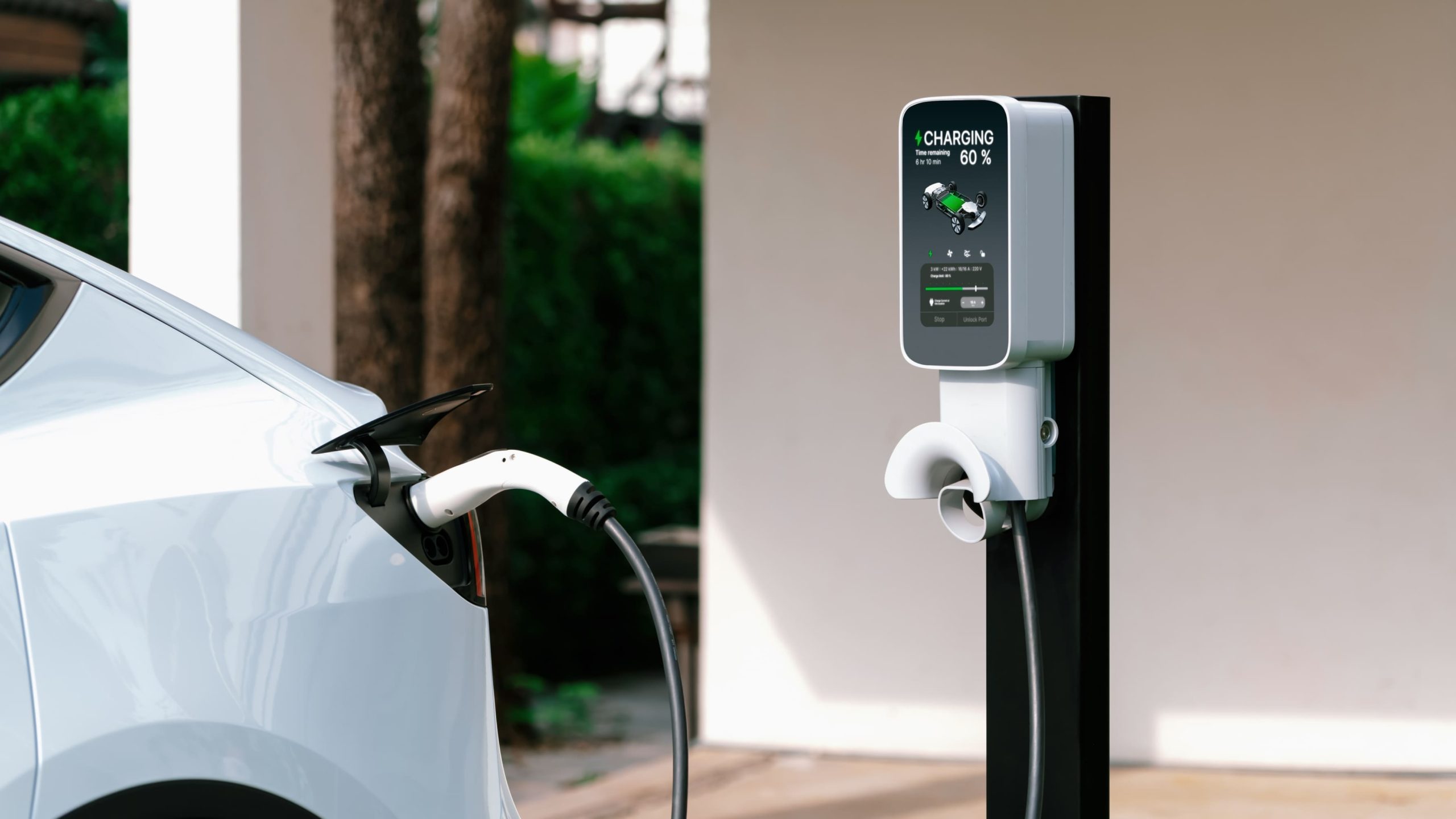
The UAE EV charging infrastructure market has moved well beyond the pilot stage and is now becoming a practical piece of the country’s transport network. A few years ago, charging stations were still viewed as a premium convenience for a limited set of EV owners. That picture has changed. Public charging points are now showing up in shopping centres, residential developments, office complexes, fuel stations, and increasingly along highway routes connecting major emirates. By 2026, the conversation in the UAE is no longer just about whether electric vehicles will catch on. It is about whether the charging network can keep pace with a market that is becoming more mainstream, especially in Dubai and Abu Dhabi where adoption is visibly stronger.
What’s Driving the EV Charging Infrastructure Market in the UAE?
Rising EV Adoption Across Urban Mobility Segments
A major factor behind this market is the simple rise in EV ownership across the country. Consumers now have more vehicle choices than they did even three years ago, from premium brands to more practical mid-range models. That shift matters because charging demand does not scale when only luxury buyers participate. It grows when families, commuters, fleet operators, and even small business owners begin to treat EVs as a usable alternative rather than a statement purchase. In cities like Dubai, this change is already visible in apartment parking lots, office basements, and school pickup zones where EVs are no longer unusual.
Expansion of Fast and Ultra-Fast Charging Networks
Charging speed is also becoming a more important differentiator than many early market forecasts suggested. On paper, a large charging network sounds impressive. In reality, drivers care more about how long they need to wait and whether the charger works when they arrive. That is why fast and ultra-fast charging stations are gaining relevance across the UAE. Highway corridors, especially between Abu Dhabi and Dubai, are becoming critical because they address one of the biggest practical concerns around electric mobility: confidence on longer trips. Once intercity travel feels easy, the category becomes much harder to dismiss.
Growing Role of Real Estate, Fleets, and Commercial Sites
There is also a quieter but commercially significant segment developing in the background – private and semi-public charging. Real estate developers, hotels, logistics depots, corporate offices, and ride-hailing fleets are steadily adding their own charging setups. This part of the market often receives less attention than public charging, but in many cases, it will be the more stable revenue stream. A mall visitor might charge once in a while. A taxi fleet or delivery operator needs charging every single day.
Government-Led Initiatives
Government support has played a meaningful role in getting the market to this point. Authorities in the UAE have not limited their role to policy announcements or sustainability campaigns. Utilities and transport bodies have actively backed deployment, especially in urban centres where EV adoption is more concentrated. Dubai’s Green Charger initiative helped establish early confidence in public charging, while regulatory frameworks are gradually making it easier for licensed private operators to enter the market. What is notable here is that the UAE has generally been more execution-focused than many markets in the region. Targets around decarbonisation and cleaner transport are important, but the real differentiator has been the willingness to fund visible infrastructure rather than leave the transition entirely to private demand.
Market Competition
The UAE EV charging infrastructure market is moderately concentrated at present, with a handful of major players accounting for much of the visible rollout. DEWA, ADNOC Distribution, ENOC Group, Tesla, and selected specialist charging providers remain the most influential names in the space. Utilities and fuel retailers naturally have an advantage because they already control high-traffic sites and power access. That said, the market is unlikely to stay this concentrated forever. Over time, property developers, parking operators, software-led charging service providers, and mobility platforms are likely to become more relevant. In practice, hardware alone will not be enough. Reliability, app usability, payment integration, and charger uptime may end up shaping customer preference more than charger count.
Grid Readiness and Site Economics
One of the biggest constraints in the UAE EV charging market is not demand alone, but where chargers can be installed profitably and at scale. Fast chargers require strong grid connectivity, transformer upgrades, and enough vehicle traffic to justify the investment. That works well on premium urban sites and major corridors but becomes harder in lower-utilization zones. In practice, many operators face a trade-off between visibility and viability. A charger can look impressive on paper while remaining commercially underused for years.
ADNOC Expands Intercity EV Charging with 60-Point Superfast Hub
A notable recent development in the UAE EV charging space came from ADNOC Distribution, which opened one of the world’s largest superfast EV charging hubs on the E11 highway between Abu Dhabi and Dubai in early 2026. The site features 60 high-speed charging points and can charge most electric vehicles from 0% to 80% in roughly 20 minutes. This matters because it addresses a real consumer pain point – confidence during longer intercity travel. The move also signals a clear shift in the UAE market from city-based charging clusters toward corridor-led infrastructure that supports broader, everyday EV usage across emirates.
Future Outlook
The UAE EV charging infrastructure market is expected to witness robust expansion through 2035, supported by sustained EV adoption, smart city development, and public-private ecosystem collaboration. By 2035, the UAE charging market will likely be judged less by how many stations exist and more by how useful they are in everyday life. The next phase will favour operators that understand real user behaviour – short urban charging stops, overnight residential demand, commercial fleet cycles, and reliable intercity charging.
Consultants at Nexdigm, in their latest publication “UAE EV Charging Infrastructure Market Outlook to 2035”, analyzed the market by Charger Type (AC Chargers, DC Fast Chargers, Ultra-Fast Chargers), By Application (Public Charging, Residential Charging, Commercial Charging, Fleet Charging), By Connectivity (Networked Chargers, Non-Networked Chargers), and By End User (Private Users, Fleet Operators, Commercial Establishments, Government & Public Utilities). Nexdigm believes that businesses should focus on uptime, site quality, software integration, and partnerships that solve real charging bottlenecks rather than simply adding more plugs to the map.
To take the next step, simply visit our Request a Consultation page and share your requirements with us.
Harsh Mittal
+91-8422857704