
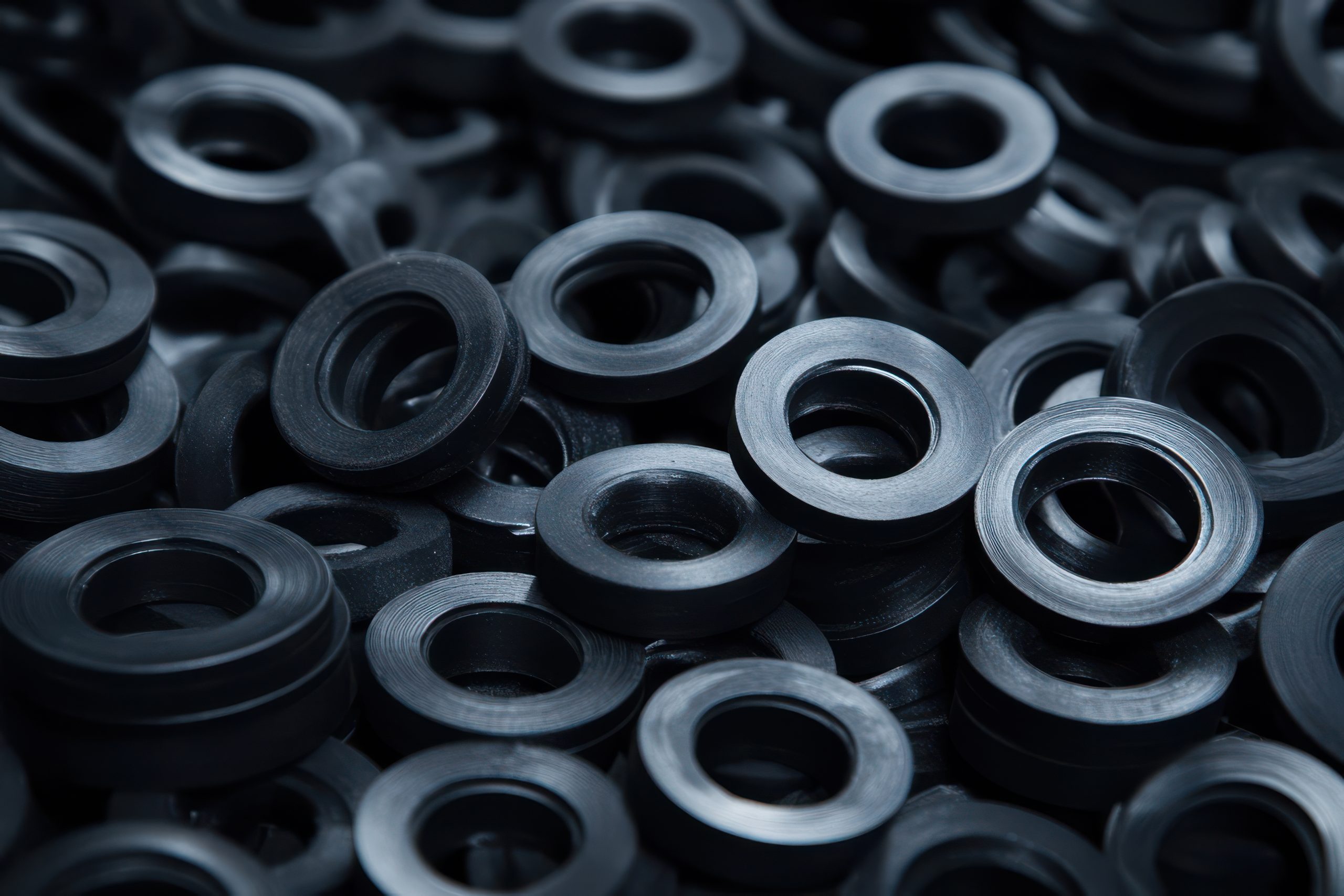
From oil and gas facilities to water treatment plants, power systems, manufacturing units, and vehicles, gaskets and seals quietly support many of the UAE’s most important industries. Their role is straightforward but essential: preventing leaks, maintaining pressure, and helping equipment operate reliably under demanding conditions. The UAE seals and gaskets market was estimated at approximately USD 160 million in 2025 and is projected to reach USD 224 million by 2032, representing a 6.1% CAGR. Continued industrial investment and maintenance requirements are creating opportunities for both standard and high-performance sealing solutions.
Market Drivers for the UAE Gaskets and Seals Industry
Oil and Gas Activity Supports UAE Sealing Demand
Oil and gas remains a major source of demand for industrial gaskets and seals in the UAE. Pipelines, refineries, petrochemical facilities, pumps, valves, compressors, and pressure vessels all rely on sealing components to maintain operational integrity. High-pressure and high-temperature applications require specialized products such as spiral-wound, ring-joint, graphite, PTFE, and engineered elastomeric seals. The UAE’s industrial gasket market is structurally import-dependent, with an estimated 70–85% of domestic consumption supplied by foreign manufacturers, according to recent market research. Oil and gas and petrochemical processing are estimated to represent approximately 45–55% of total industrial gasket demand. As energy facilities expand or undergo maintenance and upgrades, replacement demand provides a recurring market base for sealing products.
Industrial Growth Expands the UAE Gaskets and Seals Market
The UAE’s wider industrial diversification is creating additional applications beyond hydrocarbons. Manufacturing, chemical processing, power generation, water treatment, marine operations, construction, and transportation all require gaskets and seals across machinery and infrastructure. Dubai’s construction sector recorded 8.2% year-over-year growth in Q1 2026, with gross value added reaching approximately AED18.7 billion. Although construction is not the sole driver of gasket and seal demand, expanding buildings, utilities, industrial facilities, and equipment installations increase the installed base requiring sealing components.
Maintenance Demand Creates Recurring Opportunities
A significant share of UAE gasket and seal demand comes from maintenance, repair, and replacement activity rather than entirely new installations. Industrial facilities operate continuously and require periodic replacement of sealing components to prevent leakage, maintain efficiency, and reduce unplanned downtime. Recent market estimates suggest that MRO and replacement applications account for approximately 55–65% of industrial gasket sales in the UAE. This creates a relatively consistent aftermarket opportunity for suppliers. Demand is also shifting toward higher-performance materials such as PTFE, graphite, and specialized elastomers, particularly in chemical, petrochemical, and high-temperature applications.
Government Support for the UAE Gaskets and Seals Industry
The UAE’s industrial-development strategy emphasizes manufacturing growth, economic diversification, and stronger domestic supply chains. Initiatives under the UAE Industrial Strategy 2031 aim to increase the contribution of manufacturing to the national economy and strengthen local industrial capabilities. These priorities are relevant to the gaskets and seals sector because the UAE currently relies significantly on imported products. Local value addition through assembly, distribution, engineering, and eventually manufacturing can improve supply resilience while supporting industrial development.
Competitive Insights of the UAE Gaskets and Seals Industry
The UAE market includes international gasket and seal manufacturers, regional distributors, local traders, MRO suppliers, and specialized engineering companies. International suppliers remain important because many oil and gas and industrial applications require certified products and specialized materials. At the same time, Dubai and other industrial hubs support local distribution, cutting, kitting, assembly, and technical services. Competition therefore extends beyond product price to certification, material quality, delivery speed, technical support, customization, and inventory availability. Local stockholding can be particularly valuable for maintenance customers working against short turnaround schedules.
Major Challenges Facing the UAE Gaskets and Seals Industry
Import Dependence Can Affect UAE Supply Chains
The UAE industrial gasket and seal market remains substantially dependent on overseas manufacturers. Import reliance can expose suppliers and customers to freight costs, shipping delays, currency movements, and fluctuations in raw-material prices. Specialty products can also have longer lead times than standard sealing components. Developing local stock, regional sourcing, and value-added processing can help reduce some of these supply-chain pressures.
Quality and Technical Requirements Remain Important
Gaskets and seals used in oil and gas, petrochemical, power, and chemical applications must meet demanding pressure, temperature, chemical-resistance, and safety requirements. Substandard products can result in leakage, equipment damage, downtime, or safety concerns. Market research indicates that counterfeit and lower-quality products remain a challenge in price-sensitive procurement channels. Suppliers therefore need strong quality control, traceability, certification, and technical expertise.
Future Outlook
In the upcoming years, the UAE’s gaskets and seals market is likely to remain closely linked to the country’s industrial base, particularly oil and gas, petrochemicals, power, water infrastructure, and manufacturing. Recent market estimates place the UAE seals and gaskets market at USD 160 million, with projected growth to USD 224 million by 2032 at a 6.1% CAGR. Over time, demand is expected to become more focused on engineered products that can withstand heat, pressure, chemicals, and demanding operating environments. For suppliers, dependable inventory, technical support, certification, and local value addition will matter alongside price. The UAE’s position as a regional logistics hub can also support distribution opportunities beyond the domestic market, particularly across the wider Gulf and nearby region.
Consultants at Nexdigm, in their latest publication “UAE Gaskets and Seals Market Outlook to 2035,” analyze the sector By Product Type (Spiral Wound, Ring Type Joint, Kammprofile, Metal Jacketed Gaskets), By Sealing Function (Static, Dynamic Sealing Systems, Rotary Equipment Sealing and Pneumatic Sealing).
Nexdigm suggests that businesses in the UAE Gasket and Seals Industry should focus on strengthening local supply capabilities, maintaining reliable inventories, expanding technical support, and developing high-performance sealing solutions for oil and gas, petrochemical, power, manufacturing, and water applications.
To take the next step, simply visit our Request a Consultation page and share your requirements with us.
Harsh Mittal
+91-8422857704