
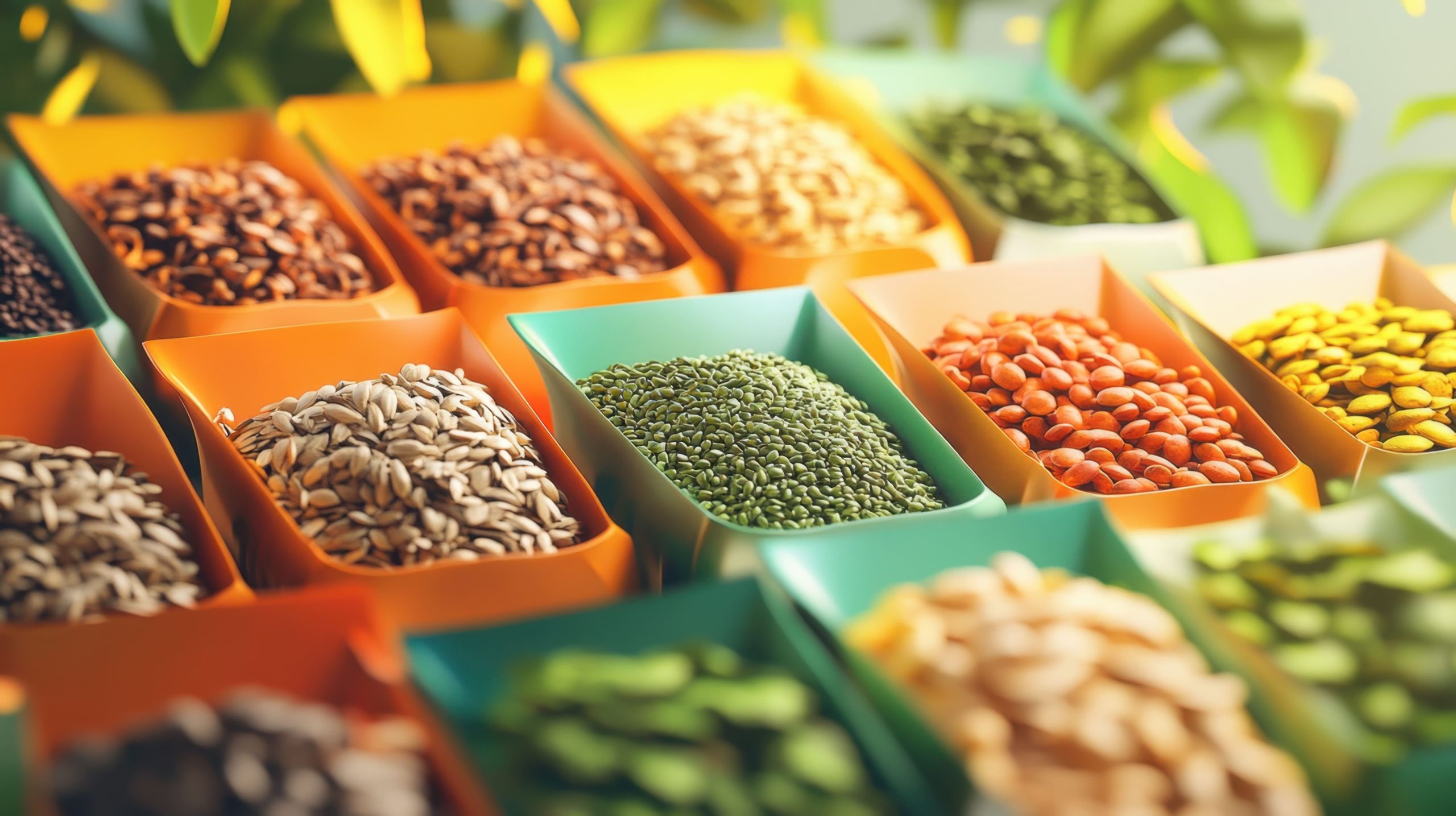
The UAE seed market is witnessing a steady transformation as the country strengthens its food security agenda and accelerates investments in agri-tech and controlled-environment agriculture. Given the UAE’s arid climate and limited arable land, domestic crop production remains structurally constrained. However, government-backed initiatives to promote greenhouse farming, hydroponics, vertical agriculture, and climate-resilient crops are expanding demand for high-quality vegetable, forage, and specialty seeds. As of 2025, a large share of commercial seeds used in the UAE were imported, particularly hybrid vegetable seeds and high-yield forage varieties. The market is gradually shifting from conventional open-pollinated varieties to hybrid and protected seeds, driven by productivity targets, water-use efficiency goals, and rising adoption of precision agriculture across commercial farms in Abu Dhabi, Al Ain, and emerging agri-tech clusters.
What’s Driving the Seed Market in the UAE?
Food Security Focus and Controlled-Environment Farming
The UAE’s National Food Security Strategy 2051 continues to shape demand for improved seed varieties that can perform under harsh climatic conditions. Investments in greenhouse farming, vertical farms, and hydroponic systems are creating demand for high-performing hybrid vegetable seeds such as tomatoes, cucumbers, leafy greens, and peppers. These systems require seeds with consistent germination rates, shorter crop cycles, and resistance to common pests and diseases, encouraging farmers to shift toward premium seed varieties despite higher upfront costs.
Adoption of Climate-Resilient and Water-Efficient Crops
Water scarcity remains a binding constraint for agriculture in the UAE. As a result, there is growing interest in drought-tolerant, heat-resistant, and salinity-tolerant seed varieties. Forage crops such as alfalfa and sorghum are increasingly sourced as improved hybrids to support domestic livestock and dairy operations. Research collaborations with international seed developers and agri-research institutions are helping introduce varieties tailored for desert and saline conditions, improving yields per unit of water used.
Growth of Agri-Tech Startups and Precision Farming
The expansion of agri-tech startups and pilot farms is accelerating demand for specialized seeds suited for indoor and semi-controlled environments. These farms prioritize uniformity, predictability, and high output per square meter, favoring proprietary hybrid seeds. Precision agriculture tools, including sensor-based irrigation and climate control, are further enhancing returns on premium seed investments, supporting market value growth even if cultivated acreage remains limited.
Government-Led Initiatives Supporting Seed Innovation
The UAE government continues to promote agricultural sustainability through grants, research funding, and public-private partnerships focused on food security and desert agriculture. Initiatives supporting agri-research, seed trials, and greenhouse expansion in Abu Dhabi and Al Ain are strengthening the ecosystem for seed innovation. Moreover, incentives for local production of fresh vegetables and fodder are indirectly encouraging the adoption of higher-yield seed varieties. Over time, the government’s push for domestic production of strategic food items is expected to increase demand for specialized seeds adapted to local conditions.
Market Competition and Import Dependency
The UAE seed market is largely dependent on imports from global seed companies, particularly for hybrid vegetable seeds and specialty varieties. International players dominate the organized segment through local distributors and agri-input suppliers, while smaller traders cater to niche and price-sensitive demand. The reliance on imported seeds exposes farmers to price volatility, foreign exchange risks, and supply chain disruptions. At the same time, stringent quality standards and phytosanitary regulations are raising entry barriers, gradually professionalizing the market and favoring established brands with proven performance in arid climates.
Limited Domestic Seed Production and Testing Ecosystem
The UAE has limited domestic seed breeding and large-scale seed production capabilities due to climatic constraints and small cultivated acreage. This limits local availability of customized varieties and keeps the market reliant on imported genetics. Additionally, adapting global seed varieties to UAE-specific growing conditions requires localized testing and validation, which can slow the introduction of new products and raise costs for commercial farms.
Future Outlook
The UAE seed market is expected to grow steadily through 2035, driven by the expansion of controlled-environment agriculture, increasing demand for climate-resilient crop varieties, and continued government focus on food security. By 2035, the market is likely to become more technology-driven, with greater adoption of hybrid and specialty seeds, stronger collaboration between seed developers and agri-tech farms, and more structured distribution channels. While the UAE will remain heavily reliant on imported seeds, localized trials, seed customization for desert conditions, and regional partnerships are expected to strengthen supply reliability and performance outcomes. The UAE is also positioned to emerge as a regional testing and demonstration hub for arid-climate seed technologies serving the Middle East and parts of Africa.
Consultants at Nexdigm, in their latest publication “UAE Seed Market Outlook to 2035”, analyzed the market by Crop Type (Vegetables, Forage Crops, Cereals, Specialty Crops), By Farming Method (Open Field, Greenhouse, Hydroponics, Vertical Farming), and By Distribution Channel (Direct Sales, Distributors and Agro-Dealers, Online Platforms). Nexdigm believes that businesses should prioritize partnerships with agri-tech farms for localized seed trials, focus on climate-resilient and water-efficient hybrids, and build strong technical advisory networks to support farmers in optimizing yields under desert conditions.
To take the next step, simply visit our Request a Consultation page and share your requirements with us.
Harsh Mittal
+91-8422857704