
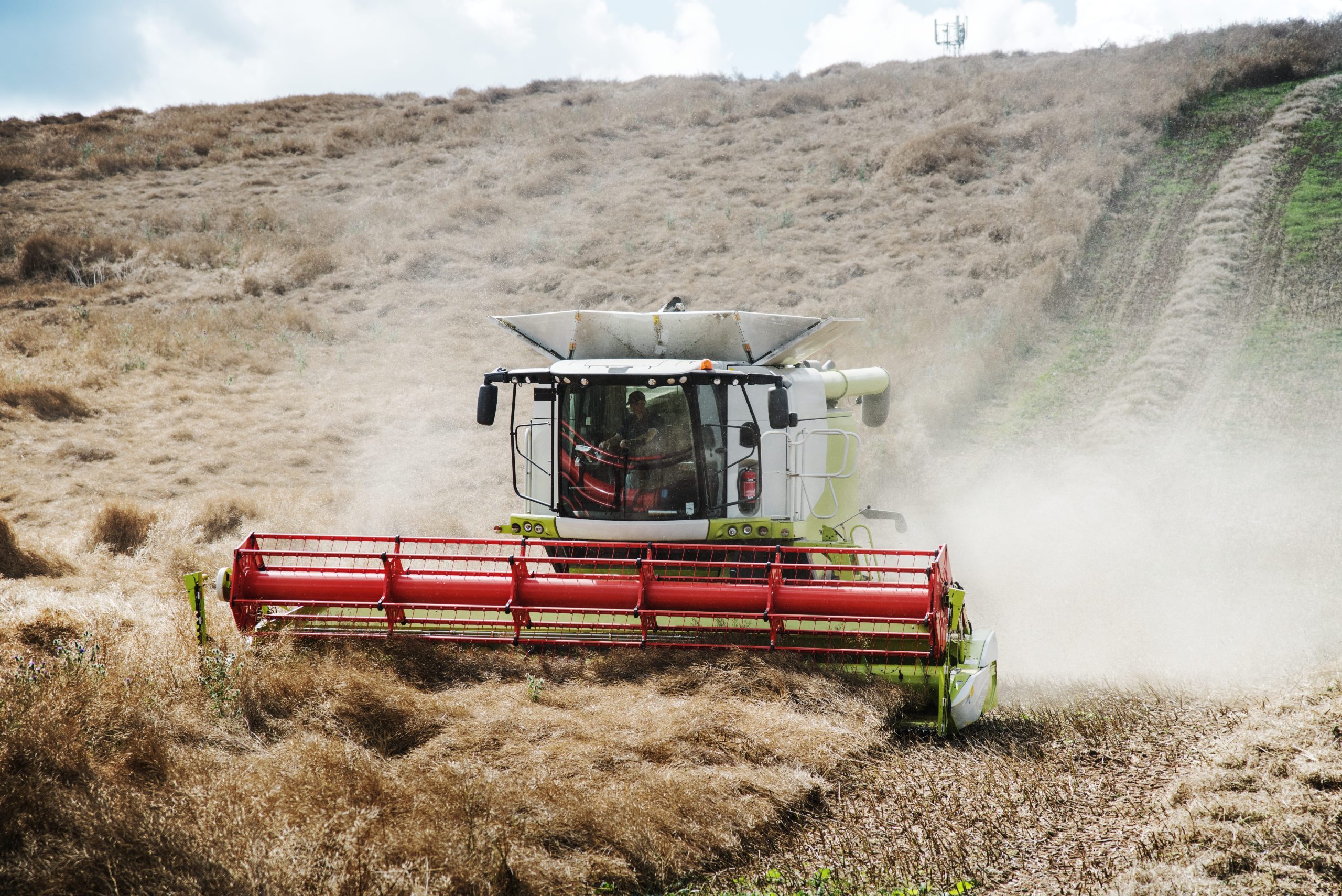
The UAE agricultural machinery sector is seeing steady change as the country pushes forward its food security agenda and channels more investment into sustainable and controlled-environment farming. With less than 6% arable land, government-backed efforts in agri-tech, hydroponics, and desert agriculture are pushing up demand for practical harvesting equipment. As of 2026, the UAE still depends heavily on imported farm machinery, with a rising number of harvesters moving into the secondary market after 4–8 years of field use. The used harvester segment is gaining traction due to budget constraints among farms, more frequent fleet renewal cycles, and the slow but steady growth of commercial farming clusters in Abu Dhabi, Al Ain, and Sharjah.
What’s Driving the Used Harvester Market in the UAE?
Rising Focus on Food Security and Controlled Environment Agriculture
The UAE’s National Food Security Strategy 2051 has triggered increased spending on greenhouse farming, hydroponics, and vertical agriculture to cut reliance on food imports. These controlled farming setups depend on reliable harvesting equipment to raise output and limit post-harvest losses. Small and mid-sized farms, along with agri-tech startups, are turning to used harvesters to keep capital costs under control while expanding operations. Lower purchase prices for refurbished machines are widening adoption, especially for harvesting vegetables, forage crops, and greenhouse produce.
High Cost of New Harvesters and Preference for Refurbished Equipment
New harvesters come with heavy upfront costs, which restricts adoption among smaller farms and contract service providers. Used machines deliver 30–50% savings over new units, making them a sensible choice for seasonal harvesting work and pilot farming projects. Better availability of imported refurbished harvesters with basic automation features is also helping to lift demand in the secondary market.
High Import Reliance and Equipment Turnover Cycles
The UAE depends almost entirely on imported harvesters from global brands such as John Deere, CLAAS, New Holland Agriculture, and Kubota Corporation. Large commercial farms and agri-service firms regularly refresh their fleets to improve efficiency, releasing a steady stream of mid-life harvesters into the resale channel. This turnover helps maintain supply and keeps pricing competitive in the used equipment space.
Government-Led Initiatives Supporting Mechanization
Public sector efforts continue to promote farm modernization through sustainability-linked programs, smart irrigation schemes, and agri-tech funding, especially across Abu Dhabi and Al Ain. National food security priorities and the UAE’s Net Zero 2050 targets are pushing farms to move away from older machinery toward more fuel-efficient and lower-emission alternatives. This shift is feeding additional supply into the used market while also encouraging smaller farms to adopt mechanized solutions at lower cost.
Market Competition and Distribution Landscape
The UAE used harvester market remains moderately fragmented. Authorized dealers tied to global OEMs lead the organized segment, while independent traders and smaller importers serve price-conscious buyers. Growing use of online equipment trading platforms and classified portals is improving price visibility and widening buyer reach across emirates. Over time, certified refurbishment schemes, warranty-backed resale options, and bundled service contracts should bring more structure and professionalism to the market.
Limited Domestic Agricultural Base
The UAE’s farming base is constrained by desert conditions, water scarcity, and limited arable land. This restricts the scale of agricultural activity and places a natural ceiling on demand for harvesting machinery. Market volumes for used harvesters therefore remain modest, with demand concentrated in niche areas such as greenhouse farming, forage cultivation, and landscaping-related harvesting work.
Future Outlook
The UAE used harvester market should record steady, measured growth through 2035, driven by mechanization in controlled farming environments, ongoing fleet replacement by commercial operators, and rising cost awareness among agri-businesses. By 2035, the market is expected to be more organized, with clearer pricing benchmarks, standardized refurbishment practices, and broader use of financing and leasing options. While the UAE is unlikely to become a large-volume buyer of harvesting machinery, it is steadily building its role as a regional trading and re-export hub for used harvesters across the Middle East and Africa.
Consultants at Nexdigm, in their latest publication “UAE Used Harvester Market Outlook to 2035”, analyzed the market by Harvester Type (Combine Harvesters, Forage Harvesters, Specialty Crop Harvesters), By Application (Commercial Farming, Contract Farming, Controlled-Environment Agriculture), and By Sales Channel (Authorized Dealers, Independent Traders, Online Platforms, Auctions). Nexdigm believes that businesses should prioritize certified refurbishment programs, strong after-sales service and spare-parts networks, and digital sales platforms, while leveraging the UAE’s re-export linkages to the Middle East and Africa as key growth levers in the secondary harvester market.
To take the next step, simply visit our Request a Consultation page and share your requirements with us.
Harsh Mittal
+91-8422857704