
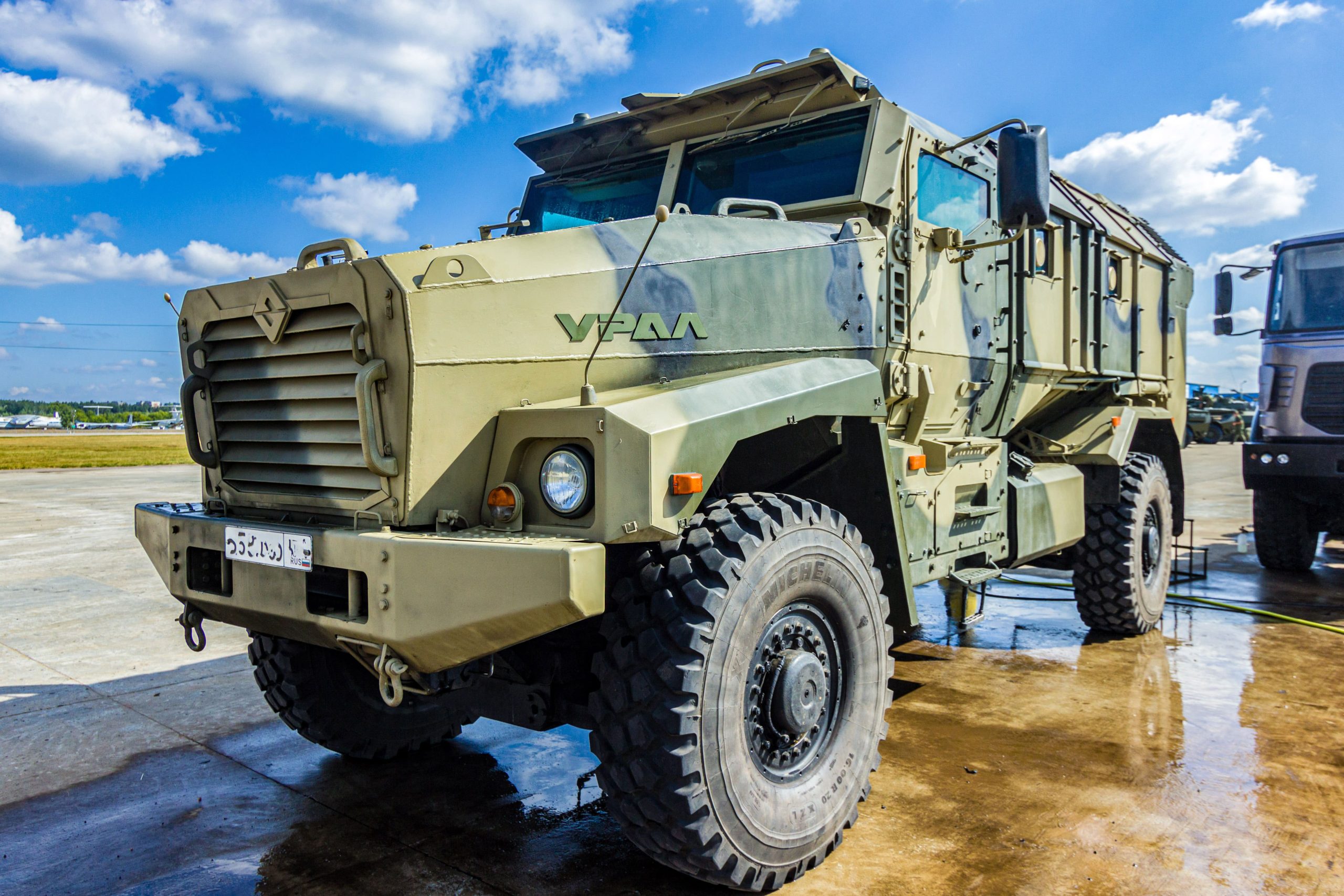
The US armored fighting vehicles (AFV) market is undergoing a major modernization cycle as the Department of Defense prioritizes survivability, digital integration, and readiness across legacy fleets. As of 2026, the US Army continues to operate large numbers of Abrams main battle tanks, Bradley infantry fighting vehicles, and Stryker armored vehicles, many of which are being upgraded rather than fully replaced. Rising geopolitical tensions and evolving battlefield threats are pushing procurement toward platforms with enhanced protection, networked communications, and improved mobility. Budget discipline is encouraging lifecycle extension programs alongside selective induction of next-generation vehicles.
What’s Driving the Armored Fighting Vehicles Market in the US?
Network-Centric and Multi-Domain Operations
The US Army’s shift toward multi-domain operations is driving integration of AFVs with ISR assets, drones, and joint fires. Vehicles are being upgraded with advanced battle management systems, secure communications, and sensor fusion to operate as connected nodes on the digital battlefield. This is increasing demand for electronic architecture upgrades and open-systems integration.
Modernization of Legacy Fleets
Rather than rapid fleet replacement, the US is extending the service life of Abrams, Bradley, and Stryker platforms. Programs such as Abrams SEP upgrades and Bradley lethality improvements are enhancing protection against anti-tank missiles, loitering munitions, and drones. This modernization push is sustaining demand for active protection systems, advanced optics, remote weapon stations, and upgraded power and cooling systems.
Next-Generation Combat Vehicles
The Next Generation Combat Vehicle (NGCV) portfolio, including the XM30 Mechanized Infantry Combat Vehicle, is shaping long-term procurement. These platforms emphasize modularity, reduced crew burden, improved survivability, and hybrid powertrains. While large-scale induction is expected later in the decade, R&D and low-rate production are already driving supplier activity across propulsion, armor materials, and digital systems.
Government-Led Modernization Programs
The US government continues to fund AFV modernization under the Army Modernization Strategy, with focus on lethality, protection, and digitization. Multi-year procurement and sustainment contracts support steady demand for upgrades and depot maintenance. Forward-deployed readiness in Europe and the Indo-Pacific is accelerating upgrades to communications, situational awareness systems, and active protection systems. Performance-based logistics and lifecycle sustainment models are becoming central to long-term procurement.
Market Competition and Industrial Base
The US AFV market is highly consolidated. Key players include General Dynamics Land Systems, BAE Systems, Oshkosh Defense, RTX, and L3Harris Technologies. Competition is increasingly driven by subsystem innovation in active protection, sensors, electronic protection, and vehicle networking. Partnerships with SMEs and dual-use tech firms are expanding, particularly in autonomy and AI-enabled situational awareness.
Rising Sustainment Costs and Readiness Strain
The US AFV market faces rising sustainment costs as legacy fleets such as Abrams and Bradley remain maintenance intensive. Supply chain constraints for semiconductors, optics, propulsion systems, and armor materials delay upgrades and depot repairs. Skilled workforce shortages further impact readiness levels. Additionally, increased vehicle weight from layered protection reduces fuel efficiency and mobility, driving demand for lightweight armor solutions and hybrid propulsion to balance survivability with operational performance.
Future Outlook
The US AFV market is expected to see steady modernization-led growth through 2035, driven by upgrades, selective platform replacement, and gradual induction of next-generation vehicles. By 2035, most frontline AFVs are expected to feature integrated active protection systems, AI-enabled threat detection, advanced sensors, and secure battlefield networking. Hybrid-electric propulsion and improved power management are likely to gain traction to support energy-intensive onboard systems.
Nexdigm consultants, in their publication “US Armored Fighting Vehicles Market Outlook to 2035,” note that OEMs should prioritize modular upgrade kits, open-systems architectures, and survivability solutions against drones and top-attack munitions to capture long-term value from the US AFV modernization cycle.
To take the next step, simply visit our Request a Consultation page and share your requirements with us.
Harsh Mittal
+91-8422857704