
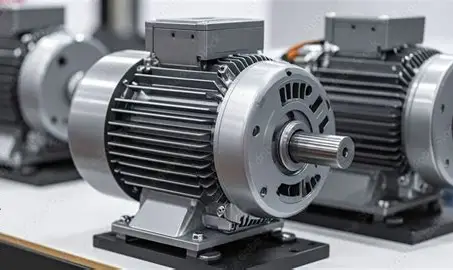
The US Industrial Electric Motors Market is witnessing strong growth, supported by industrial automation, manufacturing expansion, energy-efficiency regulations, and increasing investments in smart factories. Industrial electric motors are widely used across manufacturing, oil & gas, water treatment, food processing, mining, chemicals, HVAC systems, and power generation applications. The United States remains one of the world’s largest industrial economies, with manufacturing output exceeding USD 2.3 trillion annually and a workforce of more than 12 million manufacturing employees. Growing adoption of Industry 4.0 technologies and electrification initiatives continues to drive demand for high-efficiency motor systems.
Key Market Drivers for the US Industrial Electric Motors Market
Industrial Automation and Smart Manufacturing Accelerate Demand
The US manufacturing sector is rapidly adopting automation, robotics, and digital production technologies. Advanced electric motors are critical components in automated production lines, conveyor systems, industrial robots, pumps, compressors, and machine tools. Increasing investments in smart factories, semiconductor manufacturing, and industrial modernization programs are accelerating demand for energy-efficient and digitally connected motor systems.
Energy Efficiency Regulations Strengthen Market Growth
Industrial electric motors account for a significant share of industrial electricity consumption in the United States. Compliance with NEMA Premium efficiency standards, Department of Energy (DOE) regulations, and corporate sustainability programs is encouraging industries to replace older motors with high-efficiency alternatives. Variable frequency drives (VFDs), premium-efficiency motors, and intelligent motor-control solutions are increasingly being deployed to reduce operating costs and improve energy performance.
Infrastructure and Industrial Investments Create New Opportunities
The expansion of data centers, electric vehicle manufacturing facilities, water infrastructure projects, and energy-transition investments is increasing demand for industrial electric motors. Large-scale investments in battery manufacturing, semiconductor facilities, logistics centers, and industrial automation systems are creating substantial opportunities for motor manufacturers and component suppliers.
Government Initiatives Supporting the US Industrial Electric Motors Market
The US government continues to promote industrial efficiency and advanced manufacturing through the Infrastructure Investment and Jobs Act (IIJA) and the Inflation Reduction Act (IRA), which together direct more than USD 1 trillion toward infrastructure, clean energy, manufacturing, and industrial modernization projects. The US Department of Energy (DOE) enforces stringent motor-efficiency requirements through NEMA Premium® standards and energy-conservation regulations that encourage replacement of legacy motors with high-efficiency systems. In addition, federal incentives supporting electric vehicle manufacturing, semiconductor fabrication, water infrastructure upgrades, and grid modernization are increasing demand for industrial motors across a wide range of applications.
Competitive Landscape of the US Industrial Electric Motors Market
The US Industrial Electric Motors Market is highly competitive and supported by a manufacturing sector generating more than USD 2.3 trillion in annual output and employing over 12 million workers. Competition is increasingly focused on premium-efficiency motors, variable frequency drives (VFDs), smart motor controls, predictive maintenance solutions, and IoT-enabled monitoring technologies. Major market participants including ABB, Siemens, Rockwell Automation, Regal Rexnord, Nidec Motor Corporation, WEG, TECO-Westinghouse, and Toshiba International Corporation continue to expand advanced motor portfolios for industrial automation, EV manufacturing, data centers, water treatment, oil & gas, and semiconductor facilities. Growing investments in Industry 4.0 technologies, battery gigafactories, and hyperscale data centers are accelerating demand for intelligent, energy-efficient motor systems across the US industrial landscape.
Major Challenges Facing the US Industrial Electric Motors Market
Rising Raw Material and Manufacturing Costs
Fluctuations in steel, copper, aluminum, and rare-earth material prices can affect motor manufacturing costs and profit margins. Supply-chain disruptions and labor shortages may also impact production and delivery schedules.
High Capital Costs for Industrial Upgrades
Although high-efficiency motors deliver long-term operational savings, the initial investment required for motor replacement, automation systems, and process upgrades can slow adoption among some industrial users.
Future Outlook
The US Industrial Electric Motors Market is expected to witness robust growth through 2035, supported by manufacturing output exceeding USD 2.3 trillion annually, a workforce of more than 12 million employees, and continued investments in industrial automation and digital manufacturing. Expansion of electric vehicle production, battery manufacturing facilities, semiconductor fabs, and hyperscale data centers will continue to strengthen demand for advanced motor systems. Additionally, increasing adoption of Industry 4.0 technologies, predictive maintenance platforms, and energy-efficient motor solutions is expected to accelerate market development. Companies investing in premium-efficiency motors, intelligent motor-control systems, and digitally connected industrial equipment will be well-positioned to capitalize on the modernization of the US industrial sector.
Consultants at Nexdigm, in their latest publication “US Industrial Electric Motors Market Outlook to 2035” analyse the sector By Motor Type (Three-Phase Squirrel Cage, Single-Phase Induction and Wound Rotor Motors), By Power Rating Range (Micro and Fractional and Integral 1-5 HP) and By End User Industry (Automotive Assembly, Chemical Processing and Metal Fabrication).
Nexdigm suggests that businesses in the US Industrial Electric Motors Industry prioritize NEMA Premium efficiency motors, smart motor-control technologies, IoT-enabled condition monitoring systems, and variable frequency drive (VFD) solutions to capitalize on the country’s USD 2.3 trillion+ manufacturing sector, expanding industrial automation investments, growing EV and semiconductor manufacturing capacity, and increasing demand for energy-efficient industrial equipment across manufacturing, infrastructure, and utility applications.
To take the next step, simply visit our Request a Consultation page and share your requirements with us.
Harsh Mittal
+91-8422857704