
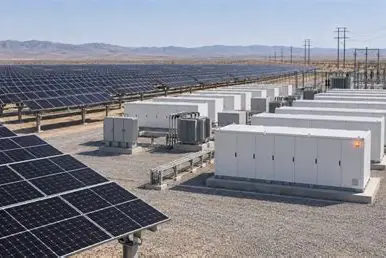
The U.S. Off-Grid Solar Energy Market is witnessing robust growth as consumers, businesses, farms, and remote facilities increasingly seek reliable alternatives to conventional grid power. The United States has surpassed 250 GW of installed solar capacity and deployed more than 30 GW of utility-scale battery energy storage capacity, creating a strong foundation for off-grid energy solutions. Additionally, over 140 million housing units and thousands of remote agricultural, telecommunications, and industrial sites are exploring solar-plus-storage systems to enhance resilience against grid outages and rising electricity costs. Increasing climate-related disruptions, expanding microgrid deployments, and growing adoption of battery-backed solar systems are accelerating demand for independent, sustainable, and cost-effective off-grid power solutions across the country.
Key Market Drivers for the US Off-Grid Solar Energy Market
Rising Grid Outages and Extreme Weather Events Accelerate Off-Grid Adoption
Increasing frequency of wildfires, hurricanes, winter storms, and grid disruptions is driving demand for independent power solutions across the United States. According to the U.S. Energy Information Administration (EIA), electricity customers experience billions of outage-hours annually, with weather-related events accounting for the majority of major service interruptions. As a result, homeowners, farms, telecommunications operators, and businesses are increasingly investing in off-grid solar-plus-storage systems to ensure uninterrupted power supply. The growing emphasis on energy resilience is making off-grid solar a viable alternative in both remote and grid-connected regions.
Expanding Battery Storage Capacity Improves Off-Grid System Economics
The rapid growth of energy storage deployment is significantly enhancing the viability of off-grid solar systems. The United States has installed more than 30 GW of utility-scale battery storage capacity, while battery prices have declined by more than 80% over the past decade. Improved battery performance enables off-grid users to store excess solar generation and maintain reliable electricity during nighttime hours or prolonged weather disruptions. These advancements are accelerating adoption across residential properties, rural communities, mobile applications, remote industrial facilities, and microgrid projects.
Strong Solar Deployment and Rural Energy Demand Create New Opportunities
The U.S. has surpassed 250 GW of installed solar capacity, making solar energy one of the fastest-growing sources of electricity generation nationwide. In addition to utility-scale projects, demand is increasing for off-grid systems serving agricultural operations, ranches, telecommunications towers, national parks, remote cabins, military facilities, and recreational vehicles. Furthermore, the United States has more than 140 million housing units and millions of acres of agricultural land, creating a substantial addressable market for decentralized solar power systems. The combination of falling equipment costs, increasing energy prices, and growing demand for self-sufficiency is expected to continue driving investment in off-grid solar solutions across diverse end-user segments.
Government Initiatives Supporting the US Off-Grid Solar Energy Market
The U.S. government continues to support solar and energy storage deployment through the Inflation Reduction Act (IRA), Department of Energy programs, and various rural electrification initiatives. Federal tax credits, energy resilience funding, and support for distributed energy resources are encouraging investment in standalone solar systems and battery storage technologies. Additionally, growing emphasis on grid resilience and disaster preparedness is creating favorable conditions for off-grid energy adoption across residential, commercial, agricultural, and public-sector applications.
Competitive Landscape of the US Off-Grid Solar Energy Market
The US Off-Grid Solar Energy Market is characterized by increasing innovation in solar modules, battery storage systems, hybrid energy solutions, smart energy management platforms, and microgrid technologies. Competition is driven by system efficiency, battery performance, installation flexibility, lifecycle costs, and remote monitoring capabilities. Market participants are focusing on integrated solar-plus-storage systems, modular deployment models, and intelligent energy-management solutions to address the growing demand for reliable off-grid power across multiple end-use sectors.
Major Challenges Facing the US Off-Grid Solar Energy Market
High Initial System Costs Remain a Barrier
Although solar and battery costs have declined significantly over the last decade, off-grid systems still require substantial upfront investment in panels, batteries, inverters, and energy management equipment. System sizing and storage requirements can further increase project costs.
Weather Dependency and Storage Requirements
Off-grid solar systems rely heavily on sunlight availability and battery capacity. Ensuring consistent power supply during extended periods of low solar generation requires adequate storage sizing, backup generation options, and careful energy management.
Future Outlook
The U.S. Off-Grid Solar Energy Market is expected to witness strong growth through 2035, supported by the country’s 250 GW+ installed solar capacity, 30 GW+ utility-scale battery storage capacity, and increasing investments in distributed energy resources. More than 140 million housing units and thousands of remote agricultural, telecommunications, military, and industrial facilities represent significant opportunities for off-grid solar deployment. Additionally, the rapid expansion of microgrids, community resilience projects, and EV charging infrastructure is expected to strengthen demand for solar-plus-storage systems. As battery costs continue to decline and climate-related grid disruptions increase, off-grid solutions will become increasingly attractive for ensuring energy independence, reliability, and long-term cost savings across residential and commercial applications.
Consultants at Nexdigm, in their latest publication “US Off-Grid Solar Energy Market Outlook to 2035,” analyse the sector By System Architecture (Pico-Solar Lighting Kits, DC-Coupled Solar Lanterns and Portable Power Stations), By Storage Technology (Lithium-Ion Chemistries and Lead-Acid Deep Cycle) and By End User (Residential, Commercial and Industrial).
Nexdigm suggests that businesses in the US Off-Grid Solar Energy Industry prioritize integrated solar-plus-storage solutions, advanced battery technologies, AI-enabled energy management platforms, and modular microgrid systems to capitalize on the country’s 250 GW+ solar capacity, growing demand for energy resilience, expanding battery storage deployments, and increasing adoption of independent power solutions across residential, agricultural, commercial, and remote infrastructure applications.
To take the next step, simply visit our Request a Consultation page and share your requirements with us.
Harsh Mittal
+91-8422857704