
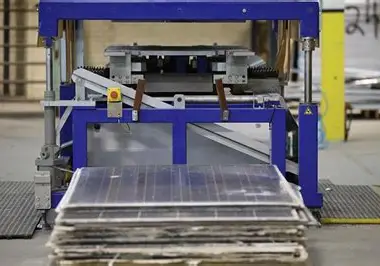
The U.S. solar industry is rapidly expanding beyond power generation into sustainable end-of-life asset management, positioning solar panel recycling as a critical component of the renewable energy ecosystem. The United States surpassed 250 GW of cumulative installed solar capacity in 2025, enough to power more than 41 million homes, while solar accounted for nearly 70% of all new electricity-generating capacity added during the year. As millions of photovoltaic modules approach retirement over the coming decade, the demand for recycling and material recovery solutions is accelerating. With growing emphasis on circular economy principles, resource conservation, and waste reduction, the U.S. Solar Panel Recycling Market is expected to witness significant growth as utilities, commercial operators, and residential system owners increasingly adopt responsible panel disposal and recycling practices.
Key Market Drivers for the U.S. Solar Panel Recycling Market
Surging Volumes of End-of-Life Solar Panels Create a Strong Recycling Need
The rapid expansion of solar energy installations across the United States is creating a substantial future stream of end-of-life photovoltaic modules. The country has exceeded 250 GW of installed solar capacity in 2025, compared to less than 100 GW just a few years ago, significantly increasing the number of panels that will eventually require responsible disposal and recycling. Industry assessments indicate that cumulative solar panel waste in the U.S. could exceed 1 million metric tons by 2030, driven by aging utility-scale projects, weather-related panel replacement, and technology upgrades. This growing waste stream is accelerating investment in collection, dismantling, and material recovery infrastructure nationwide.
Record Solar Installations Expand the Future Recycling Pipeline
The continued deployment of solar power remains one of the strongest long-term drivers for the recycling industry. In 2025, solar accounted for nearly 70% of all newly added electricity-generating capacity in the United States, reinforcing its position as the country’s fastest-growing power source. Utility-scale solar projects, commercial rooftop systems, and residential installations are expanding across states such as Texas, California, Florida, and Arizona. As these assets progress through their operational lifecycles, demand for recycling, refurbishment, and component recovery services will increase substantially, creating sustained opportunities for recycling providers through 2035 and beyond.
Rising Focus on Resource Recovery and Circular Economy Practices
Growing emphasis on sustainability and resource efficiency is encouraging stakeholders to recover valuable materials from retired solar panels rather than sending them to landfills. Modern solar modules contain recoverable materials such as glass, aluminum, silicon, copper, and silver, with advanced recycling processes capable of recovering up to 95% of certain panel materials by weight. As utilities, corporations, and renewable energy developers strengthen ESG commitments and pursue circular economy strategies, solar panel recycling is becoming an increasingly important component of long-term asset management and environmental compliance programs across the United States.
Government Initiatives Supporting the U.S. Solar Panel Recycling Market in 2026
The U.S. government is strengthening the foundation for solar panel recycling through policies that promote clean energy deployment, domestic manufacturing, and circular economy practices. The Inflation Reduction Act (IRA) continues to channel billions of dollars into renewable energy investments, while the U.S. Department of Energy (DOE) supports research into photovoltaic sustainability and end-of-life management solutions. With the nation surpassing 250 GW of installed solar capacity in 2025 and annual solar additions exceeding 50 GW, policymakers are increasingly focusing on waste management and resource recovery. Several states, including California, Washington, and New Jersey, have introduced or expanded solar panel recycling and stewardship initiatives to address the expected rise in retired PV modules over the next decade.
Competitive Landscape of the U.S. Solar Panel Recycling Market in 2026
The U.S. solar panel recycling market remains in a growth phase, characterized by specialized recyclers, waste-management service providers, material recovery firms, and renewable-energy infrastructure companies. Competition is driven by processing efficiency, material recovery rates, regulatory compliance, and nationwide collection capabilities. As solar deployment accelerates, companies are investing in advanced recycling technologies capable of recovering valuable materials such as glass, aluminum, silicon, copper, and silver, with recovery rates reaching up to 90-95% by weight for certain panel components. Growing solar waste volumes and increasing sustainability requirements are encouraging market participants to expand recycling capacity, improve logistics networks, and develop cost-effective solutions for utility-scale, commercial, and residential solar assets.
Major Challenges Facing the U.S. Solar Panel Recycling Industry
High Processing Costs and Economic Viability
Despite growing demand, recycling solar panels can remain more expensive than conventional disposal methods in certain regions. Collection logistics, transportation expenses, and material separation processes can impact profitability. Improving recycling economics and expanding large-scale processing facilities remain key priorities for industry stakeholders.
Regulatory and Infrastructure Gaps
The U.S. solar recycling ecosystem is still developing, with regulations varying across states. Limited recycling infrastructure in some regions can increase transportation costs and operational complexity. Establishing standardized recycling practices and expanding nationwide collection networks will be critical to supporting future market growth.
Future Outlook
Looking ahead to 2035, the U.S. Solar Panel Recycling Market is expected to expand rapidly as solar installations continue to surge and aging photovoltaic (PV) systems begin reaching end-of-life. The U.S. added a record 50 GW of new solar capacity in 2024, bringing cumulative installed solar capacity to approximately 236 GW, with projections indicating growth to 739 GW by 2035. As millions of panels approach retirement over the next decade, demand for recycling and material recovery services will increase significantly. Growth will be driven by advancements in automated recycling technologies, recovery of valuable materials such as glass, aluminum, silicon, and silver, and stronger sustainability regulations, creating substantial opportunities for recycling firms through 2035.
Consultants at Nexdigm, in their latest publication “US Solar Panel Recycling Market Outlook to 2035,” analyse the sector By Solar Panel Technology (Mono-Crystalline PERC Panels, Poly-Crystalline Standards Panels and Heterojunction Cells), By End-User Sector (Utility-Scale Installations and Residential Rooftop Systems) and By Recycling Recovery Method (Mechanical Crushing and Separation, Thermal Delamination Processes and Chemical Leaching and Refining).
Nexdigm suggests that businesses in the U.S. Solar Panel Recycling Market prioritize advanced recycling technologies, material recovery optimization, and efficient collection networks to capitalize on rising solar panel waste volumes, expanding renewable energy deployment, and increasing regulatory focus on sustainable end-of-life solar asset management through 2035.
To take the next step, simply visit our Request a Consultation page and share your requirements with us.
Harsh Mittal
+91-8422857704