
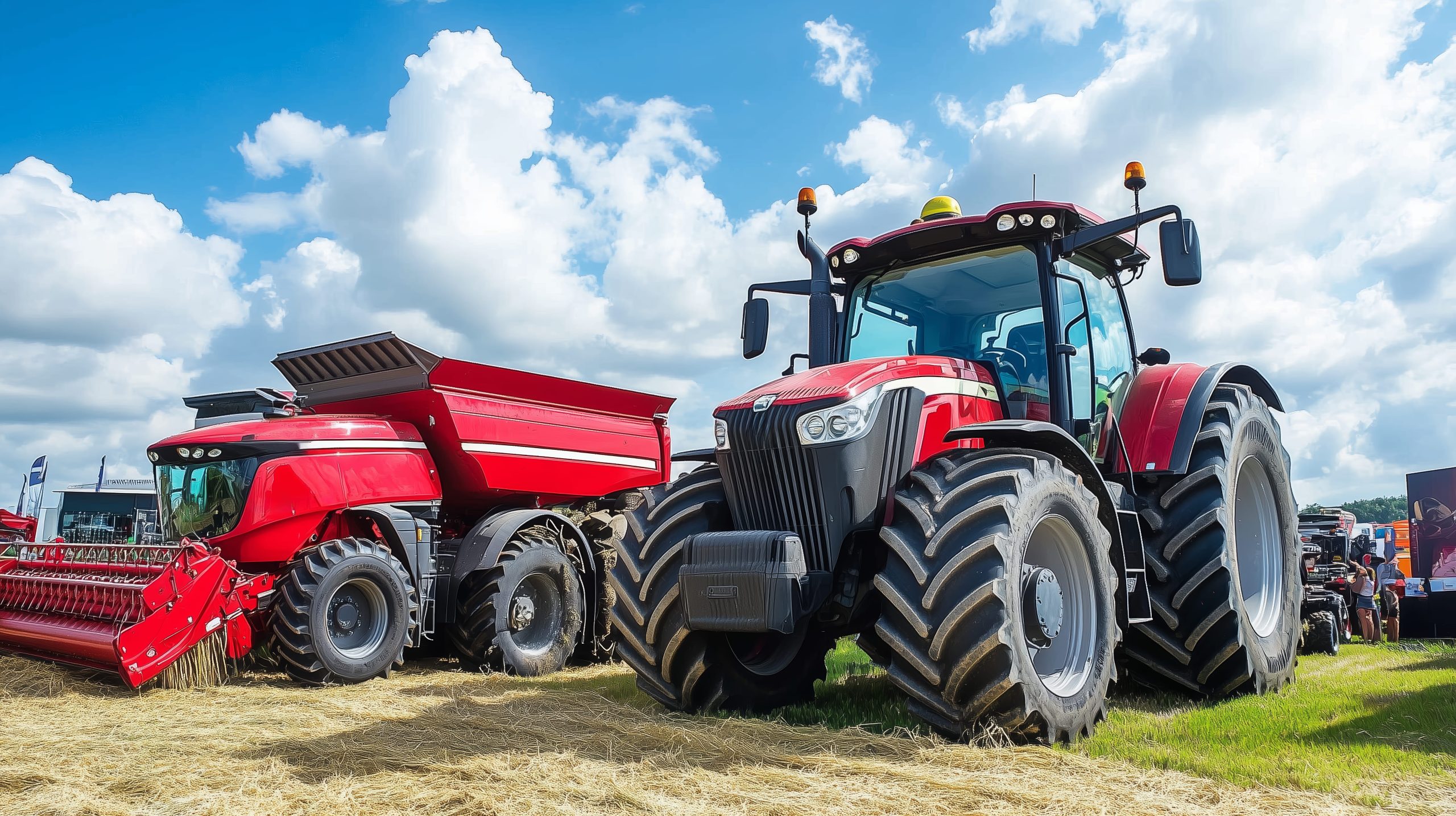
The USA agricultural machinery market is entering a new phase of transformation as farmers adapt to precision agriculture, automation, and sustainability-driven practices. As of 2026, the United States remains one of the largest agricultural producers globally, supported by over 880 million acres of farmland. High mechanization rates, large farm sizes, and advanced agri-tech adoption continue to shape equipment demand. However, rising input costs, labor shortages, and climate variability are influencing purchasing behavior, encouraging farmers to invest in technologically advanced and fuel-efficient machinery. The market is witnessing strong integration of GPS-enabled systems, telematics, and data-driven farm management solutions. Over the next decade, replacement demand, smart farming, and automation are expected to drive steady growth in the agricultural machinery market through 2035.
What’s Driving the Agricultural Machinery Market in the USA?
Rising Adoption of Precision Agriculture
Precision farming technologies are significantly reshaping equipment demand across the United States. Farmers are increasingly investing in GPS-guided tractors, variable-rate applicators, autonomous harvesters, and smart irrigation systems to improve productivity and reduce input wastage. Advanced machinery integrated with sensors and data analytics enables real-time monitoring of soil conditions, crop health, and yield forecasts. This trend is particularly strong in large-scale corn, soybean, and wheat farms across Midwest states. As profit margins tighten, technology-enabled efficiency gains are becoming critical, thereby stimulating demand for high-value agricultural machinery.
Labor Shortages and Automation
Persistent farm labor shortages are accelerating the shift toward automation. Rising wage costs and seasonal labor availability challenges are encouraging growers to deploy self-propelled equipment, robotic milking systems, and autonomous tractors. Equipment manufacturers are expanding their portfolios to include semi-autonomous and fully autonomous solutions. Automation not only reduces dependency on manual labor but also enhances operational precision and reduces long-term costs. Over time, farms are expected to transition toward fleet digitization and connected machinery ecosystems.
Government Support and Sustainability Goals
Federal support programs and sustainability initiatives are playing a key role in shaping machinery demand. Incentives for conservation practices, low-emission equipment, and climate-smart agriculture are encouraging farmers to upgrade older fleets. Programs under the Farm Bill and USDA-backed financing schemes provide credit support for capital-intensive machinery purchases. Additionally, sustainability commitments across the agricultural value chain are pushing adoption of fuel-efficient engines, electric utility vehicles, and equipment compatible with regenerative farming practices. These policy-backed initiatives are likely to support stable market expansion through 2035.
Market Competition and Key Players
The USA agricultural machinery market is moderately consolidated, with global OEMs dominating large equipment categories such as tractors, harvesters, and combines. Leading players include Deere & Company, CNH Industrial, AGCO Corporation, and Kubota Corporation. These companies compete through technological innovation, dealer network expansion, financing solutions, and aftermarket services. Strategic investments in autonomous technology, artificial intelligence, and data platforms are becoming key differentiators. Manufacturers are also focusing on retrofit solutions and subscription-based digital services to strengthen recurring revenue streams.
High Equipment Costs and Cyclical Demand
Despite strong technological momentum, high upfront costs remain a challenge for small and mid-sized farms. Advanced tractors and combine harvesters equipped with automation features require significant capital investment. The market is also cyclical, influenced by commodity prices, farm income levels, and interest rates. During periods of lower crop prices, farmers often delay machinery replacement, impacting short-term sales volumes. Additionally, supply chain disruptions and component shortages in recent years have highlighted vulnerabilities in global sourcing networks.
Future Outlook
The USA agricultural machinery market is projected to experience steady, innovation-led growth through 2035. Replacement demand will remain a key driver as aging fleets are upgraded with connected and autonomous systems. By 2035, a significant share of large farms is expected to deploy semi-autonomous or fully autonomous tractors, supported by advancements in AI, robotics, and real-time farm analytics. Electrification of compact and utility tractors is also likely to gain traction, particularly in specialty farming and horticulture. Sustainability, precision agriculture, and digital integration will define the next phase of market expansion. Equipment manufacturers are expected to strengthen partnerships with agri-tech firms, expand data-driven services, and introduce flexible financing models to improve affordability. While market growth may fluctuate with commodity cycles, the long-term outlook remains positive, driven by efficiency needs, labor constraints, and technological evolution.
Consultants at Nexdigm, in their latest publication “USA Agricultural Machinery Market Outlook to 2035”, analyzed the market by Product Type (Tractors, Harvesters, Planting Equipment, Sprayers, Haying Machinery), By Horsepower (Below 50 HP, 50–150 HP, Above 150 HP), By Application (Crop Farming, Dairy & Livestock, Horticulture, Specialty Farming), and By Distribution Channel (Authorized Dealers, Independent Dealers, Online Platforms). Nexdigm believes that businesses should prioritize automation-ready platforms, digital service integration, and financing innovation, while focusing on sustainability-compliant machinery to remain competitive in the evolving U.S. agricultural landscape through 2035.
To take the next step, simply visit our Request a Consultation page and share your requirements with us.
Harsh Mittal
+91-8422857704