
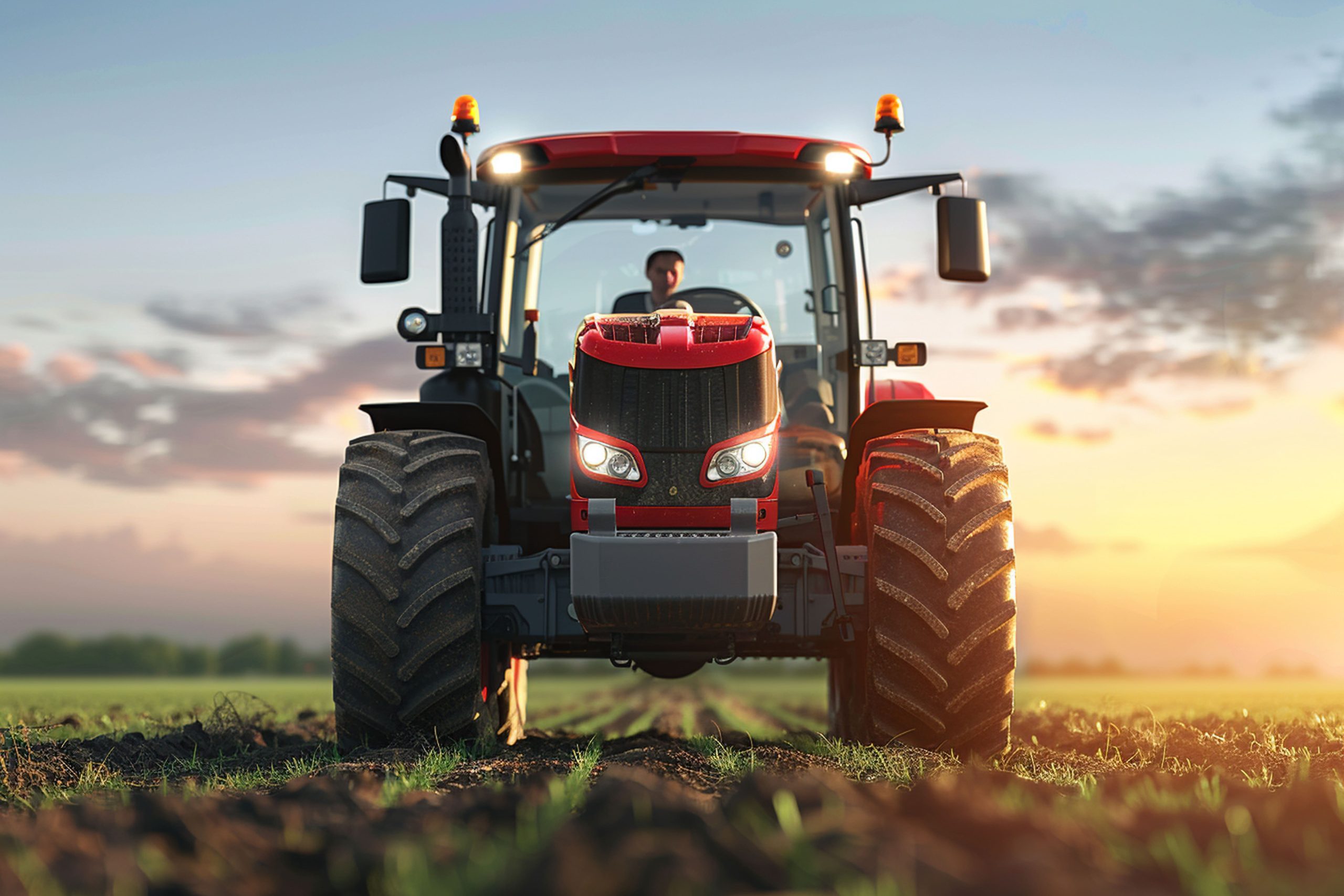
The United States agricultural tractor market is entering a new phase of transformation as farmers adapt to precision agriculture, labor shortages, and evolving sustainability mandates. As of 2026, the U.S. remains one of the largest tractor markets globally, supported by extensive arable land and high mechanization rates. However, replacement demand now outweighs first-time purchases, as most large farms are already mechanized. Rising adoption of smart farming technologies, increasing horsepower requirements for large-scale operations, and policy support for climate-resilient agriculture are shaping purchasing decisions. While global OEMs continue to dominate, domestic manufacturing and technological integration are redefining competition in the market.
What’s Driving the Agricultural Tractor Market in the USA?
Adoption of Precision Agriculture and Smart Technologies
U.S. farmers are increasingly integrating GPS-guided steering, telematics, IoT sensors, and AI-based analytics into their farm operations. Modern tractors are no longer just mechanical equipment; they are data-enabled platforms that enhance productivity and optimize input usage. Autonomous and semi-autonomous tractor models are gaining traction, particularly in large farms across the Midwest. This shift toward precision farming is boosting demand for technologically advanced and higher-value tractors.
Expansion of Large-Scale Farming Operations
The consolidation of farmland and the growth of corporate farming structures are increasing demand for high-horsepower tractors above 100 HP. States such as Iowa, Illinois, Nebraska, and Kansas continue to witness strong replacement demand for row-crop tractors used in corn and soybean cultivation. Large-scale farms prioritize performance efficiency, fuel optimization, and reduced downtime, supporting premium tractor sales.
Labor Shortages and Automation Push
The persistent shortage of skilled farm labor in rural America is accelerating mechanization. Automation-enabled tractors reduce dependency on manual labor and enhance operational efficiency during critical planting and harvesting windows. This trend is expected to intensify through 2035 as workforce constraints remain structural rather than cyclical.
Government-Led Initiatives Supporting Mechanization
Federal support programs continue to influence tractor demand across the U.S. The Farm Bill provisions and subsidies administered by the United States Department of Agriculture (USDA) promote farm modernization, conservation practices, and climate-smart agriculture. Incentives for low-emission engines, sustainable land management, and energy-efficient equipment upgrades are encouraging farmers to replace aging tractor fleets. Additionally, grants and loan guarantees under rural development programs are supporting small and mid-sized farmers in acquiring advanced machinery. Sustainability-linked financing and carbon credit programs are expected to further stimulate equipment upgrades in the coming decade.
Market Competition and Key Players
The U.S. agricultural tractor market is moderately consolidated, with a few global OEMs dominating sales through strong dealer networks and financing arms. Key players include John Deere, CNH Industrial (parent company of New Holland Agriculture and Case IH), AGCO Corporation (owner of Massey Ferguson and Fendt), and Kubota Corporation. John Deere continues to lead in precision agriculture integration, investing heavily in autonomous tractor technology and AI-powered farm management platforms. CNH Industrial and AGCO are expanding smart farming ecosystems, while Kubota maintains strong presence in the sub-100 HP segment catering to small farms, orchards, and specialty crop growers. Dealer networks play a crucial role in influencing purchase decisions, offering bundled services including financing, leasing, extended warranties, and predictive maintenance solutions.
Cyclical Farm Income Volatility
Tractor demand in the United States remains highly sensitive to fluctuations in farm income, which is largely influenced by commodity prices such as corn, wheat, and soybeans. Changes in global trade flows, weather conditions, export demand, and input costs can significantly impact crop prices and overall profitability. When farm margins decline, capital expenditure on high-value equipment like tractors is often postponed. As a result, equipment replacement cycles extend during downturns, creating periodic slowdowns in tractor sales across regions.
Future Outlook
The USA agricultural tractor market is expected to witness steady but technology-driven growth through 2035. Replacement demand will remain the primary growth driver, with increasing penetration of autonomous and hybrid tractors. By 2035, a significant share of newly sold tractors is expected to feature advanced connectivity, AI-assisted navigation, and sustainability-focused engine systems. The market is likely to shift further toward high-horsepower and smart tractors as large-scale commercial farming continues to expand. At the same time, compact tractors will maintain stable demand in horticulture, livestock farming, and specialty crop production.
Consultants at Nexdigm, in their latest publication “USA Agricultural Tractor Market Outlook to 2035,” analyzed the market by Horsepower (Below 50 HP, 50–100 HP, Above 100 HP), By Drive Type (2WD and 4WD), By Application (Row Crop, Orchard, Livestock, Utility), and By Region (Midwest, South, West, Northeast). Nexdigm believes that businesses should prioritize precision agriculture integration, flexible financing models, and aftermarket service expansion while aligning product development with sustainability and automation trends shaping U.S. agriculture through 2035.
To take the next step, simply visit our Request a Consultation page and share your requirements with us.
Harsh Mittal
+91-8422857704