
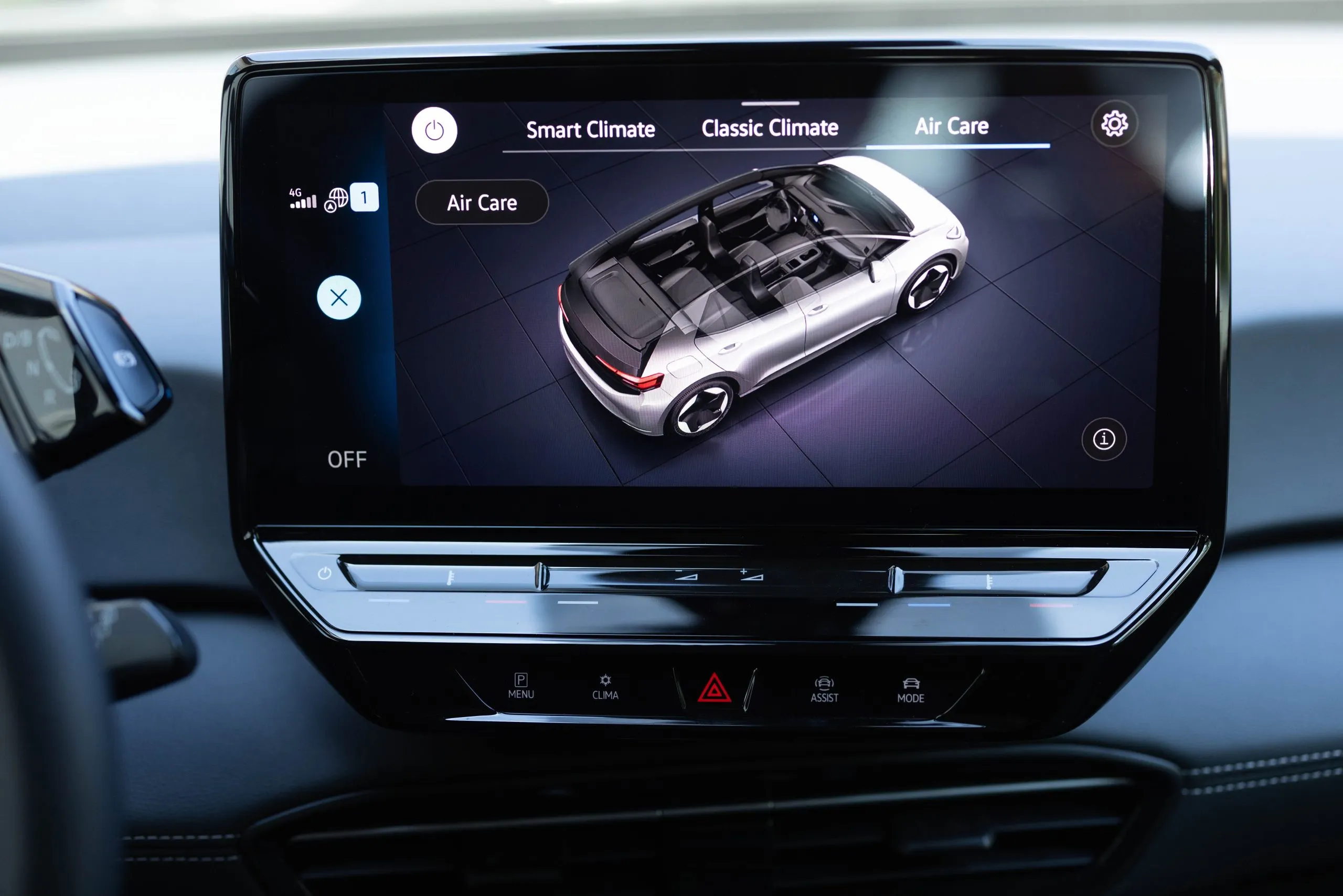
The automotive display landscape in the United States has changed noticeably over the last few years. What used to be a simple dashboard with analog dials has turned into a screen-heavy cockpit that resembles a consumer electronics device more than a traditional car interior. By 2025, it had already become common to see vehicles equipped with two or more displays, often stretching across the dashboard. This shift is not just about aesthetics. It reflects how drivers interact with vehicles today – navigation, entertainment, vehicle diagnostics, and even climate controls are now routed through digital interfaces. Automakers are treating displays as a key differentiator. Screen size, clarity, and responsiveness are now part of the buying decision, especially in mid to premium segments. The push toward electric vehicles and connected features has only accelerated this trend, making the US one of the more active markets for automotive display innovation.
What’s Driving the Automotive Displays Market in the USA?
Connected Features Becoming Standard, Not Optional
In-car connectivity has moved from being a premium feature to something buyers expect even in entry-level models. Systems powered by platforms like Apple CarPlay and Android Auto are now almost baseline requirements. This shift has forced automakers to rethink screen design. Smaller, resistive touchscreens no longer meet user expectations. Drivers want interfaces that behave like their smartphones, quick response times, clean layouts, and minimal lag. In practice, this has led to larger capacitive displays and better integration between hardware and software. Interestingly, while more features are being added, poorly designed interfaces can frustrate users, so usability has become just as important as functionality.
Electric Vehicles Redefining Cabin Design
Electric vehicles have quietly reshaped how interiors are designed. Without the constraints of traditional engine layouts, manufacturers have more flexibility to experiment with cabin layouts. Companies like Tesla, Inc. took an early lead by removing most physical buttons and centralizing controls into a single large display. Other automakers have followed, though not all with the same level of minimalism. Some still retain physical controls for essential functions, acknowledging that fully digital interfaces are not always practical. This balance between digital and tactile controls remains an ongoing debate within the industry. Still, the broader direction is clear – digital cockpits are becoming the norm rather than the exception.
Rapid Progress in Display Technology
Behind the scenes, display technology itself has advanced significantly. Suppliers such as LG Display and Samsung Display have pushed innovations in OLED and flexible panels tailored for automotive use. These screens offer deeper contrast, better visibility in varying lighting conditions, and more design flexibility. Curved displays and pillar-to-pillar screens are now appearing in newer models, creating a more immersive experience. That said, these technologies are not without trade-offs. Higher costs and durability concerns, especially in extreme temperatures, remain practical considerations for automakers.
Government Regulations and Safety Integration
Safety remains a central concern in how displays are implemented. Guidelines from the National Highway Traffic Safety Administration have pushed manufacturers to think carefully about driver distraction. Large screens can be helpful, but poorly designed interfaces can take attention away from the road. As a result, there is a noticeable shift toward voice commands, simplified menus, and head-up displays that project information directly into the driver’s line of sight. In real-world driving conditions, these features often make a bigger difference than screen size alone.
Market Competition and Key Players
Competition in this space is intense, and it is not limited to automakers. Technology suppliers play an equally important role. Companies such as Visteon Corporation, Continental AG, Panasonic Automotive Systems, and Robert Bosch GmbH are heavily involved in shaping next-generation cockpit systems. Visteon, for example, has focused on consolidating multiple display functions into a single control unit, which helps reduce hardware complexity. Continental has taken a more design-oriented approach with wide, curved displays that span across the dashboard. Each player is approaching the market differently, but the goal remains similar – deliver a seamless and intuitive user experience.
Balancing Innovation with Cost and Practicality
One of the more persistent challenges lies in cost management. Advanced displays, particularly OLED and emerging microLED panels, are still expensive to produce at scale. This raises vehicle prices, which can limit adoption in cost-sensitive segments. There is also the issue of reliability. Automotive environments are harsh – temperature fluctuations, vibration, and long usage cycles can affect display performance over time. On top of that, integrating multiple screens into a single system without glitches is not as straightforward as it sounds. These practical hurdles often slow down how quickly new technologies reach mass-market vehicles.
Future Outlook
Looking ahead, automotive displays in the US are likely to become even more central to the driving experience. Larger screens, augmented reality head-up displays, and more personalized interfaces will gradually make their way into mainstream models. What stands out is the growing importance of software. Displays are no longer just hardware components; they are platforms for interaction. Features such as gesture controls and AI-driven personalization are already being tested and refined. Still, not every innovation will succeed. Some features may prove unnecessary or even distracting in everyday driving.
Consultants at Nexdigm, in their report “USA Automotive Displays Market Outlook to 2030,” suggest that companies should pay closer attention to usability and cost efficiency rather than focusing solely on adding more features. The study segments the market by Display Type, Application, and Vehicle Type, and highlights that firms combining strong hardware capabilities with intuitive software design are more likely to stand out in an increasingly competitive space.
To take the next step, simply visit our Request a Consultation page and share your requirements with us.
Harsh Mittal
+91-8422857704