
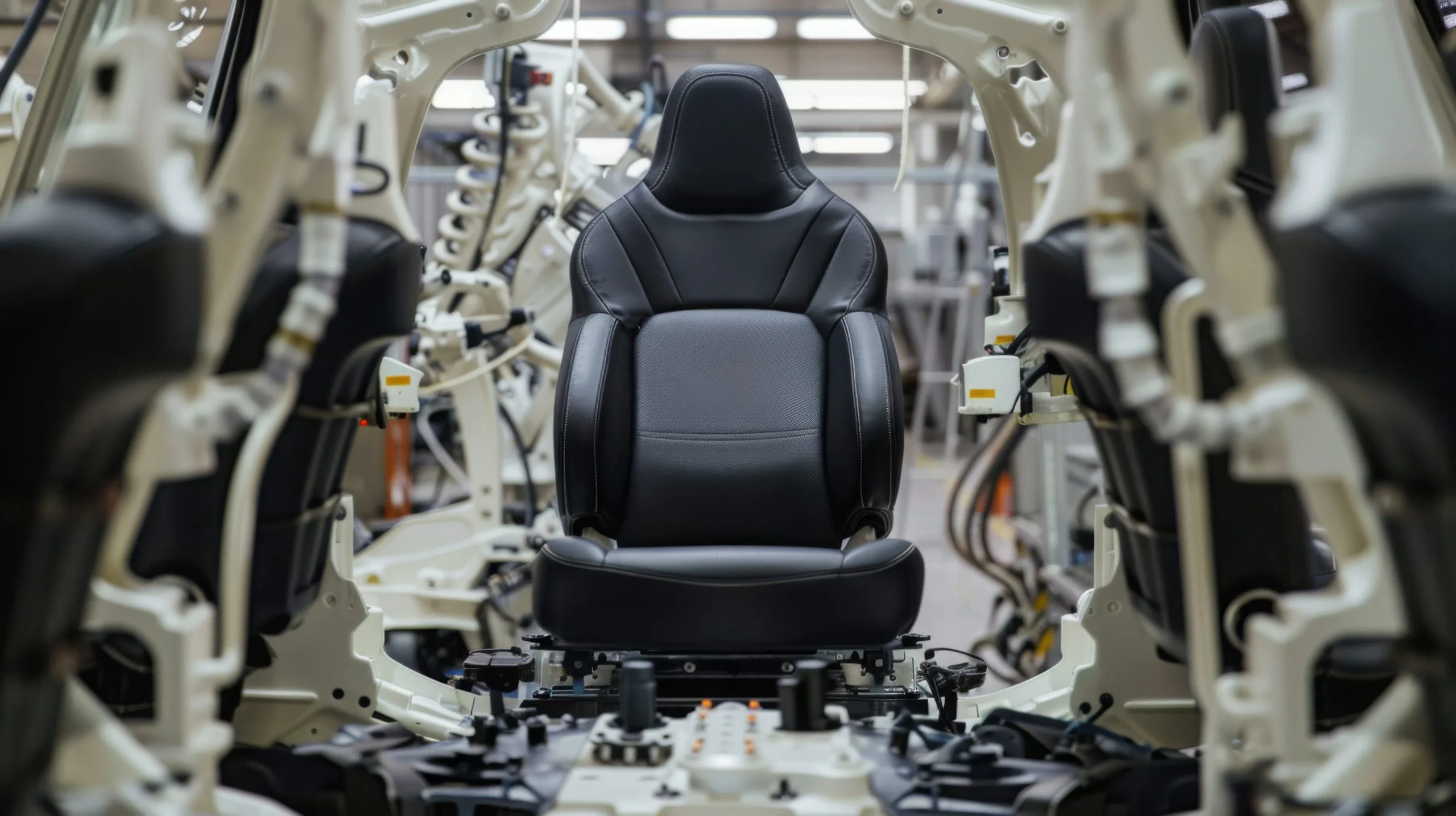
The USA automotive seats market is expected to grow steadily as we move ahead, as automakers put more focus on comfort, safety, lighter materials, and improved cabin design. The broader North America automotive seat market is projected to grow from USD 20.32 billion to USD 25.68 billion in the coming years, at a 4.79% CAGR. In the U.S., demand is strongly connected to SUV, pickup, crossover, EV, and premium vehicle sales. Seats are no longer viewed as simple interior components. They now play a bigger role in how drivers and passengers experience comfort, safety, technology, and overall vehicle quality.
Factors affecting the USA Automotive Seats Market
Drivers Want More Comfort and Better Cabin Features
Comfort is one of the main reasons the USA automotive seats market is growing. U.S. buyers are increasingly choosing SUVs, pickups, and premium vehicles where seating quality can strongly influence the purchase decision. Features such as heated seats, ventilated seats, power adjustment, lumbar support, memory settings, massage functions, and premium upholstery are becoming more common. This shift is not limited to luxury vehicles. Many mid-range models now offer comfort features that were once found only in higher-end cars. Automakers are using seating design to make cabins feel more refined, practical, and enjoyable for daily driving.
EVs Are Changing How Seats Are Designed
Electric vehicles are changing the way automakers think about interiors. Because EVs often have flatter floors and different battery layouts, designers have more flexibility to improve cabin space, seating position, storage, and passenger comfort. This is making seats an important part of EV design strategy. Last year, hybrid, battery-electric, and plug-in hybrid vehicles made up about 22% of U.S. light-duty vehicle sales. As electrified vehicles gain more share, seating systems must become lighter, more efficient, and better suited to new vehicle platforms. EV seats also need to manage energy use carefully. Features such as heating, ventilation, and power adjustment can affect battery efficiency, so suppliers are working on low-power comfort systems, thinner seat structures, lightweight frames, and materials that improve range without reducing comfort.
Safety and Smart Seating Are Becoming More Important
Seats are a key part of vehicle safety. They support seat belts, airbags, child-seat anchors, head restraints, occupant detection systems, and crash protection. As vehicles become more advanced, seats must work closely with other safety and electronic systems. Lightweighting is another major trend. Reducing seat weight can help improve fuel efficiency in gasoline vehicles and driving range in electric vehicles. To achieve this, manufacturers are using high-strength steel, aluminum, composites, and redesigned seat frames. Smart seating is also gaining attention. Future seats may include posture monitoring, automatic adjustment, biometric sensors, seat-position memory, and improved occupant detection. These features can make vehicles safer, more comfortable, and more personalized for each user.
US Government Policies Shaping Automotive Seat Innovation
Government safety rules have a major influence on the USA automotive seats market. Federal standards guide seat strength, head restraint design, seat belt anchorage, child restraint systems, and crash performance. These requirements encourage automakers and suppliers to keep improving seat safety and durability. Policies related to fuel efficiency and electrification also affect seat development. Automakers are under pressure to reduce vehicle weight and improve energy performance, which increases demand for lightweight seat frames, efficient heating systems, and advanced materials. As vehicles become safer, cleaner, and more connected, seating suppliers will need to design products that meet both regulatory requirements and consumer expectations.
Competing Environment of the USA Automotive Seats Market
The USA automotive seats market includes major seat manufacturers, foam suppliers, trim companies, electronics providers, material producers, and interior technology firms. Leading companies include Adient, Lear Corporation, Magna International, Toyota Boshoku, Forvia, TS Tech, and other OEM seating suppliers. Competition is becoming more focused on comfort, cost, weight reduction, safety, sustainability, and smart features. Automakers want suppliers that can support fast model launches, flexible vehicle platforms, and consistent quality across large production volumes. Companies with strong OEM relationships, local manufacturing capacity, advanced design capabilities, and expertise in EV seating are likely to hold a stronger position in the coming years.
Market Challenges Affecting US Automotive Seats Sector
Material Costs and Supply Chain Issues
One of the biggest challenges in the USA automotive seats market is the rising and changing cost of materials. Seats use many components, including steel, aluminum, foam, plastics, textiles, leather, synthetic leather, motors, sensors, and heating or ventilation systems. Any increase in these costs can put pressure on suppliers. Supply chain disruptions can also create delays because seats are closely linked to vehicle assembly schedules. If one component is unavailable, it can slow down production for an entire vehicle model. To manage this, suppliers will need stronger sourcing strategies, more local production options, and better cost control.
Balancing Comfort, Technology, Weight, and Price
Automakers want seats that are comfortable, safe, lightweight, durable, attractive, and affordable. Delivering all of these at the same time is difficult. Premium features such as ventilation, massage, memory settings, sensors, and power controls add cost and complexity. This creates a challenge for mass-market vehicles, where buyers want better features but still expect reasonable prices. Suppliers must find ways to offer advanced seating without making vehicles too expensive or too heavy. The companies that solve this balance well will have a clear advantage in the market.
Future Outlook
The USA automotive seats market is expected to remain on a positive path in the upcoming years. Growth will be supported by steady vehicle demand, strong SUV and pickup sales, EV adoption, premium interior trends, and consumer interest in comfort-focused cabin features. In the coming years, automotive seats are expected to become lighter, smarter, and more sustainable. More vehicles may include low-energy heating, posture sensing, automatic adjustment, recycled fabrics, bio-based materials, and improved safety sensors. Seats will continue to play a larger role in how consumers judge vehicle quality. Suppliers that can combine comfort, safety, affordability, lightweight design, and smart technology will be best positioned as the U.S. automotive industry moves toward more advanced and user-focused cabins.
Consultants at Nexdigm, in their latest publication USA Automotive Seats Market Outlook 2030, analyse the sector by System Type (Standard Manual Seats, Powered Adjustable Seats, Heated and Ventilated Seats, Memory and Massage Seats), by Platform Type (Passenger Cars, SUV and Crossover, Light Commercial Vehicles, Heavy Commercial Vehicles and Electric Vehicles).
Nexdigm suggests that businesses in the USA Automotive market should focus on supply chain resilience, cost optimization, regulatory compliance, and technology-led transformation. Companies should also invest in EV readiness, sustainable materials, localization strategies, and strategic partnerships to remain competitive as consumer expectations, safety standards, and mobility trends continue to evolve.
To take the next step, simply visit our Request a Consultation page and share your requirements with us.
Harsh Mittal
+91-8422857704