
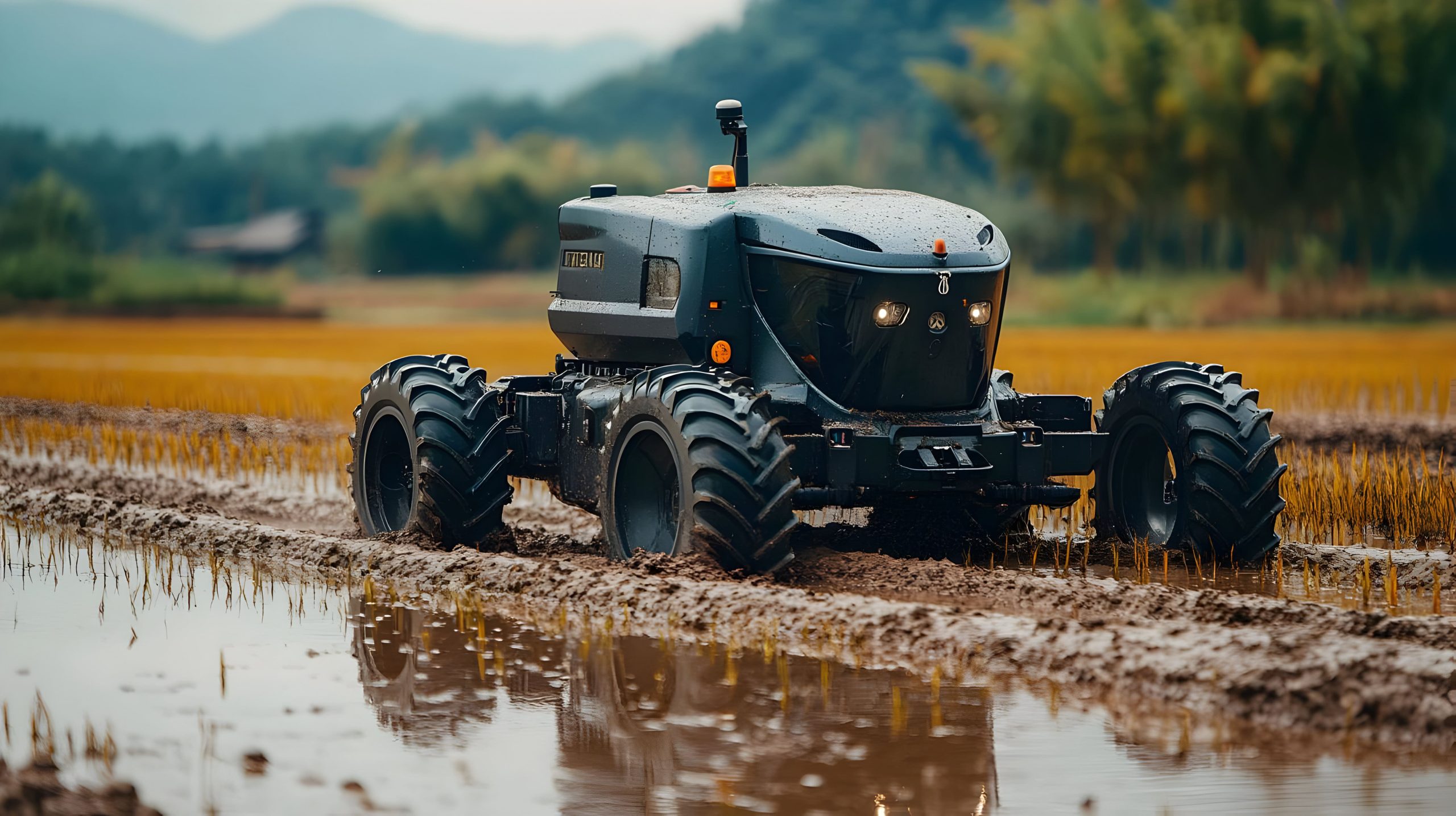
The US agricultural machinery market is entering a transformative phase as autonomous technologies reshape traditional farm operations. With rising labor shortages, increasing farm consolidation, and growing pressure to improve productivity, autonomous tractors are gaining momentum across large-scale farming states. As of 2026, autonomous and semi-autonomous tractors account for a small but rapidly expanding share of total tractor sales in the country. Major OEMs are integrating AI, GPS guidance, telematics, and machine vision into next-generation equipment to enable hands-free operations. The shift toward data-driven precision agriculture and sustainability goals is positioning autonomous tractors as a key pillar of the US farming ecosystem through 2035.
What’s Driving the Autonomous Tractor Market in the USA?
Persistent Farm Labor Shortages
The US agriculture sector continues to face acute labor shortages, particularly during planting and harvesting seasons. Aging farmer demographics and tightening immigration policies have intensified workforce constraints. Autonomous tractors allow farms to operate with minimal human intervention, enabling 24/7 fieldwork and reducing dependency on seasonal labor. This capability is particularly attractive for large corn, soybean, and wheat producers across Midwest states.
Advancements in Precision Agriculture Technologies
Autonomous tractors rely on high-accuracy GPS, LiDAR, onboard sensors, and AI-powered decision systems to perform tasks such as plowing, seeding, spraying, and harvesting with minimal overlap and reduced input wastage. Companies like John Deere have introduced fully autonomous tractor models equipped with computer vision and remote monitoring via mobile applications. Similarly, CNH Industrial and its brand Case IH are investing heavily in autonomous and driver-assist solutions. These innovations enhance operational efficiency while optimizing fuel consumption and input usage.
Rising Farm Consolidation and Scale Efficiency
Farm consolidation trends in the US are creating larger operational units that can justify higher capital expenditure on advanced machinery. Large commercial farms are increasingly investing in automation to maximize yield per acre and reduce operational variability. Autonomous tractors enable centralized fleet management, real-time data analytics, and predictive maintenance—features that align well with large-scale agribusiness models.
Government and Policy Support
Federal and state-level initiatives promoting smart farming and sustainable agriculture are indirectly supporting the adoption of autonomous tractors. Incentives for precision agriculture equipment under conservation and climate-smart agriculture programs encourage farmers to adopt technologies that reduce chemical overuse and soil degradation. Moreover, infrastructure investments in rural broadband connectivity are improving the feasibility of cloud-connected and remotely monitored farm equipment. As connectivity expands, autonomous machinery deployment is expected to accelerate, particularly in remote farming regions.
Market Competition and Technology Partnerships
The US autonomous tractor market is moderately concentrated, led by established agricultural machinery manufacturers and emerging agri-tech firms. AGCO Corporation is integrating autonomy solutions across its Fendt and Massey Ferguson brands, while startups are focusing on retrofit kits that convert conventional tractors into semi-autonomous units. Strategic collaborations between machinery manufacturers, AI startups, and semiconductor companies are shaping the innovation landscape. Investments in edge computing, advanced driver-assistance systems (ADAS), and robotics are intensifying competition. Over time, software capabilities and data integration platforms are expected to become key differentiators beyond hardware performance.
High Initial Investment Costs
Autonomous tractors carry significantly higher price tags than conventional models due to integration of advanced sensors, AI-driven software, GPS guidance, LiDAR systems, and cloud connectivity modules. For small and mid-sized farms, the substantial upfront capital requirement makes adoption financially challenging, particularly amid fluctuating commodity prices and uncertain return on investment timelines. Many farmers remain cautious until productivity gains are clearly demonstrated. To ease this burden, manufacturers and financial institutions are increasingly introducing flexible financing, leasing programs, subscription-based services, and equipment-as-a-service models.
Future Outlook
The USA autonomous tractor market is projected to witness robust growth through 2035, driven by rapid technological maturation and increasing economic viability. By 2035, autonomous capabilities are expected to become standard features in high-horsepower tractors, particularly in the above-100 HP category. Semi-autonomous and retrofit solutions are likely to penetrate mid-sized farms, broadening the adoption base. Artificial intelligence-driven agronomic insights, real-time weather adaptation, and swarm-based fleet coordination could redefine field operations over the next decade. As battery technology improves, electric autonomous tractors may gain traction, aligning with broader decarbonization goals in US agriculture.
Consultants at Nexdigm, in their latest publication “USA Autonomous Tractor Market Outlook to 2035,” analyzed the market by Horsepower (Below 50 HP, 50–100 HP, Above 100 HP), By Level of Autonomy (Semi-Autonomous, Fully Autonomous), By Application (Plowing, Seeding, Spraying, Harvesting), and By Farm Size (Small, Medium, Large Farms). Nexdigm believes that businesses should prioritize scalable autonomy platforms, flexible financing models, robust cybersecurity frameworks, and strategic technology partnerships to capitalize on the evolving US autonomous tractor landscape through 2035.
To take the next step, simply visit our Request a Consultation page and share your requirements with us.
Harsh Mittal
+91-8422857704