
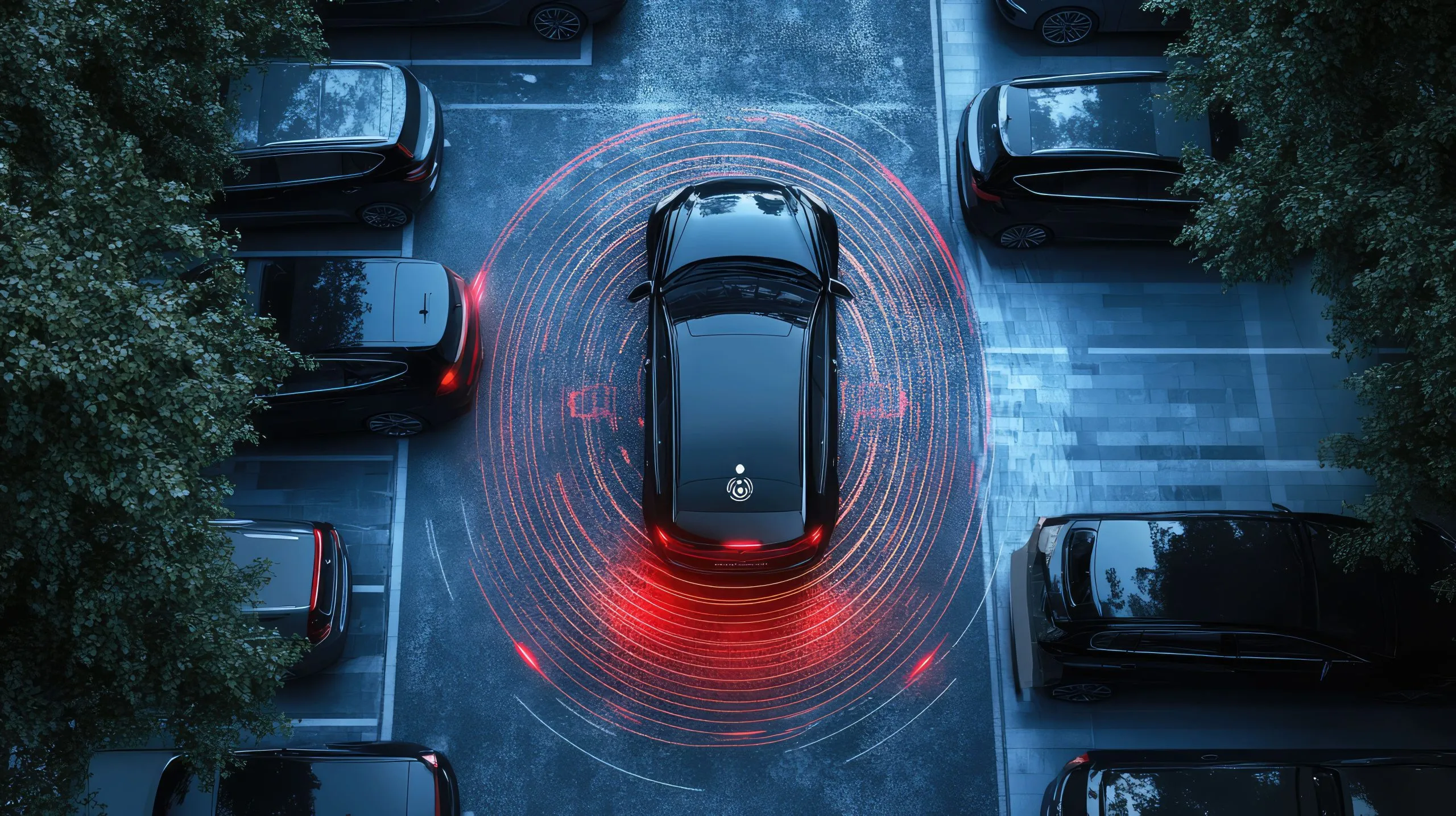
The USA collision avoidance systems market has moved well beyond being a niche part of the automotive industry. What was once limited to luxury vehicles is now steadily becoming a standard expectation across passenger cars, delivery vans, and even heavy-duty trucks. In 2026, road safety discussions in the United States are closely tied to technology adoption, especially as distracted driving and traffic congestion continue to create serious concerns. Automakers are under pressure from both regulators and consumers to make vehicles smarter and safer. At the same time, advances in sensors, AI-based software, and vehicle connectivity are making collision prevention systems more practical and commercially viable than they were a decade ago.
What’s Driving the Collision Avoidance Systems Market in the USA?
Wider Adoption of Advanced Driver Assistance Features
American consumers have become noticeably more aware of in-vehicle safety technology over the last few years. Features such as automatic emergency braking, lane keeping assistance, blind spot monitoring, and rear cross-traffic alerts are no longer viewed as premium add-ons. In practice, many buyers now compare safety technology packages before looking at engine specifications. Insurance companies have also played a role by offering lower premiums for vehicles equipped with advanced safety systems. This shift in consumer behavior has encouraged automakers to integrate collision avoidance features across mid-range vehicle segments instead of reserving them only for luxury models.
Electric and Autonomous Vehicle Development
The rise of electric vehicles has quietly accelerated the collision avoidance systems market as well. EV manufacturers often build their platforms around software-heavy architectures, making it easier to integrate advanced sensor systems and AI-assisted driving capabilities. Companies such as Tesla, General Motors, and Ford are investing heavily in semi-autonomous technologies where collision prevention becomes a core requirement rather than an optional feature. On the ground, autonomous vehicle testing in states like California, Arizona, and Texas continues to generate valuable driving data that helps refine obstacle detection and real-time decision-making systems. While fully autonomous driving still faces regulatory and technical hurdles, the supporting safety technologies are already finding mainstream adoption.
Growing Safety Concerns in Commercial Fleets
Fleet operators are approaching collision avoidance systems from a cost perspective as much as a safety one. A single road accident involving a commercial truck can lead to expensive repairs, insurance claims, delivery delays, and legal complications. Because of this, logistics providers and transport companies are increasingly fitting vehicles with forward collision warning systems, driver fatigue monitoring, and pedestrian detection tools. E-commerce expansion has only intensified this trend since delivery fleets now spend more time navigating dense urban environments. A common challenge for fleet managers is balancing technology costs with operational margins, but many have concluded that accident reduction justifies the investment over time.
Government Regulations and Safety Initiatives
Federal agencies in the United States continue to push automakers toward stronger safety standards. The National Highway Traffic Safety Administration has been particularly active in promoting automatic emergency braking systems and vehicle communication technologies designed to reduce collisions. Some state governments are also funding smart traffic infrastructure projects that support connected mobility solutions. Still, regulation remains uneven in certain areas, especially around autonomous driving policies. That uncertainty occasionally slows deployment timelines, even as manufacturers continue to invest aggressively in research and development.
Market Competition and Technological Innovation
Competition in the market is intense and increasingly technology-focused. Traditional automotive suppliers such as Robert Bosch GmbH, Continental AG, Denso Corporation, and ZF Friedrichshafen AG are competing alongside software and AI-focused firms like Mobileye and Aptiv. Sensor fusion has become a major area of focus, where radar, cameras, ultrasonic sensors, and LiDAR systems work together instead of operating independently. In reality, no single sensor technology performs perfectly in every weather or traffic condition. This is why manufacturers are experimenting with layered systems that improve reliability in rain, fog, or low-light environments.
High System Costs and Cybersecurity Risks
One issue that continues to limit broader adoption is cost. Advanced LiDAR systems, AI-powered processing units, and high-resolution cameras still add significant expense to vehicle production. For lower-priced cars, manufacturers often struggle to include sophisticated safety packages without affecting affordability. Cybersecurity is another growing concern. Connected vehicles exchange enormous amounts of data, and any vulnerability in software systems raises concerns about hacking or system manipulation. As vehicles become more software-dependent, automakers may need to devote as much attention to digital security as mechanical reliability.
Future Outlook
By 2030, collision avoidance technologies will likely become standard in most new vehicles sold across the United States, particularly as safety regulations tighten further. The market will probably see stronger integration between vehicles, traffic infrastructure, and cloud-based navigation systems. AI-assisted predictive safety tools capable of identifying risks before drivers even notice them could become more common in passenger and commercial fleets alike. At the same time, affordability will remain a deciding factor. The companies that manage to deliver reliable safety technology at lower cost are likely to gain the strongest market traction over the next several years.
Consultants at Nexdigm, in their latest publication “USA Collision Avoidance Systems Market Outlook to 2030”, analyzed the market by Technology (Radar-Based Systems, Camera-Based Systems, LiDAR Systems, Ultrasonic Sensors), By Application (Passenger Vehicles, Commercial Vehicles, Autonomous Vehicles), and By End User (OEMs, Aftermarket, Fleet Operators). Nexdigm believes that businesses should prioritize AI-enabled safety technologies, sensor fusion capabilities, and cybersecurity-focused automotive platforms while strengthening partnerships with OEMs and autonomous vehicle developers to capitalize on the rapidly evolving mobility ecosystem.
To take the next step, simply visit our Request a Consultation page and share your requirements with us.
Harsh Mittal
+91-8422857704