
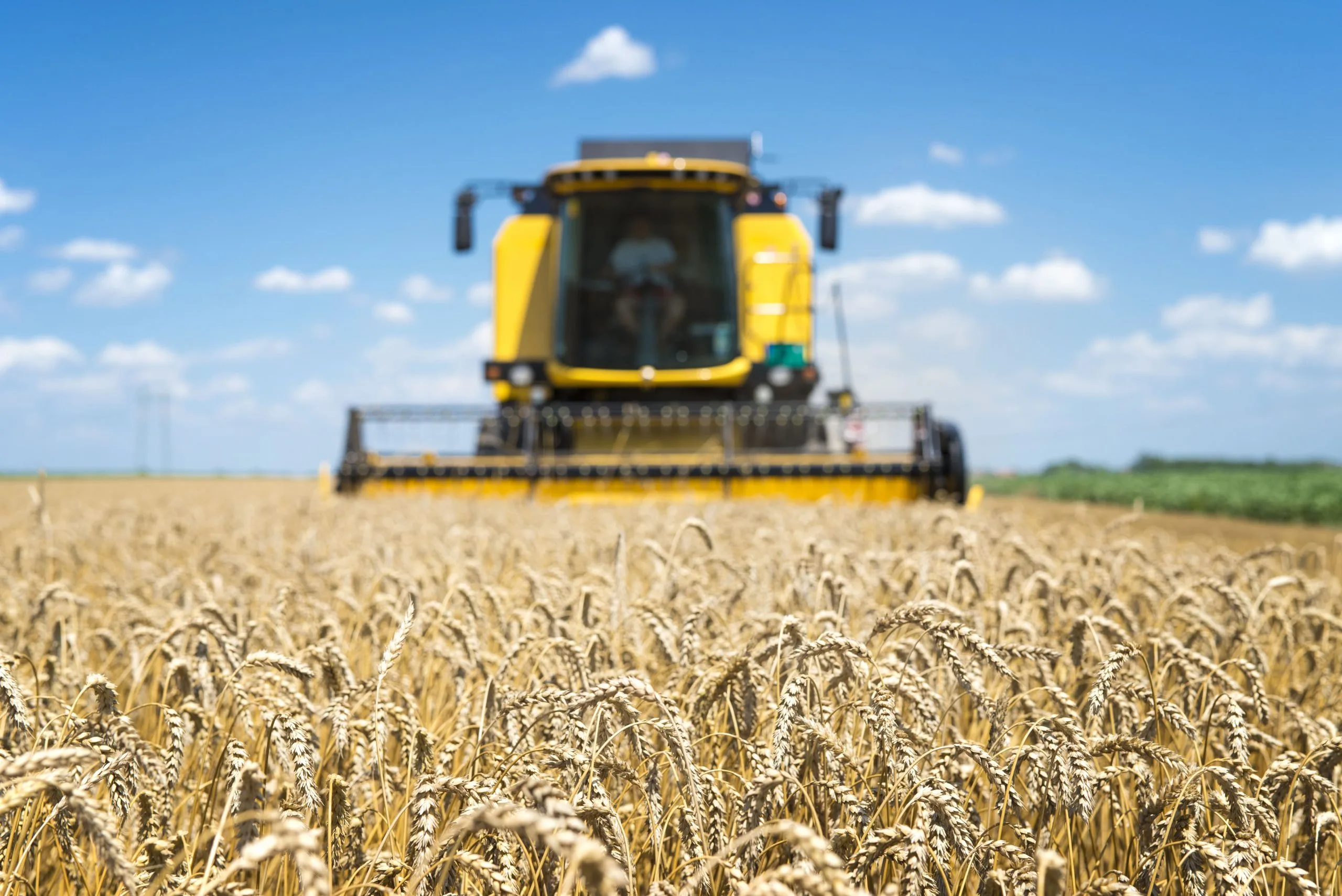
The USA agricultural machinery market continues to evolve as large-scale commercial farming, rising productivity pressures, and precision agriculture reshape equipment demand. The United States remains one of the world’s largest producers and exporters of corn, soybeans, and wheat, with highly mechanized farming systems across Midwest states such as Iowa, Illinois, and Nebraska. As of 2026, combine harvesters are an indispensable part of row-crop farming, with a strong installed base dominated by technologically advanced machines. However, rising equipment costs, labor shortages, and fluctuating commodity prices are influencing replacement cycles and purchase decisions. The market is increasingly characterized by high-capacity combines integrated with automation, telematics, and yield-monitoring systems, positioning the U.S. as a global leader in harvesting efficiency.
What’s Driving the Combine Harvester Market in the USA?
Expansion of Large-Scale Commercial Farming
The United States has one of the highest levels of farm mechanization globally. Large average farm sizes, particularly in the Midwest and Great Plains, necessitate high-horsepower combine harvesters capable of covering extensive acreage within short harvesting windows. Weather volatility has further increased the importance of timely harvesting, encouraging farmers to invest in advanced combines with larger grain tanks, improved threshing systems, and higher operational speeds. The pressure to maximize yield recovery and minimize grain losses is directly supporting demand for technologically superior machines.
Adoption of Precision Agriculture and Smart Technologies
Precision farming practices are reshaping combine harvester specifications. Modern combines are increasingly equipped with GPS guidance, auto-steering systems, real-time yield mapping, and moisture sensors. Leading manufacturers such as John Deere, CNH Industrial (parent company of Case IH and New Holland), and AGCO Corporation are integrating artificial intelligence and data analytics into harvesting equipment. These features enable farmers to optimize crop management decisions, reduce input waste, and improve overall farm profitability. Connectivity solutions that allow remote diagnostics and fleet management are becoming standard, particularly among large agribusinesses.
Rising Labor Costs and Workforce Constraints
Labor shortages in rural America are accelerating automation in agriculture. Combine harvesters equipped with advanced automation reduce dependency on skilled operators and enhance operational efficiency. Semi-autonomous harvesting solutions and simplified control interfaces are becoming critical value propositions for manufacturers. As labor costs continue to rise, farmers are increasingly evaluating long-term operational savings over upfront capital expenditure, supporting the case for high-tech combine investments.
Government Support and Sustainability Initiatives
Federal and state-level programs supporting climate-smart agriculture and sustainable farming practices are indirectly influencing equipment modernization. Incentives for conservation tillage, soil health management, and carbon-smart practices require precise harvesting and minimal crop residue disturbance. Advanced combine harvesters equipped with residue management systems align with these sustainability goals. Additionally, financing support through agricultural credit programs enables farmers to upgrade aging fleets, particularly as many machines purchased during the early 2010s approach replacement age.
Market Competition and Innovation Landscape
The USA combine harvester market is moderately consolidated, with a few global manufacturers dominating sales. John Deere holds a leading market share, supported by its strong dealer network and integrated digital ecosystem. Case IH and New Holland Agriculture continue to compete aggressively in the high-capacity segment, while Fendt, a brand under AGCO, is expanding its presence with premium technology-focused combines. Manufacturers are focusing on increasing engine power beyond 500 HP, enhancing grain tank capacity, and improving fuel efficiency. The integration of predictive maintenance tools and subscription-based digital services is also creating recurring revenue streams. Strategic partnerships with agri-tech firms are further strengthening product differentiation in a competitive landscape.
High Capital Costs and Commodity Price Volatility
Modern combine harvesters can cost several hundred thousand dollars, creating significant capital investment barriers, particularly for mid-sized farms. Commodity price fluctuations for corn and soybeans directly influence farm income and equipment purchasing decisions. During periods of lower crop prices, farmers tend to delay replacement cycles or opt for refurbished equipment. Additionally, rising interest rates can increase financing costs, impacting overall market growth in the short term.
Future Outlook
The USA combine harvester market is expected to witness steady but technology-driven growth through 2035. Replacement demand will remain the primary growth driver, supported by the aging fleet and the need for higher operational efficiency. By 2035, autonomous harvesting capabilities, AI-powered yield optimization, and enhanced machine-to-machine connectivity are expected to become mainstream features. Sustainability-focused innovations, including reduced fuel consumption and alternative power solutions, may gradually emerge as differentiators. While overall unit sales may remain cyclical due to commodity trends, value growth is anticipated to be driven by premiumization and digital service integration. The U.S. will continue to set global benchmarks in combine harvester innovation, balancing productivity, precision, and sustainability in large-scale agriculture.
Consultants at Nexdigm, in their latest publication “USA Combine Harvester Market Outlook to 2035”, analyzed the market by Type (Self-Propelled, Tractor-Mounted, Pull-Type), By Power Output (Below 300 HP, 300–500 HP, Above 500 HP), By Crop Type (Corn, Wheat, Soybean, Others), and By Distribution Channel (Authorized Dealers, Independent Dealers, Direct Sales). Nexdigm believes that manufacturers should prioritize automation, data-driven services, flexible financing models, and sustainable harvesting technologies to remain competitive in the evolving U.S. agricultural machinery landscape.
To take the next step, simply visit our Request a Consultation page and share your requirements with us.
Harsh Mittal
+91-8422857704