
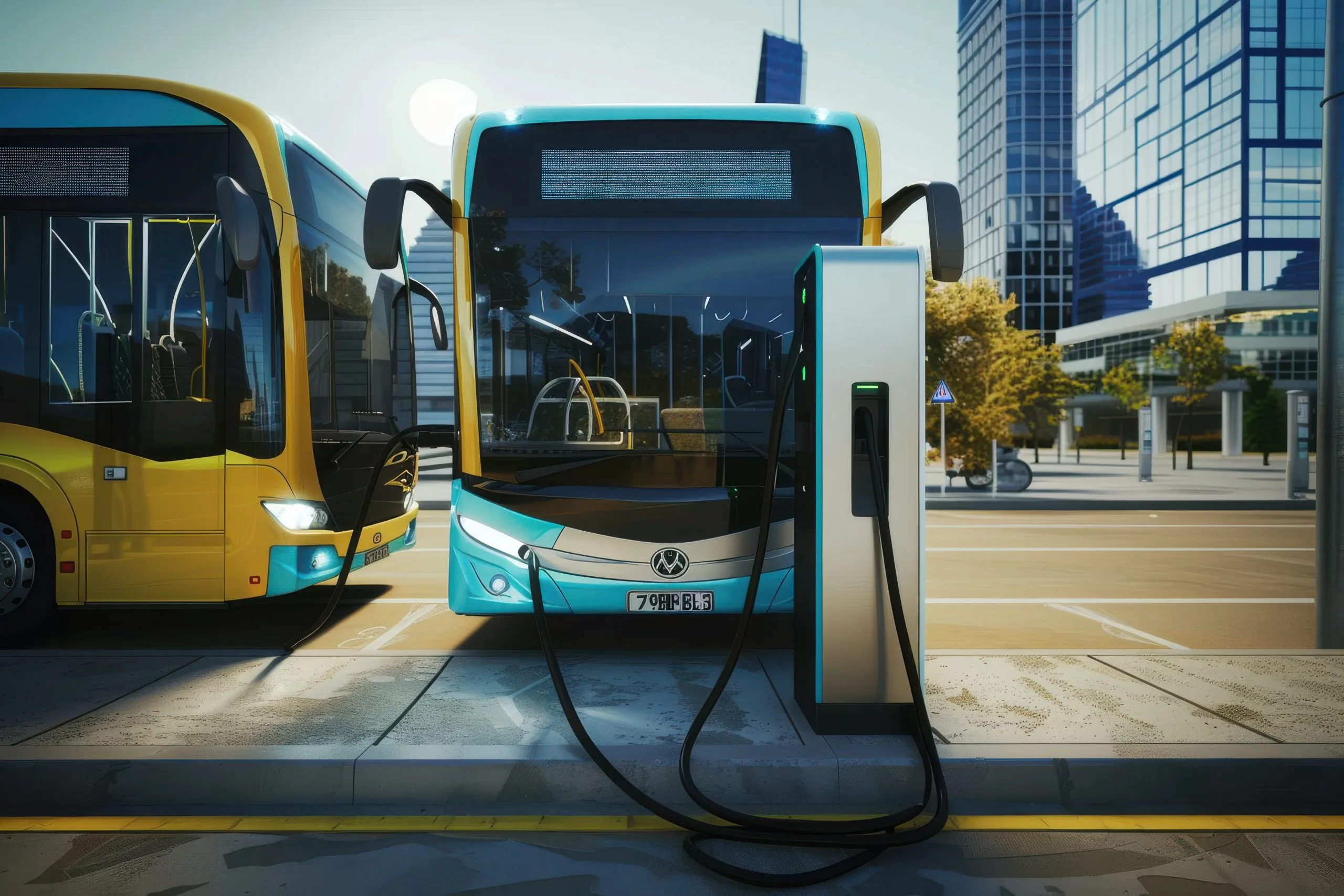
The USA electric bus market is gaining momentum as transit agencies, school districts, airports, universities, and private fleet operators shift toward zero-emission mobility. The market generated USD 877.1 million in revenue last year and is projected to reach USD 2.31 billion, growing at a 17.5% CAGR value. In the upcoming years, electric buses are expected to become a more common part of daily transportation across U.S. cities and communities. For passengers, the shift means quieter rides, cleaner air, and a public transport system that better aligns with long-term climate goals. For fleet operators, the transition also brings an opportunity to modernize aging fleets and reduce dependence on diesel fuel.
Growth Drivers boosting the USA Electric Bus Market
Public Transit Agencies Are Moving Toward Zero-Emission Fleets
Public transit electrification is one of the strongest drivers of electric bus demand in the U.S. Transit agencies are under pressure to reduce emissions, improve air quality, and modernize aging bus fleets. Electric buses are especially attractive for fixed-route transit because routes are predictable, and charging can often be planned around depot schedules. According to CALSTART data reported currently, 8,116 full-size zero-emission buses had been funded, ordered, delivered, or placed on the road nationwide, a 16% increase over the previous year. This shows that electric bus adoption is no longer limited to pilot programs. More agencies are now treating fleet electrification as a long-term operating strategy.
Electric School Buses Are Creating a Large Growth Opportunity
School buses are becoming a major opportunity within the electric bus market. The U.S. has one of the world’s largest school bus fleets, and electrification can help reduce children’s exposure to diesel exhaust while lowering long-term operating costs for districts. The number of electric school buses on the road has been increasing. These buses now transport over 265,000 students daily, showing that adoption is moving beyond early pilots into wider deployment. For parents and communities, electric school buses offer a cleaner and quieter alternative for daily student transportation. For school districts, they also support sustainability goals while improving the overall quality of fleet operations.
Better Fleet Economics Are Strengthening the Business Case
Electric buses can help reduce fuel and maintenance expenses over time, especially high-mileage routes. Fewer moving parts, regenerative braking, and lower electricity costs compared with diesel can improve lifetime economics. For school fleets, research suggests that a new electric school bus can save districts about USD 7,000 per year in operating costs compared with a new diesel bus. As battery range improves and charging systems become more reliable, the business case for electric buses is likely to be strengthened. Operators are also learning how to plan charging schedules, manage routes, and reduce downtime more effectively. This growing operational experience will make future fleet conversions smoother.
How Policy Support Is Helping Electric Buses Scale Across the U.S.A?
Government funding remains central to electric bus deployment in the U.S. The Federal Transit Administration’s Low or No Emission Grant Program supports the purchase or lease of low- and zero-emission transit buses and related facilities. Earlier, the FTA announced approximately USD 2 billion in Low-No and Buses and Bus Facilities project selections across 165 projects in 45 states and Washington, D.C. Federal support is also helping school districts transition away from diesel buses. These programs reduce the financial burden for public agencies and make electric buses more accessible to communities that may otherwise delay adoption.
Competitive Insights of the USA Electric Bus Ecosystem
The U.S. electric bus market includes bus manufacturers, battery suppliers, charging infrastructure providers, fleet software companies, utilities, and maintenance service providers. Competition is increasing as demand grows across transit buses, school buses, shuttle buses, and specialty fleet applications. Companies compete on vehicle range, battery safety, charging compatibility, total cost of ownership, after-sales support, and domestic manufacturing capability. Partnerships between OEMs, charging providers, utilities, and public agencies will be important as fleet electrification becomes more complex. The strongest players will be those that can offer complete solutions, not just vehicles. Reliability, service coverage, and financing support will matter as much as technology.
Challenges affecting the Electric Bus Adoption in the USA
Charging Infrastructure and Grid Readiness Remain Practical Barriers
Electric buses need reliable depot charging, route planning, grid capacity, and maintenance support. If charging infrastructure is delayed or underbuilt, fleet operators may struggle to keep buses in regular service. Large bus depots may require transformer upgrades, new electrical connections, energy management systems, and utility coordination. These steps can increase project timelines and make fleet electrification more complex than simply buying new buses. Operators also need charging systems that match real-world schedules, weather conditions, and route lengths. Without proper planning, charging limitations can affect daily service reliability.
High Upfront Costs and Fleet Transition Challenges
Electric buses usually have higher upfront costs than diesel or CNG buses, even if lifetime operating costs may be lower. This makes grants, subsidies, financing, and careful total-cost-of-ownership planning important for transit agencies and school districts. Operators must also train drivers, technicians, dispatchers, and emergency responders. Battery performance, cold-weather range, spare parts availability, and charger uptime will remain practical concerns during the transition. Smaller agencies and school districts may find the shift more difficult due to limited budgets and technical capacity. Strong vendor support and phased deployment plans will be important to manage these challenges.
Future Outlook
The USA electric bus market is expected to be larger, more mature, and more integrated with the country’s broader zero-emission transport strategy. With revenue projected to grow rapidly in the coming years, the market has a strong foundation for long-term expansion. Future growth will likely come from transit agencies, school districts, airport shuttles, university fleets, and commercial operators. As battery technology improves and charging infrastructure expands, electric buses will become a more practical and familiar part of U.S. mobility. The next phase of growth will depend on affordability, charging reliability, and the ability of suppliers to support fleets after deployment. Businesses that can deliver dependable vehicles, charging solutions, financing support, and strong service networks will be better positioned in the upcoming years.
Consultants at Nexdigm, in their latest publication USA Electric Bus Market Outlook to 2035 analyzed the market by System Type (Battery Electric Buses, Plug in Hybrid Electric Buses, Fuel Cell Electric Buses), by Platform Type (City Transit Buses, Intercity, School Electric Buses and Airport Shuttle Electric Buses).
Nexdigm believes that businesses in the USA should closely evaluate the electric bus market, as government support, fleet electrification targets, and infrastructure investments are creating strong opportunities for manufacturers, suppliers, and technology providers.
To take the next step, simply visit our Request a Consultation page and share your requirements with us.
Harsh Mittal
+91-8422857704