
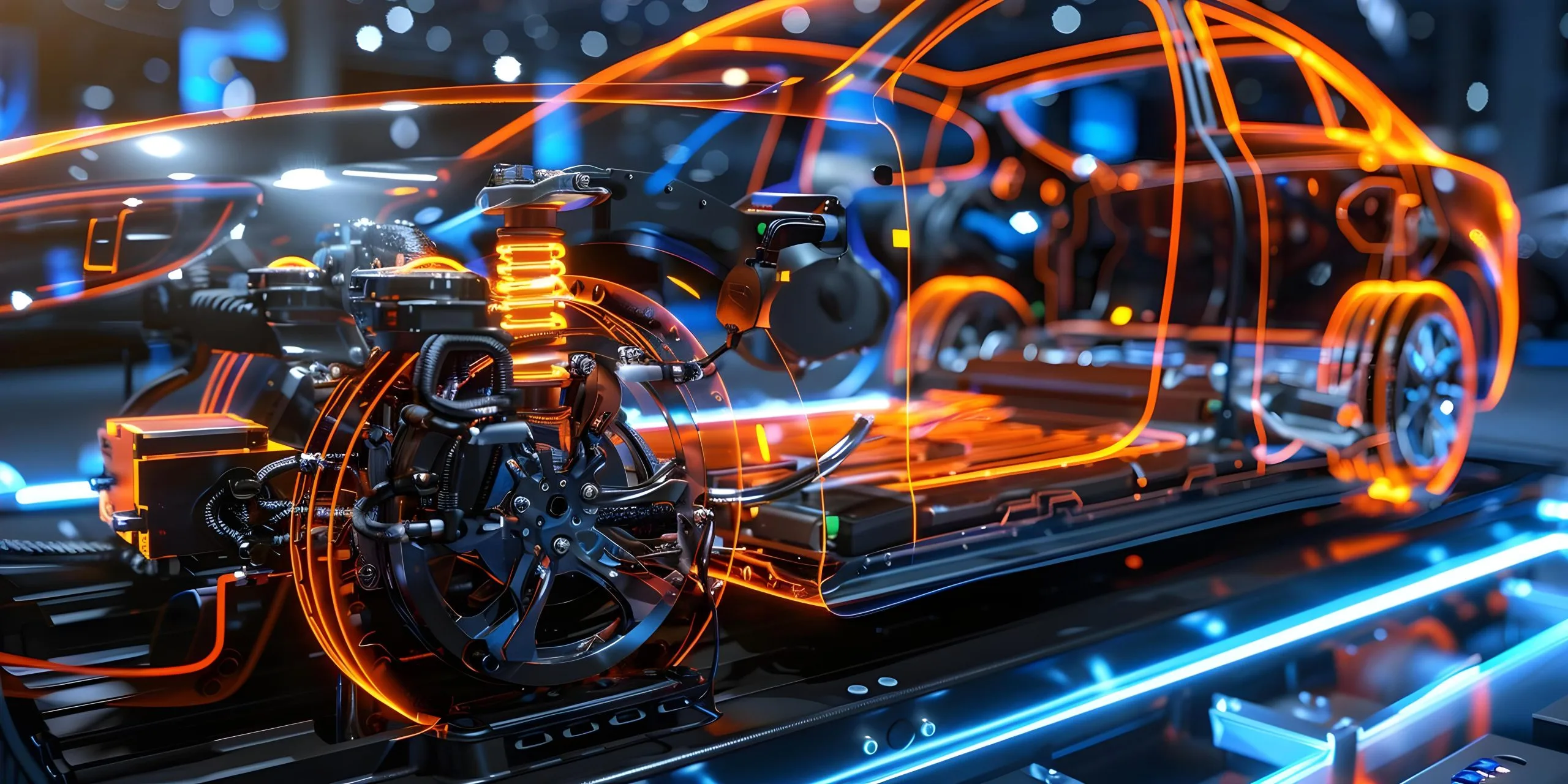
The United States electric motors market is entering a phase where efficiency is no longer optional, it is becoming a baseline requirement. Electric motors already account for a large share of industrial power usage across factories, commercial buildings, and transport systems. What stands out today is not just demand growth, but the shift in expectations. Buyers are no longer satisfied with standard motors; they want systems that are smarter, quieter, and cheaper to run over time. In 2025, demand remained closely tied to manufacturing activity, construction cycles, and the pace of electric vehicle adoption. At the same time, energy costs and sustainability targets have started influencing procurement decisions in a more direct way. While the U.S. maintains a solid manufacturing base, it still leans on imports for cost-sensitive segments and key components, which adds a layer of complexity to pricing and supply reliability.
What’s Driving the Electric Motors Market in the USA?
Industrial Automation and Smart Systems
Walk into a modern U.S. factory and the change is obvious. Production lines are becoming more automated, and motors are no longer standalone hardware. They are embedded into interconnected systems that respond in real time. Motors used in robotics, packaging lines, and CNC machinery now come with sensors and control features that allow operators to monitor performance continuously. In practice, this reduces downtime and improves output consistency. A plant manager today is more concerned about lifecycle costs than upfront pricing, which explains the growing preference for high-performance motor systems.
Electric Vehicle Momentum
The EV segment has introduced a different layer of demand. Unlike traditional vehicles, electric cars rely heavily on multiple motors, not just for propulsion but also for auxiliary systems. With automakers expanding their EV portfolios and federal incentives supporting adoption, motor manufacturers are seeing steady order pipelines. There is also a technical shift underway. Automakers are experimenting with compact, high-speed motors that offer better efficiency and reduced weight. This creates opportunities but also raises the bar for suppliers who must meet stricter performance benchmarks.
Energy Efficiency and Regulatory Push
Energy efficiency standards are quietly reshaping the market. Regulations from agencies such as the Department of Energy have made older, less efficient motors increasingly unattractive. For many industrial users, replacing legacy systems is no longer about compliance alone. It is a cost decision. Electricity savings over a motor’s lifetime can be substantial, especially in energy-intensive sectors like chemicals or metals. Still, some smaller businesses hesitate due to higher upfront costs, which shows that adoption is not uniform across all segments.
Government-Led Initiatives
Public policy in the U.S. has taken a practical approach, focusing on incentives rather than mandates alone. Programs tied to clean energy, industrial efficiency, and EV adoption indirectly support motor demand. Tax credits and grants often make the difference for companies considering equipment upgrades. There is also a renewed emphasis on domestic manufacturing. Funding for advanced manufacturing and supply chain resilience aims to reduce dependence on overseas components. While results will take time, the intent is clear: build local capability without significantly raising costs.
Market Competition
Competition in this market feels intense but not chaotic. Large players such as ABB Ltd., Nidec Corporation, Siemens AG, and Rockwell Automation continue to dominate high-value segments. Their advantage lies in technology depth and established client relationships. At the same time, smaller and mid-sized firms compete aggressively in niche areas, particularly where customization or pricing flexibility matters. Digital capabilities have become a key differentiator. A motor that integrates easily with plant software often wins over one that does not, even if the base specifications are similar.
Supply Chain Constraints and Import Dependency
A common challenge is the reliance on imported components, especially rare earth materials and electronic parts used in advanced motors. Supply disruptions over the past few years exposed how vulnerable certain segments can be. Lead times became unpredictable, and costs fluctuated sharply. Domestic sourcing sounds like a solution, but in reality, it comes with trade-offs. Setting up local supply chains requires investment and time, and in some cases, costs may rise before they stabilize. For manufacturers operating on thin margins, this balancing act is not straightforward.
Future Outlook
Looking ahead, the direction of the market feels clear even if the pace may vary. High-efficiency motors are likely to replace a significant portion of older installations across industries. Smart features such as predictive maintenance will move from being optional add-ons to standard expectations. The EV sector will remain a major contributor, though its growth may fluctuate depending on policy support and consumer adoption rates. Renewable energy projects will also create steady demand, particularly for motors used in auxiliary systems. By 2030, the market will likely look more technology-driven than volume-driven. Companies that focus on efficiency, reliability, and integration with digital systems will have an edge.
Consultants at Nexdigm, in their latest publication “USA Electric Motors Market Outlook to 2030,” highlight segmentation by Motor Type, Application, and End-User Industry. Their view leans toward a practical strategy: invest in efficient designs, strengthen supply chains closer to home, and build capabilities around smart motor systems rather than competing only on price.
To take the next step, simply visit our Request a Consultation page and share your requirements with us.
Harsh Mittal
+91-8422857704