
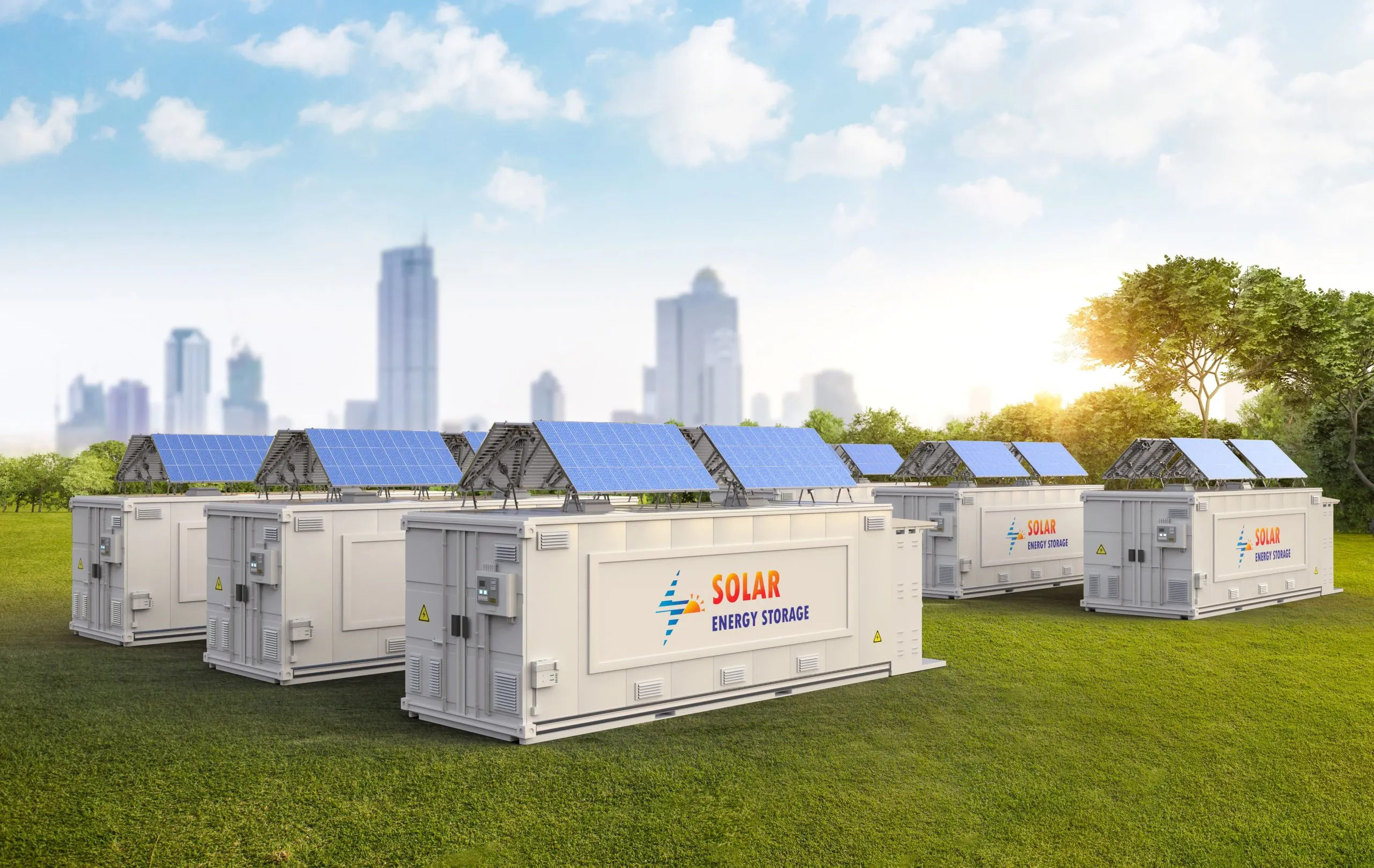
The USA energy storage market has moved far beyond being a niche segment tied only to renewable energy projects. In 2026, storage systems are becoming a core part of how utilities manage electricity demand, prevent outages, and handle the uneven nature of solar and wind generation. Battery installations are expanding quickly across states such as California, Texas, Arizona, and Nevada, where extreme weather events and rising electricity consumption continue to pressure existing grid infrastructure. At the same time, federal incentives introduced under the Inflation Reduction Act have made large-scale storage projects financially attractive for utilities and private investors alike. What stands out in the US market is the scale at which deployment is happening. Utility companies are no longer experimenting with pilot projects. They are building multi-gigawatt storage pipelines to stabilize power supply during peak demand hours. In practice, energy storage is becoming less about sustainability branding and more about keeping the lights on during heatwaves, wildfires, and grid disruptions.
What’s Driving the Energy Storage Market in the USA?
Renewable Energy Expansion and Grid Stability
The rapid buildout of solar and wind capacity has created a practical problem for utilities – renewable power generation does not always align with electricity demand. Solar farms produce excess power during the afternoon, while demand often spikes in the evening. Battery storage helps bridge that gap by storing electricity and releasing it when required. California offers a clear example. During periods of high solar generation, batteries now absorb surplus electricity that would otherwise go unused. A few years ago, curtailment was a common issue in the state. Today, storage systems are helping utilities reduce wastage and improve reliability. This shift has made battery projects a necessity rather than an optional clean-energy add-on.
Rising Electricity Consumption from EVs and Data Centers
Electric vehicles and AI-driven data centers are placing fresh pressure on the US power grid. Charging hubs for electric trucks and passenger vehicles demand substantial electricity, especially in urban corridors and logistics hubs. Data centers powering cloud computing and AI workloads consume enormous amounts of energy around the clock. For utilities, this creates an operational balancing act. Building new power plants takes years, while battery storage can be deployed much faster. Many grid operators now rely on storage systems during peak demand periods because it is often cheaper and quicker than adding new gas-fired generation capacity. There is also growing interest in commercial and industrial battery installations, particularly among companies seeking backup power during outages.
Falling Battery Costs and Technology Improvements
Battery prices have dropped sharply over the last decade, making energy storage commercially viable for a wider range of applications. Lithium-ion technology still dominates the market, though concerns around fire safety, mineral dependency, and recycling remain difficult to ignore. A common challenge on the ground is balancing affordability with long-term sustainability. That is partly why companies are exploring alternatives such as sodium-ion and long-duration storage technologies. While many of these solutions are still developing, investors are paying close attention because lithium alone may not fully support future storage demand. Some utilities are also testing hybrid systems that combine batteries with pumped hydro or thermal storage to improve reliability during longer outages.
Government-Led Initiatives Supporting Energy Storage Deployment
Federal policy has played a major role in accelerating storage investments across the United States. The Inflation Reduction Act introduced standalone tax credits for battery storage projects, which significantly improved project economics. State governments are also setting aggressive clean energy and storage targets, particularly in California and New York. The Department of Energy continues to fund research into advanced battery technologies and domestic manufacturing. This matters because the US still relies heavily on imported battery materials and components. Policymakers increasingly view energy storage not only as an energy issue but also as an industrial and national security priority.
Market Competition and Investment Landscape
The market remains moderately concentrated, with companies such as Tesla, Fluence Energy, NextEra Energy, and LG Energy Solution competing aggressively for utility-scale projects. Competition is no longer limited to battery hardware. Software platforms that optimize charging cycles and grid performance are becoming equally important. Many developers are also investing in domestic battery factories to reduce exposure to global supply disruptions. Yet scaling local production is not simple. Labor shortages, permitting delays, and volatile raw material prices continue to complicate expansion plans.
Supply Chain Dependency Remains a Major Challenge
Despite rapid market growth, the US energy storage sector still depends heavily on imported lithium, cobalt, nickel, and graphite. That dependence creates pricing uncertainty and exposes developers to geopolitical risks. Battery recycling infrastructure remains underdeveloped as well, which could become a larger issue once early-generation storage systems reach end-of-life over the next decade.
Future Outlook
By 2035, energy storage is likely to become a standard feature across the US electricity network rather than a specialized technology reserved for renewable projects. Utility-scale batteries, distributed storage systems, and AI-enabled grid management tools will play a much larger role in balancing supply and demand. Long-duration storage technologies could also gain traction as utilities look for alternatives that can support the grid for several days rather than just a few hours.
Consultants at Nexdigm, in their latest publication “USA Energy Storage Market Outlook to 2035,” analyzed the market by Technology (Lithium-Ion Batteries, Flow Batteries, Sodium-Ion Batteries, Solid-State Batteries, Pumped Hydro Storage), By Application (Utility-Scale Storage, Residential Storage, Commercial & Industrial Storage, EV Charging Infrastructure, Renewable Energy Integration), and By End User (Utilities, Industrial Sector, Commercial Establishments, Residential Consumers). Nexdigm believes companies focusing on domestic battery supply chains, advanced recycling capabilities, and software-driven grid optimization are likely to secure a stronger foothold as the market matures over the next decade.
To take the next step, simply visit our Request a Consultation page and share your requirements with us.
Harsh Mittal
+91-8422857704