
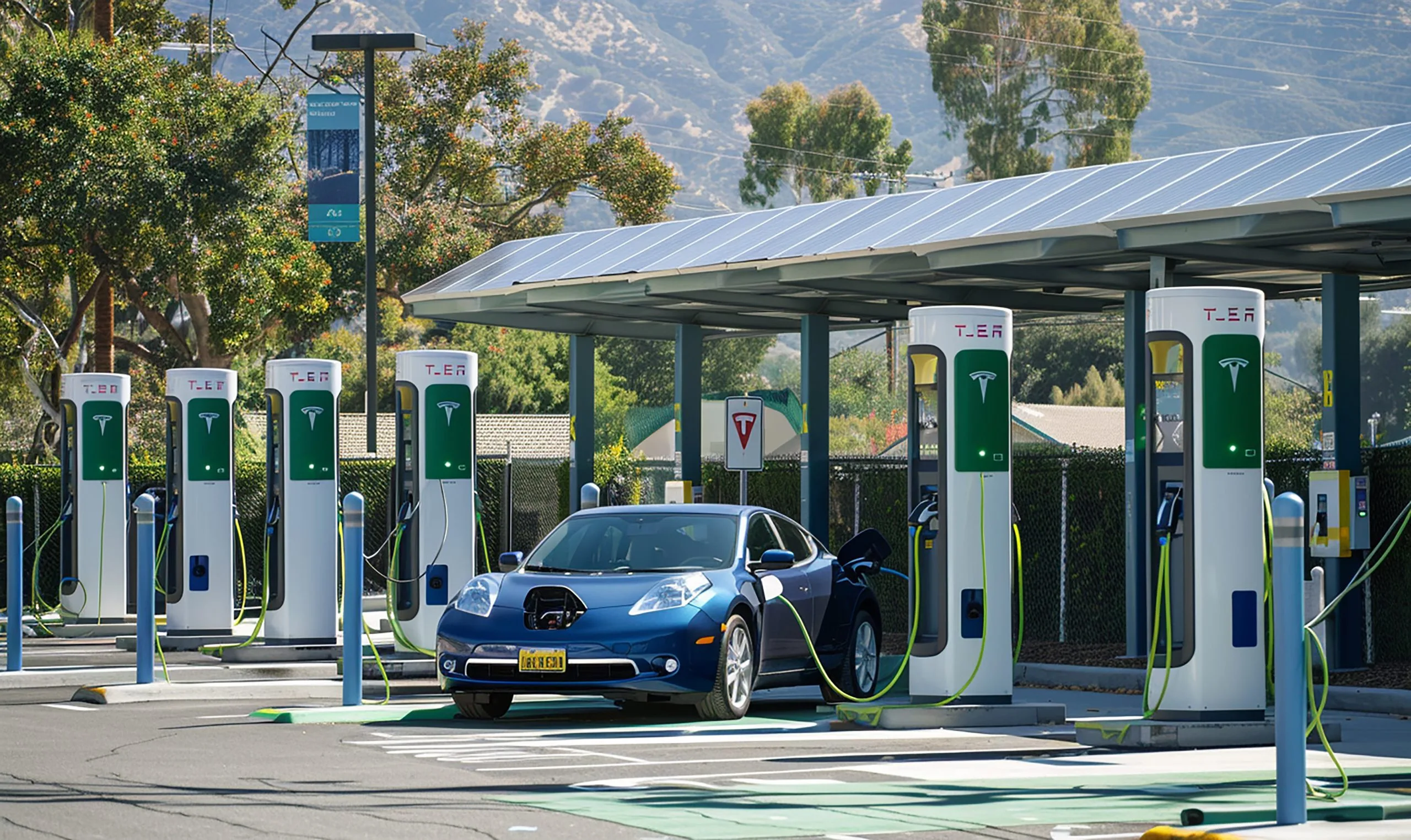
The USA EV charging infrastructure market is entering a major expansion phase as electric vehicle adoption grows across passenger cars, commercial fleets, and public transport. The market was valued at USD 5.09 billion earlier, is projected to grow at a 30.3% CAGR value. In the coming years, charging networks are expected to become more visible across highways, workplaces, retail spaces, residential communities, and fleet depots. For drivers, this means EV ownership will feel more practical and less uncertain. For businesses, the market is not just about installing chargers; it is about building the backbone of America’s electric mobility future.
Factors driving the USA EV Charging Infrastructure Market
Growing EV Adoption Is Creating Strong Charging Demand
The rapid growth of electric vehicles is one of the strongest drivers of charging infrastructure demand. As more consumers shift to EVs, the need for convenient, reliable, and fast charging is increasing across urban, suburban, and highway locations. Charging availability directly affects EV buying confidence. Consumers are more likely to adopt EVs when they know they can charge at home, at work, during shopping trips, and on long-distance routes. This makes charging infrastructure a key enabler of the wider EV transition, not just a supporting service.
Public and Fast-Charging Networks Are Expanding
The U.S. public EV charging network has grown steadily, with the number of public charging ports more than doubling than earlier, according to the Alternative Fuels Data Center. The Joint Office of Energy and Transportation also reported 250,100 public EV charging ports nationwide, more than double the number available than last year. This expansion is helping reduce range anxiety and making EV ownership more practical for drivers without access to home charging. Fast-charging stations along highways, retail centers, and travel corridors are becoming especially important. They allow drivers to charge during regular stops, making electric mobility easier to fit into daily life.
Fleet Electrification Is Opening New Commercial Opportunities
Commercial fleets are becoming an important growth area for EV charging infrastructure. Delivery companies, ride-hailing operators, logistics fleets, municipal fleets, and transit agencies need dedicated charging solutions that can support high vehicle utilization. Fleet charging creates demand for depot chargers, energy management software, load balancing, and fast-charging systems. As businesses focus on lowering fuel costs and meeting sustainability goals, fleet electrification will become a key driver of charging investment. This segment also gives charging companies a more predictable revenue base compared with some public charging locations.
US Government Policy Support Accelerating Charging Infrastructure
Government support continues to play a central role in market development. The National Electric Vehicle Infrastructure Program provides funding to states for strategic EV charging deployment, including charger acquisition, installation, network connection, operation, maintenance, and data sharing. The program can cover up to 80% of eligible project costs, making it important for highway charging and corridor-based infrastructure. Federal and state policies are also encouraging interoperability, charger reliability, and wider access in underserved communities. This policy backing is helping reduce investment risk and encourage more private companies to enter the market.
Competitive Landscape of USA EV Charging Market
The U.S. EV charging infrastructure market includes charging network operators, hardware manufacturers, software providers, utilities, automakers, retailers, and energy companies. Competition is increasing as companies expand public fast-charging networks, workplace charging, residential charging, and fleet charging services. Key players are likely to compete on charger reliability, uptime, charging speed, location quality, payment convenience, and software integration. Partnerships between automakers, retail chains, fuel station operators, and utilities will shape the next phase of market growth. The companies that can offer reliable charging and a smooth user experience are likely to stand out.
Key Barriers Slowing Down EV Charging Infrastructure in the US
Grid Readiness Remains a Critical Issue
Large-scale EV charging requires strong grid capacity, especially for fast-charging hubs and fleet depots. Some locations may need transformer upgrades, new utility connections, or energy storage systems before chargers can be deployed at scale. Delays in grid connection can slow project timelines and increase costs. This makes coordination among utilities, charging operators, property owners, and local authorities essential. Without proper planning, charging demand could grow faster than the power infrastructure needed to support it.
Charger Reliability and User Experience Need Improvement
Charger uptime remains a major concern for EV drivers. A charging network may look strong on paper, but poor maintenance, broken chargers, slow payment systems, or software issues can reduce consumer confidence. For broader EV adoption, charging must become as dependable and simple as refueling a gasoline vehicle. Operators that provide reliable service, transparent pricing, and easy access will have a stronger market position. A positive charging experience will be just as important as the number of chargers installed.
Future Outlook
Looking ahead, the USA EV charging infrastructure market is expected to be larger, more connected, and more commercially mature. Market estimates already point to strong growth, with the sector projected to expand at a 30.3% in the coming years. Future growth will likely come from public fast charging, fleet depots, smart charging, renewable energy integration, and charging solutions for apartments and workplaces. As EV adoption deepens, charging infrastructure will become a critical part of the country’s transport, energy, and real estate ecosystem. The companies that invest early in reliable networks, strong partnerships, and customer-friendly technology will be better placed to capture long-term opportunities.
Consultants at Nexdigm, in their latest publication “USA EV Charging Infrastructure Market Outlook to 2035,” analyze the sector by System Type (AC Level 1 Charging System, AC Level 2 Charging System, DC Fast Charging System, Ultra-Fast High Power Charging System), By Platform Type (Public Charging Networks, Residential Charging Infrastructure, Commercial Destination Charging), and By Fitment Type (Standalone Charging Stations, Parking Facility Integrated Chargers, On Street Municipal Charging Points).
Nexdigm suggests that businesses should strategically invest in the expansion of EV charging infrastructure to meet the increasing demand for electric vehicles. By focusing on enhancing charging station coverage, especially in under-served regions, and adopting advanced technologies like smart charging solutions, companies can drive growth while ensuring seamless EV adoption. Additionally, aligning with government initiatives and fostering collaborations with key industry players will help create a robust and sustainable charging network across Italy.
To take the next step, simply visit our Request a Consultation page and share your requirements with us.
Harsh Mittal
+91-8422857704