
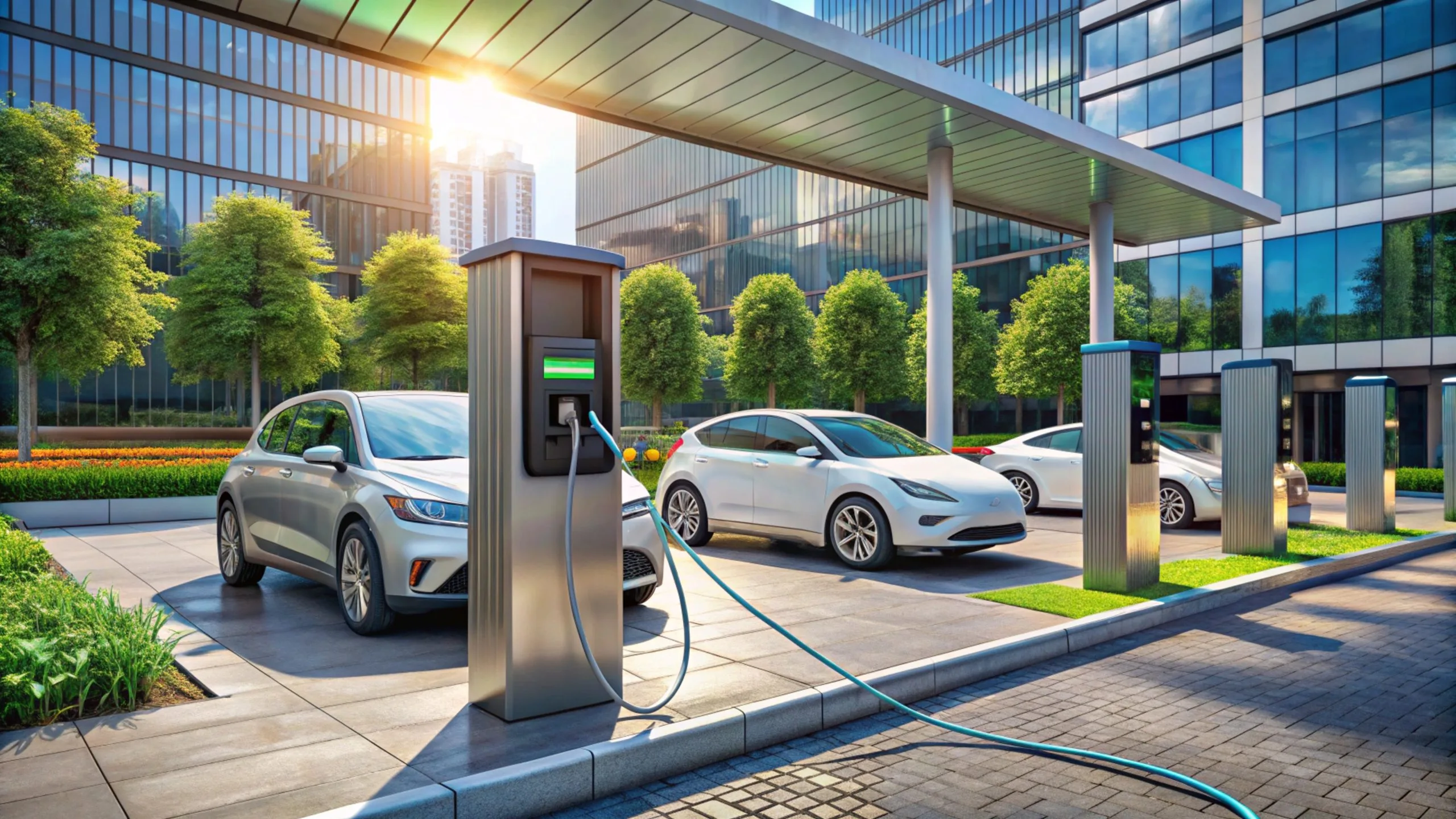
The EV charging infrastructure market in the United States is growing quickly as more people switch to electric vehicles. Charging networks are essential to making EVs practical, as they provide the convenience and accessibility drivers need. The market is expected to reach around $24 billion by next decade. This rapid growth reflects the rising number of EVs on the road. It also highlights the increasing need for reliable and widespread charging access. As a result, building a strong charging network is becoming a national priority. Charging infrastructure is now seen as a key enabler of the country’s shift toward cleaner transportation.
Market Growth Factors accelerating the USA EV Charging Infrastructure
Growing Adoption of Electric Vehicles
One of the main reasons behind this market growth is the increasing adoption of electric vehicles across the U.S. More consumers are choosing EVs due to lower running costs and environmental benefits. As the number of EVs grows, the demand for accessible charging options rises as well. Drivers now expect convenient charging at homes, workplaces, and public locations. The expected rise to nearly 24 million EVs, by next decade, which will further increase demand. This is pushing both governments and private companies to invest in charging infrastructure. Commercial fleets are also moving toward electrification, adding to the demand. Overall, EV adoption remains the strongest driver for charging infrastructure growth. Without adequate charging networks, large-scale EV adoption would not be possible. This makes infrastructure development a critical part of the EV ecosystem.
Expansion of Charging Networks
Charging infrastructure across the U.S. is expanding rapidly to meet rising demand.
The country is expected to need millions of charging ports in the upcoming years to support EV growth. Public charging stations are being installed along highways, in cities, and in residential areas. Fast-charging stations are becoming more common, helping reduce charging time significantly. Private investments and partnerships are playing a key role in this expansion. Utilities and energy companies are also entering the market. At the same time, workplace and home charging solutions are increasing. This widespread expansion is making EV ownership more practical. Improved accessibility is helping build consumer confidence in EVs.
As networks grow, coverage gaps are gradually being reduced.
Advancements in Charging Technology
Technology is improving the way EV charging works, making it faster and more efficient. Innovations such as ultra-fast charging and smart charging systems are gaining traction. These technologies reduce waiting time and improve overall user experience. Digital platforms now allow users to locate stations, monitor charging, and make payments easily. Smart charging systems also help manage energy use and reduce strain on the grid. Wireless charging is being explored as a future solution.
Compatibility across different vehicle types is also improving. These advancements are making charging more seamless and convenient. Technology will continue to play a major role in shaping the market. As innovation progresses, charging infrastructure will become more efficient and user-friendly.
Government Support to grow US EV Charging Market
Government support in the U.S. is playing a major role in accelerating the growth of charging infrastructure. Programs aim to build a nationwide network of up to 500,000 public chargers in the coming years. Funding and incentives are encouraging both public and private investments. Policies are also supporting EV adoption, which indirectly boosts infrastructure demand. These efforts are helping speed up deployment across the country. Government initiatives are also focusing on rural and underserved areas. This ensures more balanced and inclusive infrastructure development.
Competitive Landscape of the US EV Charging Market
The U.S. EV charging infrastructure market is highly competitive, with both established companies and new entrants. Key players include Tesla Inc., ChargePoint, ABB Ltd., and BP Pulse. These companies are expanding their networks and investing in fast-charging technologies. Partnerships with automakers and governments are helping them grow. Competition is driving innovation and improving service quality.
Market Challenges faced in EV Charging Market of the US
Infrastructure Gaps and Reliability Issues
Despite rapid growth, there are still gaps in charging coverage, especially in rural areas. Some charging stations also face reliability issues, which can affect user experience. These challenges can reduce consumer confidence in EV adoption.
Improving uptime and accessibility remains a key focus area. Consistent performance is essential for widespread adoption.
High Costs and Deployment Barriers
Setting up charging infrastructure requires significant investment. Costs related to equipment, installation, and grid upgrades can be high. This can slow down deployment, particularly in less populated regions. Balancing cost and expansion remains a major challenge. Addressing these issues will be critical for long-term growth.
Future Outlook
The EV charging infrastructure market in the U.S. is expected to grow rapidly, in the upcoming years. Rising EV adoption and continued investment will drive expansion across the country. Charging networks will become more widespread and accessible. Advances in fast-charging and smart technology will improve efficiency and convenience. Public and private sector collaboration will play a key role in scaling infrastructure. Charging systems will also become more integrated with the energy grid. In addition, improved standardization will make charging easier for users. Overall, charging infrastructure will remain a critical foundation for the future of electric mobility.
Consultants at Nexdigm, in their latest publication USA EV Charging Infrastructure Market Outlook 2030 , analyze the sector by System Type (Level 1 AC Charging System, Level 2 AC Charging System, DC Fast Charging System, Wireless Inductive Fast Charging System), by Platform Type (Passenger Electric Vehicle, Electric Commercial Vehicle, Energy Storage Systems, Consumer Electronics, Industrial Equipment).
Nexdigm suggests that businesses should approach the EV charging ecosystem as a long-term infrastructure play rather than a short-term opportunity. This means investing in scalable charging networks, integrating digital platforms for seamless user experience, and forming partnerships across utilities, automakers, and real estate stakeholders. Companies that combine infrastructure deployment with smart energy management and customer-centric solutions will be better positioned to lead in the evolving electric mobility landscape.
To take the next step, simply visit our Request a Consultation page and share your requirements with us.
Harsh Mittal
+91-8422857704