
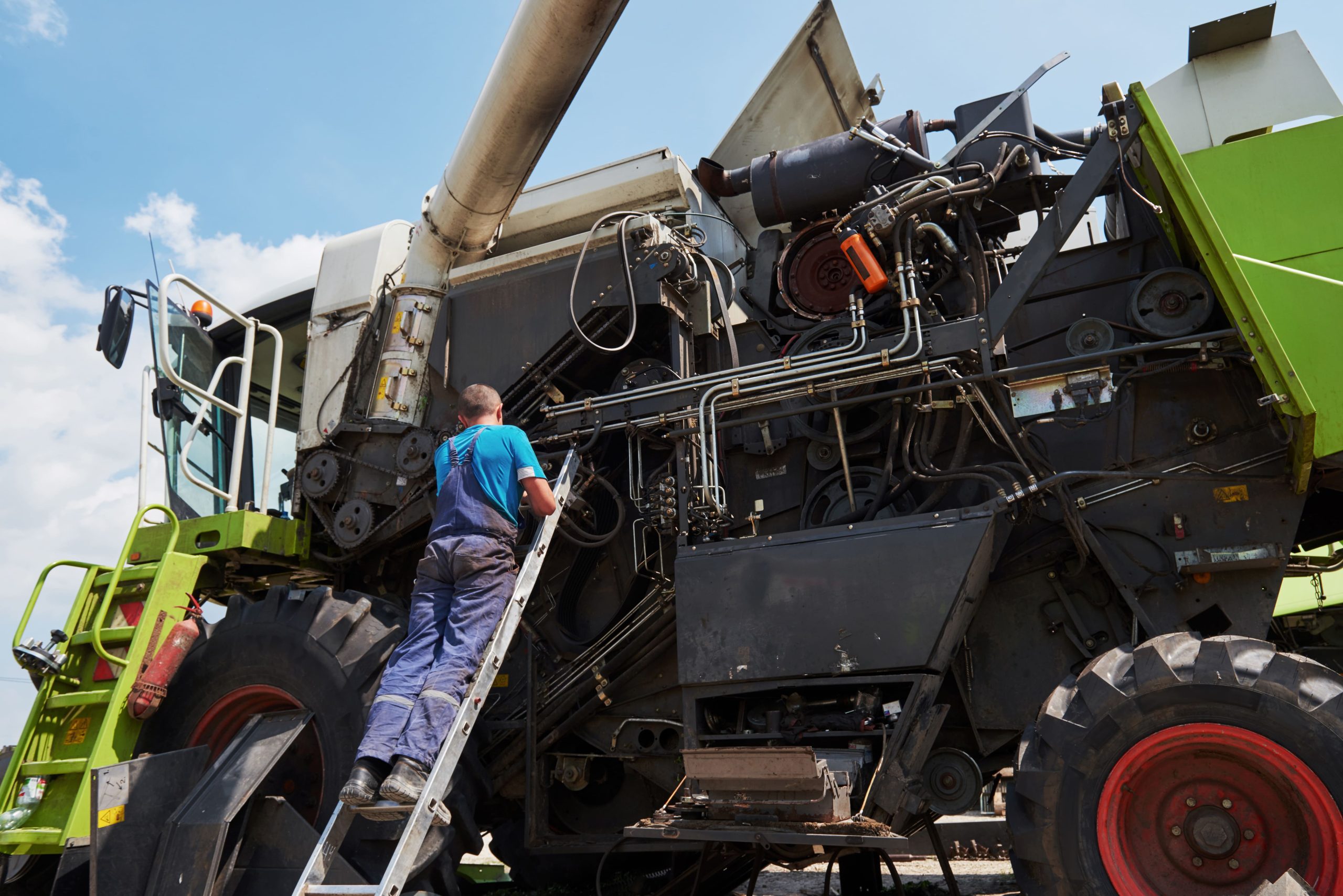
The USA farm equipment aftermarket & spare parts market is entering a stable growth phase as the country’s large installed base of agricultural machinery continues to age. The United States remains one of the largest agricultural producers globally, supported by extensive mechanization across row crops, dairy, and specialty farming. As of 2026, a significant share of tractors, combines, sprayers, and hay equipment in operation are over 8–12 years old, increasing the need for replacement parts, maintenance, and refurbishment. With high new equipment prices and cyclical farm incomes, farmers are increasingly prioritizing lifecycle extension of existing machinery. This shift is strengthening demand for components, attachments, and value-added aftermarket services across the country.
What’s Driving the Farm Equipment Aftermarket in the USA?
Aging Equipment Fleet and High Replacement Costs
The rising cost of new agricultural machinery from OEMs such as John Deere, CNH Industrial, and AGCO Corporation is encouraging farmers to extend the operational life of existing fleets. Modern tractors and combines involve high upfront capital expenditure, often influenced by interest rates and commodity price cycles. As a result, farmers are opting for preventive maintenance, remanufactured components, and certified spare parts to optimize performance without investing in new units. This structural trend is supporting consistent aftermarket revenue streams.
Growth of Precision Agriculture and Smart Components
The integration of GPS, telematics, sensors, and variable rate technology is reshaping the nature of aftermarket demand. Farmers are increasingly replacing electronic modules, guidance systems, displays, and software-enabled components. Precision agriculture retrofits for older tractors are becoming common, enabling productivity improvements without full equipment replacement. Demand for data-driven upgrades and calibration services is therefore expanding the scope of the aftermarket beyond traditional mechanical parts such as filters, belts, and engine components.
Expansion of Independent Repair and E-commerce Channels
The “Right to Repair” movement in the United States has gained traction in recent years, improving access to diagnostic tools and spare parts. This has strengthened the role of independent repair shops and third-party parts suppliers. In parallel, online platforms are gaining popularity for purchasing filters, hydraulic parts, tires, and electrical components. Digital sales channels are improving price transparency and delivery timelines, especially for small and mid-sized farms operating in remote areas.
Government and Policy Landscape
The U.S. government continues to support farm modernization through programs administered by the U.S. Department of Agriculture (USDA). Incentives for conservation equipment, energy-efficient machinery, and climate-smart farming practices are indirectly stimulating aftermarket demand. Subsidies for equipment upgrades, particularly for precision application systems and emission-compliant engines, are leading to higher replacement of specific components. Additionally, trade policies and tariffs on imported parts influence pricing structures, prompting distributors to diversify sourcing strategies.
Market Competition and Distribution Structure
The USA farm equipment aftermarket is moderately consolidated at the OEM level but highly competitive in the independent segment. OEM-affiliated dealer networks linked to John Deere, CNH Industrial, and AGCO Corporation dominate genuine parts sales and warranty-backed servicing. Meanwhile, aftermarket brands such as A&I Products and Shoup Manufacturing provide alternative and cost-effective components for price-sensitive customers. Distribution channels include authorized dealers, independent repair workshops, agricultural cooperatives, and online marketplaces. Increasingly, remanufactured parts programs offered by OEMs are gaining acceptance, especially for engines, transmissions, and hydraulic assemblies. These programs balance cost savings with quality assurance, making them attractive to commercial farming operations.
Growing Complexity of Smart and Software-Driven Equipment
One of the primary challenges in the USA farm equipment aftermarket is the rising complexity of software-integrated and electronically advanced machinery. Modern tractors and harvesters increasingly rely on proprietary diagnostics, embedded software, sensors, and control modules, limiting accessibility for independent repair providers. Despite ongoing right-to-repair discussions, restricted access to firmware updates and specialized tools can delay servicing and increase repair costs. This technological barrier may constrain third-party aftermarket growth while strengthening OEM-controlled service ecosystems through 2035.
Future Outlook
The USA farm equipment aftermarket & spare parts market is expected to grow steadily through 2035, supported by an expanding installed base and continued technological integration. By 2035, electronic and software-related components are projected to account for a significantly larger share of aftermarket revenues compared to purely mechanical parts. Subscription-based diagnostics, predictive maintenance tools, and remote servicing models are likely to become more common. Sustainability goals and carbon reduction initiatives will further drive demand for emission-control systems, fuel-efficient engine components, and retrofit kits for older machinery. The market is also expected to see greater formalization, with certified remanufacturing, digital inventory tracking, and direct-to-farm delivery models improving efficiency. While new equipment sales will remain cyclical and dependent on farm incomes, the aftermarket segment is poised to provide stable and recurring revenue opportunities across the agricultural value chain.
Consultants at Nexdigm, in their latest publication “USA Farm Equipment Aftermarket & Spare Parts Market Outlook to 2035,” analyzed the market by Equipment Type (Tractors, Harvesters, Sprayers, Hay & Forage Equipment, Planting Equipment), By Component (Engine Parts, Hydraulic Systems, Electrical & Electronics, Filters & Lubricants, Tires & Wear Parts), and By Sales Channel (OEM Dealers, Independent Distributors, Online Platforms, Repair Workshops). Nexdigm believes that businesses should focus on strengthening digital distribution networks, expanding remanufacturing capabilities, and investing in smart diagnostics solutions to capitalize on long-term growth in the U.S. agricultural aftermarket ecosystem.
To take the next step, simply visit our Request a Consultation page and share your requirements with us.
Harsh Mittal
+91-8422857704