

Healthcare choices are rarely impulsive; they reflect layered evaluations of cost, access, trust, and perceived outcomes. Buyer behavior in healthcare refers to how patients, payers, and institutions select providers, treatments, plans, and channels across complex care journeys. These decisions are shaped by insurance design, provider reputation, digital information sources, and prior care experiences, making behavioral insight central to healthcare strategy.
In the United States, rising out-of-pocket spending and plan complexity have made consumers more price- and value-conscious in selecting care. Growth of telehealth, retail clinics, and insurer-integrated provider networks has diversified care options and intensified comparison behavior across channels. Public ratings, employer-sponsored plans, and digital scheduling tools increasingly steer patient flows, directly influencing provider competition and market positioning.
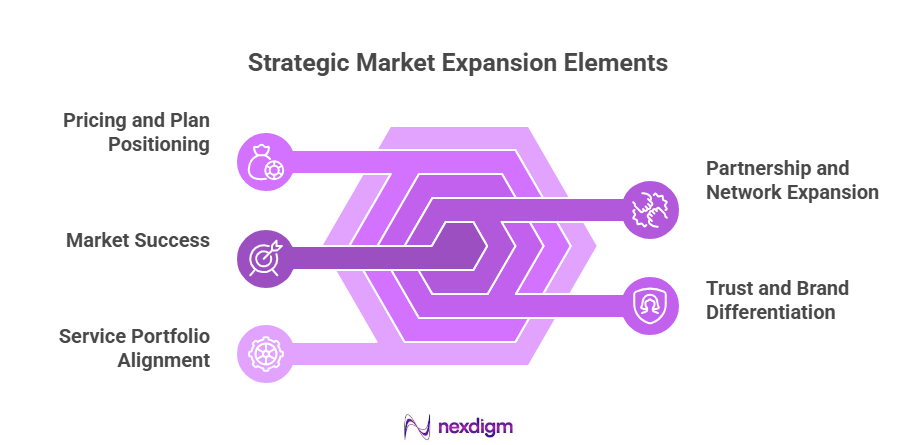
How Buyer Behavior Data Enables Strategic Market Expansion
-
Segment Identification Precision
Behavioral data reveals distinct patient and purchaser cohorts based on needs, risk tolerance, and channel preference, enabling targeted service design and localized expansion strategies.
-
Channel Optimization Strategy
Insights into search, booking, and care-access pathways guide investment across digital front doors, referral networks, and physical sites to match preferred engagement routes.
-
Service Portfolio Alignment
Utilization patterns and decision drivers show which specialties, care models, and convenience features attract specific segments, informing portfolio mix in new markets.
-
Pricing and Plan Positioning
Sensitivity to copays, deductibles, and bundled pricing clarifies optimal plan structures and transparent pricing models to win value-oriented consumers.
-
Trust and Brand Differentiation
Perception metrics on outcomes, communication, and experience identify reputation levers that increase switching from incumbents during entry phases.
-
Partnership and Network Expansion
Referral behavior and payer influence mapping indicate which employer, insurer, and community partnerships accelerate adoption in target geographies.
Why Choose Nexdigm for Buyer Behavior Consumer Insights
Nexdigm’s approach toward buyer behaviour consumer insights is driven by our clients’ goals. We strive to obtain the insights most relevant to our client so that our strategy can be implemented straightaway without losing opportunities to time.
-
Healthcare-Specific Behavioral Frameworks
Nexdigm applies sector-tuned survey instruments capturing clinical choice drivers, payer influence, and care-journey friction unique to healthcare markets.
-
Integrated Data Triangulation
Survey findings are fused with claims, utilization, and digital interaction data to validate intent-to-action gaps and quantify switching triggers.
-
Expansion-Focused Analytics
Models translate behavior signals into site location priorities, service rollout sequencing, and channel investments aligned to growth objectives.
-
Regulatory-Aware Research Design
Approaches align with HIPAA and healthcare research norms, ensuring compliant data capture across patient and purchaser segments.
-
Actionable Strategy Translation
Outputs convert insights into market entry playbooks, partnership maps, and messaging frameworks that operational teams can deploy rapidly.
Nexdigm Case
A regional U.S. healthcare network sought to expand into adjacent metropolitan counties where patient outmigration exceeded 18% of local demand. Nexdigm conducted a buyer behavior consumer insights survey across 1,200 insured households and 150 employer benefit managers, mapping decision drivers for provider choice, telehealth adoption, and price sensitivity. Findings showed 42% of switchers prioritized appointment availability within three days, while 37% valued integrated diagnostics at one location.
Using these insights, the network repositioned urgent care hours, bundled imaging with specialty visits, and aligned employer outreach in high-leakage ZIP codes. Within twelve months, new-patient capture in target areas rose 26%, telehealth utilization increased 31%, and employer-sponsored referrals grew 22%, supporting profitable service line launches and sustained regional share gains.
To take the next step, simply visit our Request a Consultation page and share your requirements with us.
Harsh Mittal
+91-8422857704