
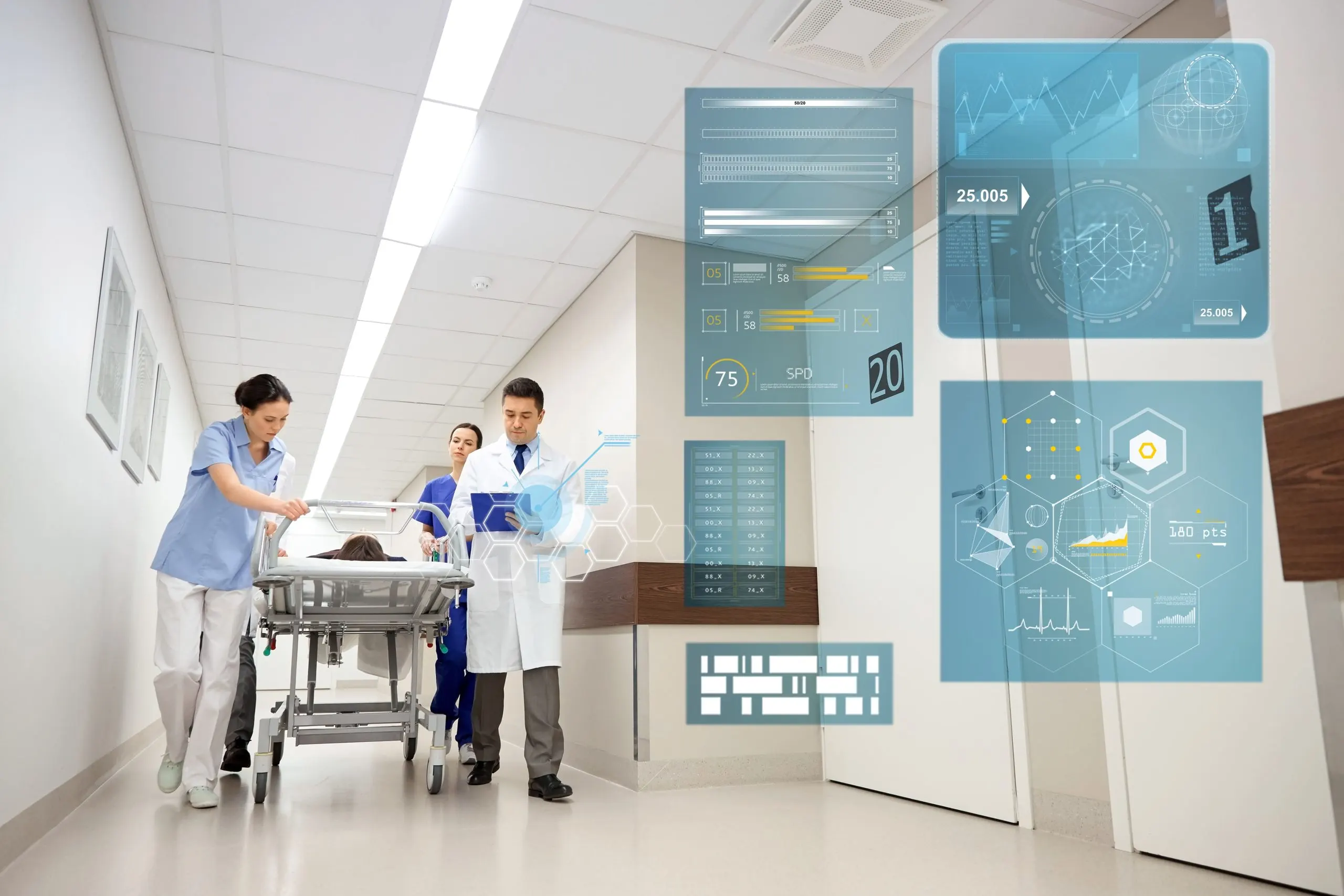
The United States healthcare infrastructure market has entered a period of serious reinvestment. For years, many providers focused more on clinical technology than the buildings, utility systems, and care networks that support delivery. That gap is now visible. Aging hospitals, overcrowded emergency departments, outdated HVAC systems, and uneven access in rural counties have made infrastructure a boardroom issue rather than a facilities issue. As of 2026, the U.S. remains the world’s largest healthcare spender, yet higher spending has not always translated into modern capacity. Some urban systems are building advanced specialty towers, while smaller community hospitals struggle to fund basic upgrades. At the same time, demand is shifting away from large inpatient campuses toward outpatient sites, same-day surgery centers, and home-based care. Through 2035, the market will likely reward providers that build flexible, efficient, and digitally connected assets rather than simply adding square footage.
What’s Driving the Healthcare Infrastructure Market in the USA?
Aging Population and Higher Care Demand
The demographic trend is straightforward: older populations need more healthcare. Americans over 65 are using more cardiology services, orthopedic procedures, cancer treatment, rehabilitation care, and long-term support. That creates pressure not only on hospitals but also on dialysis centers, memory care facilities, skilled nursing units, and recovery centers. In practice, this means infrastructure demand spreads across many facility types. A city may need fewer traditional beds but more outpatient infusion suites or post-acute rehab capacity. Providers that read these shifts early tend to allocate capital better.
Rise of Outpatient and Neighborhood Care Models
Large hospitals still matter, but they are no longer the only center of gravity. Many routine procedures now happen in ambulatory surgical centers, urgent care clinics, imaging hubs, and physician-owned specialty facilities. Patients usually prefer faster access, easier parking, and shorter wait times. Payers often prefer lower-cost settings too. That has changed construction priorities. Instead of one $1 billion campus project, systems may develop multiple smaller sites across suburban corridors. On the ground, these distributed networks often produce stronger patient retention than a flagship tower downtown.
Digital Modernization and Smarter Facilities
Healthcare buildings are becoming more software-driven. New facilities increasingly include remote monitoring rooms, AI-assisted radiology workflows, automated pharmacy systems, and predictive maintenance tools for elevators, generators, and cooling systems. This matters because margins are thin. If a hospital can cut energy waste, reduce equipment downtime, or improve patient flow by even a few percentage points, the savings become meaningful. Many executives now see digital infrastructure as essential, not optional.
Government-Led Initiatives Supporting Expansion
Federal and state programs continue to shape capital spending across the sector. Rural hospital grants, veterans healthcare upgrades, behavioral health funding, and public health preparedness budgets are all directing money into physical assets. Broadband programs have also had an indirect effect by making telehealth practical in remote areas. There is still a trade-off. Public funds often prioritize underserved communities, while private capital typically flows to high-demand metro markets. That tension will likely remain through the next decade.
Market Competition and Investment Landscape
The market is led by large health systems, specialized developers, construction groups, and infrastructure investors. Organizations such as HCA Healthcare, Kaiser Permanente, and Mayo Clinic continue to expand campuses, cancer centers, and outpatient networks. Real estate investment trusts and private equity firms have also become more active, particularly in surgery centers and physician office buildings. Some deals make financial sense. Others rely too heavily on optimistic utilization assumptions, which can create pressure later.
Uneven Access and Aging Legacy Assets
A common challenge is the split between modern urban facilities and financially strained regional providers. Many hospitals still operate from decades-old buildings with expensive maintenance needs, inefficient layouts, and limited room for expansion. Rural communities face an even tougher reality when closures force residents to travel hours for emergency care. New construction alone will not solve this problem. In many cases, renovation, network redesign, and telehealth integration may offer better returns than building from scratch.
Future Outlook
By 2035, the U.S. healthcare infrastructure market will likely look more distributed and specialized than it does today. Expect continued growth in ambulatory centers, behavioral health facilities, senior living with medical support, and hospital-at-home platforms. Major hospitals may concentrate on trauma, complex surgery, ICU care, and advanced oncology while routine care moves elsewhere. Energy resilience will become more important as climate risks and utility costs rise. Backup power, water redundancy, and smarter building controls will move higher on capital agendas. Providers that modernize selectively and manage assets carefully should outperform those that continue expanding old models.
Consultants at Nexdigm, in their latest publication “USA Healthcare Infrastructure Market Outlook to 2035”, analyzed the market by Facility Type (Hospitals, Ambulatory Surgical Centers, Diagnostic Centers, Long-Term Care Facilities, Behavioral Health Centers), By Ownership (Public, Private Nonprofit, Private For-Profit), and By Region (Northeast, Midwest, South, West). Nexdigm believes that businesses should focus on outpatient expansion, selective retrofits, rural access partnerships, and senior-care capacity as the most practical opportunities over the coming decade.
To take the next step, simply visit our Request a Consultation page and share your requirements with us.
Harsh Mittal
+91-8422857704