

A Healthcare Market Demand Survey looks at how people, employers, insurers, and care providers actually create and respond to demand across services and care settings. It helps explain who is seeking care, where they go first, what shapes their choices, and why use shifts between prevention, urgent care, and ongoing treatment.
In a large and complex healthcare system, demand is influenced by coverage rules, digital access, costs, and trust in providers. Well-designed surveys uncover unmet needs, expectations, and access barriers. This helps healthcare organizations and payers align services, capacity, and engagement with what people genuinely need and prefer.
Why a Healthcare Market Demand Survey Is Essential
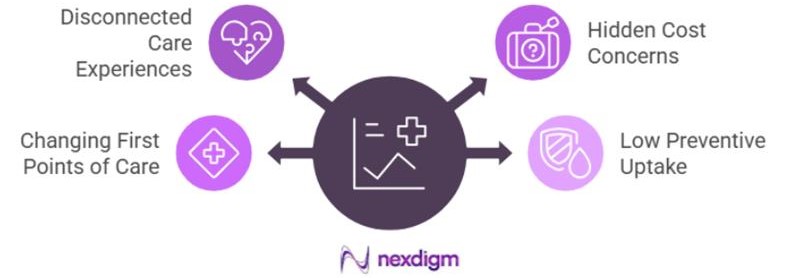
Disconnected Care Experiences
People often move between multiple doctors, hospitals, and insurers, making demand patterns hard to see. Surveys track how individuals choose providers, when they switch, and where care gaps appear across real patient journeys.
Hidden Cost Concerns
Insurance design and out-of-pocket costs strongly affect whether people seek or delay care. Demand surveys measure how price exposure shapes decisions to use, postpone, or replace services across different population groups.
Changing First Points of Care
Telehealth, retail clinics, and digital triage tools are changing where people begin care. Surveys identify preferred access channels, reasons for switching, and barriers that affect appointment completion and follow-up.
Low Preventive Uptake
Screenings, vaccines, and routine monitoring remain underused in many groups. Surveys reveal awareness levels, trust issues, and practical barriers that limit preventive care, enabling more targeted outreach and benefit design.
Employer and Insurer Steering
Plan networks, incentives, and coverage rules influence where and how people seek care. Surveys clarify how employer and payer structures shape provider choice, care locations, and adherence to treatment pathways.
Access and Equity Gaps
Location, income, language, and health literacy affect demand and access. Surveys highlight disparities in awareness and experience, supporting more localized service planning and culturally appropriate care approaches.
Nexdigm’s Frameworks For Healthcare Demand Survey
End to End Demand Visibility
Nexdigm follows how people actually move through care from first symptom to follow up. This shows where they enter, why they switch providers, and where needs remain unmet so services can match real demand.
Understanding Cost Reactions
Surveys explore how coverage rules and out of pocket costs affect decisions. The approach identifies when people delay, avoid, or substitute care under different price and benefit situations across patient groups.
Access Channel Experience Review
Nexdigm assesses preferences across telehealth, clinics, hospitals, and digital tools. Insights highlight barriers in booking, navigation, and continuity so healthcare organizations can simplify access and improve completed visits.
Driving Preventive Care Use
Survey modules examine awareness, trust, and convenience factors behind low screening and monitoring uptake. Findings help design outreach and benefits that encourage earlier care and ongoing health management.
Employer And Payer Impact Insight
The framework captures how plan design, incentives, and networks shape provider and care setting choices. This helps align offerings with how members are guided through the system.
Equity Led Demand Planning
Geo demographic and behavioral segmentation reveals where access gaps persist. Results support localized service planning and culturally relevant engagement to expand demand in underserved communities.
Nexdigm’s Case
Nexdigm partnered with a regional U.S. health system experiencing declining outpatient volumes despite strong specialty capacity. A healthcare demand survey mapped patient entry points, cost concerns, and channel preferences across insured and Medicare populations. Insights showed high appointment drop off due to scheduling friction and unclear coverage expectations. The system simplified booking, clarified benefits pre visit, and expanded telehealth triage. Within six months, completed outpatient visits rose by 18 %.
To take the next step, simply visit our Request a Consultation page and share your requirements with us.
Harsh Mittal
+91-8422857704