


U.S. healthcare data showing about 7.5 percent growth across 2024–2025 as prices increased. Providers and insurers are competing as services move toward outpatient, retail, and digital care. In such a large market, knowing what patients plan to choose and where they prefer to go directly shapes growth.
Healthcare decisions are complex and shaped by doctors, coverage, and access, so true intent is not visible in usage data alone. Consumer surveys reveal what patients want and what drives their choices. These insights help organizations design services, channels, pricing, and outreach that patients actually choose.
Conventional Challenges in Healthcare Purchase Intent Surveys
-
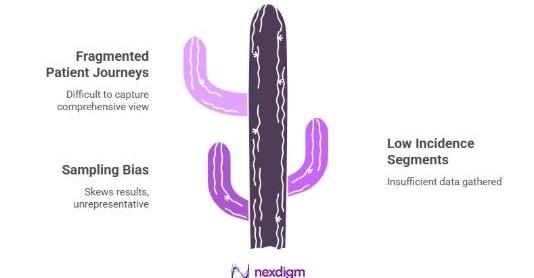
Sampling bias
Healthcare panels often overrepresent insured, urban, digitally engaged respondents, missing Medicaid, rural, and elderly segments where intent differs, skewing demand estimates and service prioritization decisions significantly in practice.
-
Low incidence segments
Rare procedures and niche specialties yield few qualified respondents, forcing small samples, wide confidence intervals, and unstable estimates that cannot guide investment or capacity planning decisions reliably.
-
Fragmented journeys
Patients traverse providers, payers, pharmacies, and digital tools, yet surveys capture single touchpoints, missing cross channel drivers of intent such as referrals, benefits design, and access barriers perceptions.
Nexdigm’s Healthcare Purchase Consumer Survey Services
Nexdigm’s Healthcare Purchase Intent Consumer Survey helps healthcare organizations see care decisions from the patient’s point of view. It explores how people choose providers, weigh costs, compare access options, and feel about in person versus virtual care. By listening across different patient and payer groups, the survey shows what truly matters in real life choices. These insights help organizations shape services, pricing, and access around genuine needs while understanding pressure from alternatives like telehealth, retail clinics, and large integrated systems.
How Nexdigm Makes Healthcare Purchase Intent Surveys Actionable
-
Representative sampling
Nexdigm ensures the survey includes all key patient groups, not just urban or insured respondents. Medicare, Medicaid, rural, and complex care patients are properly represented. This makes results reflect real healthcare demand.
-
Real journey recall
Questions follow how patients actually use healthcare, with simple prompts on visits, plans, and costs. This helps people answer accurately instead of guessing. Insights align better with real decisions.
-
Bias-free questions
Different question styles and orders are tested to avoid influence, especially in sensitive topics. Private response formats improve honesty. Results stay reliable across services and segments.
-
Niche patient coverage
For rare treatments or specialties, Nexdigm recruits the right patients directly. Enough responses are collected for stable insights. Even small service areas get dependable demand signals.
Nexdigm’s Crucial Consumer Experience Insights
- Care Access: Appointment availability, wait times, and referral complexity shape accessibility. Nexdigm captures these through journey mapping surveys, patient diaries, and network analytics to quantify barriers across channels and geographies.
- Cost Transparency: Out-of-pocket expectations, billing clarity, and coverage comprehension drive trust. Nexdigm integrates pricing modules, claims-linked surveys, and benefits literacy testing to measure affordability perception and decision thresholds across segments.
- Quality Signals: Clinical outcomes understanding, staff communication, and safety perception influence experience. Nexdigm deploys post-encounter surveys, text analytics on narratives, and HCAHPS-aligned metrics to connect quality with specialty, and pathway.
- Digital Usability: Portal usability, telehealth reliability, and app navigation affect engagement. Nexdigm conducts usability tests, clickstream-linked surveys, and accessibility audits to quantify friction, completion rates, and satisfaction across demographic cohorts.
Nexdigm’s Case
A U.S. hospital network partnered with Nexdigm to understand why elective procedure demand was lagging despite capacity.Purchase intent surveys revealed patients were deterred by unclear costs and referral delays.After transparent pricing and faster scheduling were introduced, bookings rose and patient satisfaction improved.
To take the next step, simply visit our Request a Consultation page and share your requirements with us.
Harsh Mittal
+91-8422857704