
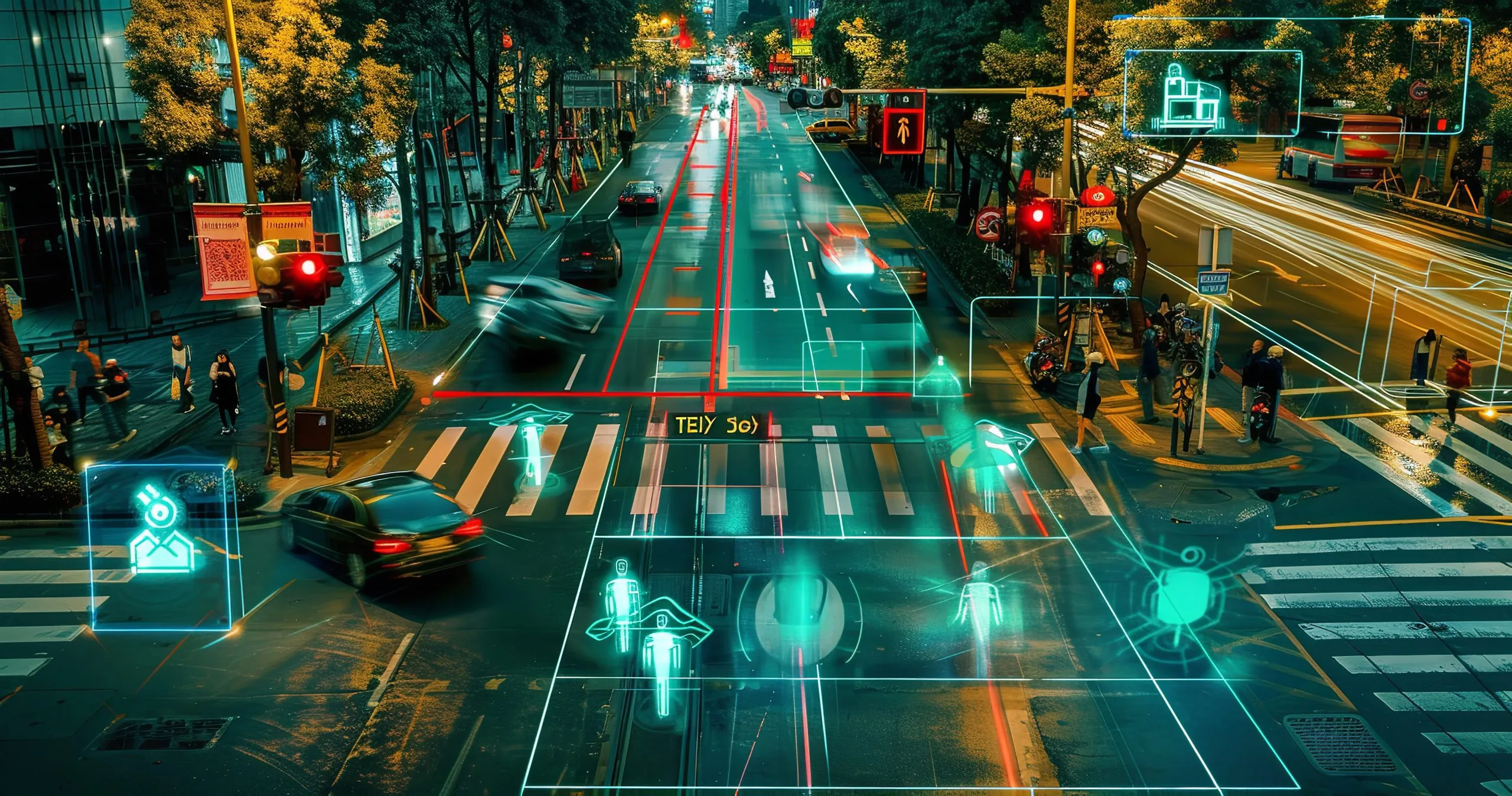
The USA pedestrian detection systems market is set for steady growth through 2030, driven by rising road-safety concerns, regulatory pressure, and wider adoption of advanced driver assistance systems. Pedestrian fatalities remain a major issue: NHTSA reported 7,080 pedestrian deaths and more than 71,000 pedestrian injuries in U.S. traffic crashes in 2024. As automakers move toward camera, radar, LiDAR, and AI-based sensing, pedestrian detection is shifting from a premium feature to a standard safety requirement across passenger cars, SUVs, light trucks, and emerging autonomous mobility platforms.
Key Market Drivers Accelerating Pedestrian Detection System Adoption
Rising Pedestrian Safety Concerns
Pedestrian safety remains the strongest demand driver. According to NHTSA, pedestrians accounted for 18% of all U.S. traffic deaths in 2024, underlining the need for proactive crash-avoidance technologies. Urban congestion, larger vehicle fleets, distracted driving, and nighttime visibility limitations are pushing automakers and Tier-1 suppliers to improve pedestrian detection accuracy. Systems that combine cameras with radar or LiDAR are gaining traction because they can improve object classification, distance measurement, and braking response in complex traffic environments.
Growth of ADAS and Automatic Emergency Braking
Pedestrian detection is increasingly integrated into automatic emergency braking, forward collision warning, adaptive cruise control, and broader ADAS packages. Research cited by the Insurance Institute for Highway Safety found that AEB with pedestrian detection was associated with a 25%–27% reduction in pedestrian crash risk and a 29%–30% reduction in pedestrian injury crash risk. This evidence supports wider deployment by OEMs, insurers, fleet operators, and safety-rating bodies. By 2030, pedestrian detection is expected to be a baseline feature in many new vehicles rather than an optional add-on.
Advances in Sensors and AI
Technology development is improving market economics. High-resolution cameras, thermal imaging, 4D radar, edge AI processors, and sensor-fusion software help systems detect pedestrians in low light, adverse weather, and cluttered urban scenes. AI models are also improving recognition of children, cyclists, wheelchair users, and partially occluded pedestrians. As component costs decline, mid-range and mass-market vehicles are expected to adopt more capable systems, supporting volume growth through 2030.
Government Initiatives Supporting Vehicle and Pedestrian Safety
Government regulation is a major catalyst. In April 2024, NHTSA finalized a rule requiring automatic emergency braking to be standard in new cars and light trucks starting in 2029, with systems required to detect both vehicles and pedestrians. The rule also aligns with the U.S. Department of Transportation’s National Roadway Safety Strategy and the Bipartisan Infrastructure Law mandate for AEB. These policies are expected to accelerate OEM investment before 2030.
Competitive Landscape and Key Players in the U.S. Market
The market is led by global automotive technology suppliers and sensor companies, including Bosch, Continental, ZF, Aptiv, Valeo, Denso, Magna, Mobileye, NVIDIA, and several radar, camera, and LiDAR specialists. Competition is shifting from hardware alone to integrated perception platforms, software updates, and validation performance. Automakers are also forming partnerships with AI-chip, mapping, and autonomous-driving firms to improve real-time pedestrian recognition and reduce false braking events.
Key Challenges Limiting Wider Adoption of Pedestrian Detection Systems
Performance in Nighttime and Complex Conditions
Despite progress, technical gaps remain. IIHS has noted that many vehicles still perform poorly in nighttime pedestrian crash-prevention tests, and earlier research found limited evidence of effectiveness in dark areas without street lighting, higher-speed roads, or turning scenarios. This creates pressure for better sensor fusion, thermal detection, and more rigorous validation.
Cost and Compliance Burden
Advanced pedestrian detection can increase vehicle cost, especially when systems require multiple sensors, high-performance processors, and extensive software calibration. Automakers also face compliance complexity as the 2029 AEB requirement approaches, particularly for lower-cost vehicle segments where margins are tighter.
Future Outlook
By 2030, the USA pedestrian detection systems market is expected to be shaped by regulation-led standardization, stronger safety-rating expectations, and rapid improvements in AI-based perception. Demand will expand beyond passenger vehicles into delivery fleets, robo-taxis, buses, and smart-city mobility systems. The strongest growth opportunities will likely be in sensor-fusion platforms, nighttime detection, over-the-air software improvement, and validation tools. While cost and real-world performance challenges remain, pedestrian detection is positioned to become a core pillar of U.S. vehicle safety architecture by the end of the decade.
Consultants at Nexdigm, in their latest publication “USA Pedestrian Detection Systems Market Outlook 2030,” analyze the sector by System Type (Camera Based Detection Systems, Radar Assisted Detection Systems, LiDAR Enabled Pedestrian Detection Systems, Thermal Imaging Detection Systems), By Platform Type (Passenger Vehicles, Light Commercial Vehicles, Heavy Commercial Vehicles), and By Fitment Type (OEM Factory Integrated Systems, Aftermarket Retrofit Solutions, Embedded ADAS Modules). Nexdigm suggests that businesses should prioritize investment in AI-enabled, sensor-fusion pedestrian detection technologies while aligning product strategies with evolving U.S. safety regulations, OEM requirements, and consumer demand for advanced driver assistance systems.
To take the next step, simply visit our Request a Consultation page and share your requirements with us.
Harsh Mittal
+91-8422857704