
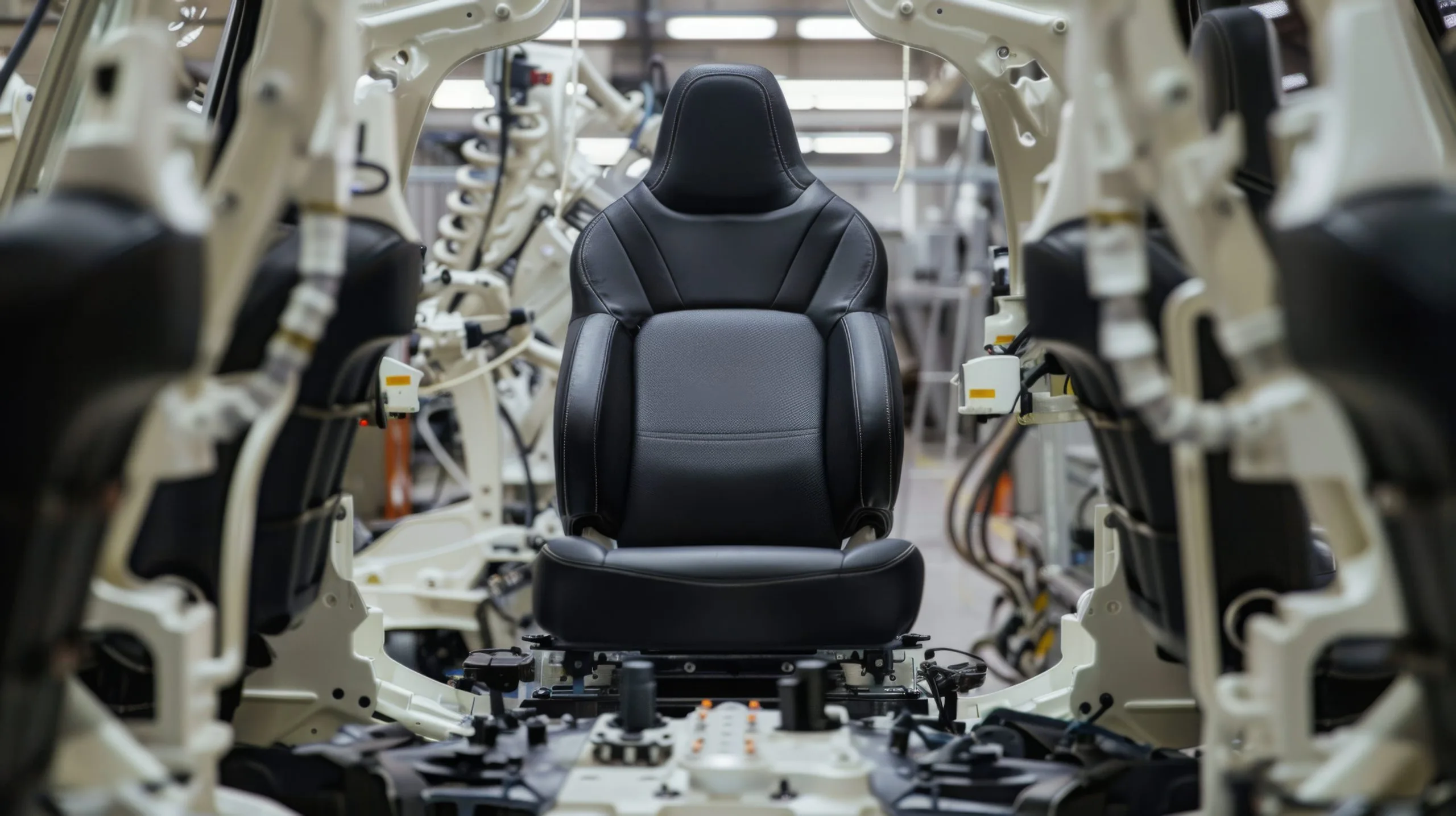
The USA seat frames market is expected to grow steadily as automakers focus on building seats that are lighter, safer, and more comfortable. Seat frames may not be visible to drivers, but they are one of the most important parts of a vehicle’s interior. They support the seat structure, help protect passengers during crashes, and carry features such as reclining, sliding, folding, and power adjustment. Globally, the automotive seat frames market is projected to grow from USD 32.13 billion to USD 43.49 billion in the upcoming years, at a 3.07% CAGR. In the U.S., demand will be shaped by EV growth, SUV and pickup popularity, safety rules, and the need for lighter vehicle components.
Major Factors contributing to the USA Seat Frames Market
Lighter Vehicles Need Lighter Seat Frames
One of the biggest shifts in the USA seat frames market is the move toward lightweight design. Automakers are trying to reduce vehicle weight to improve fuel efficiency in gasoline vehicles and extend the driving range in electric vehicles. Since every vehicle uses multiple seat frames, even small weight reductions can make a meaningful difference. This is why manufacturers are using high-strength steel, aluminum, magnesium alloys, and composite materials in seat frame design. These materials help reduce weight while maintaining the strength needed for safety and durability. The trend is especially important for EVs because batteries already add significant weight to the vehicle.
Strong Vehicle Demand Keeps Seat Frame Production Active
The U.S. remains a large and important automotive market, which creates steady demand for seat frames. New light-vehicle sales reached around 16.2 million units last year, up 2.4% from the previous years. Since every vehicle requires seat structures, this large production and sales base support consistent demand for frame suppliers. SUVs, pickups, and crossovers are especially important for the market. These vehicles often include larger seats, third-row options, fold-flat systems, power adjustments, and more complex seat mechanisms. This creates demand for stronger and more flexible seat frame designs.
Safety and Comfort Features Are Making Frames More Advanced
Seat frames are a key part of vehicle safety. They must support seat belts, airbags, head restraints, child-seat anchors, crash loads, and occupant positioning systems. As safety expectations rise, seat frames need to be stronger, more precise, and better integrated with the rest of the vehicle. At the same time, comfort features make seat frames more complex. Power adjustment, reclining, lumbar support, memory settings, ventilation, massage functions, and folding mechanisms all require advanced frame structures. In the coming years, more seat frames are expected to support smart seating features and flexible cabin layouts. Suppliers will need to design frames that are strong enough for safety, light enough for efficiency, and flexible enough for modern interiors.
US Government Goals Influencing the Seat Frames Market
Government safety standards play an important role in shaping the USA seat frames market. Rules covering crash protection, seat belt anchorage, head restraints, and child restraint systems require seat frames to meet strict strength and durability requirements. These standards push manufacturers to keep improving design and testing. Efficiency and emissions goals are also influencing the market. Automakers need lighter components to improve fuel economy and EV range, making lightweight seat frames more valuable. As safety, efficiency, and comfort expectations rise together, seat frame suppliers will need to deliver products that meet technical requirements without adding unnecessary cost or weight.
Competing Environment of the USA Seat Frames Market
The USA seat frames market includes major seating system suppliers, metal component manufacturers, materials companies, and specialist frame producers. Key players include Lear Corporation, Adient, Magna International, Toyota Boshoku, Forvia, TS Tech, and other automotive seating suppliers. Competition is based on safety performance, cost control, lightweight design, manufacturing scale, and the ability to support EV and SUV platforms. Automakers prefer suppliers that can deliver consistent quality, meet production timelines, and adapt quickly to new vehicle designs. As vehicle interiors become more advanced, seat frame suppliers are becoming more important partners in overall cabin development.
Challenges Holding the US Seat Frames Market
Material Costs and Supply Chain Pressure
Seat frames depend on materials and components such as steel, aluminum, brackets, sliders, recliners, motors, fasteners, and electronic parts. When prices rise or supplies are delayed, manufacturers face pressure on both cost and production schedules. Because seat frames are closely linked to vehicle assembly, even a small component shortage can create delays. Suppliers need stronger sourcing networks, better inventory planning, and more flexible manufacturing strategies. Managing cost while keeping quality high will remain a major concern in the coming years.
Balancing Strength, Weight, and Affordability
Automakers want seat frames that are strong, lightweight, safe, durable, and affordable. Achieving all of these goals at once is difficult. Advanced materials can reduce weight, but they may also increase cost or require new production methods. This challenge is especially important in mass-market vehicles, where buyers want better features but automakers must control prices. Suppliers must find ways to reduce weight without weakening safety performance or making seats too expensive. Companies that solve this balance well will have a clear advantage in the market.
Future Outlook
The USA seat frames market is expected to remain on a positive path in the upcoming years, supported by EV adoption, SUV and pickup demand, strong safety requirements, and continued innovation in vehicle interiors. The broader North America automotive seat market is projected to reach USD 25.68 billion, growing at a 4.79% CAGR, showing continued strength in the seating sector. In the coming years, seat frames are likely to become lighter, more modular, and more closely connected with comfort and safety technologies. They will support flexible interiors, fold-flat seating, smart adjustment systems, and low-weight EV platforms. Suppliers that can combine crash safety, lightweight materials, cost efficiency, and scalable production will be best positioned in the U.S. market.
Consultants at Nexdigm, in their latest publication USA Seat Frames Market Outlook 2030, analyse the sector by System Type (Front Seat Frames Structure, Rear Bench Seat Frames, Recliner Integrated Frames), by Platform Type (Passenger Cars, SUV and Crossover, Light Commercial Vehicles, Heavy Commercial Vehicles and Electric Vehicles).
Nexdigm suggests that businesses in the USA Seat Frames market should focus on lightweight material innovation, cost-efficient manufacturing, supply chain resilience, and compliance with safety standards. Companies should also invest in EV-ready frame designs, modular seating structures, local sourcing, and partnerships with OEMs to stay competitive in the evolving market.
To take the next step, simply visit our Request a Consultation page and share your requirements with us.
Harsh Mittal
+91-8422857704