
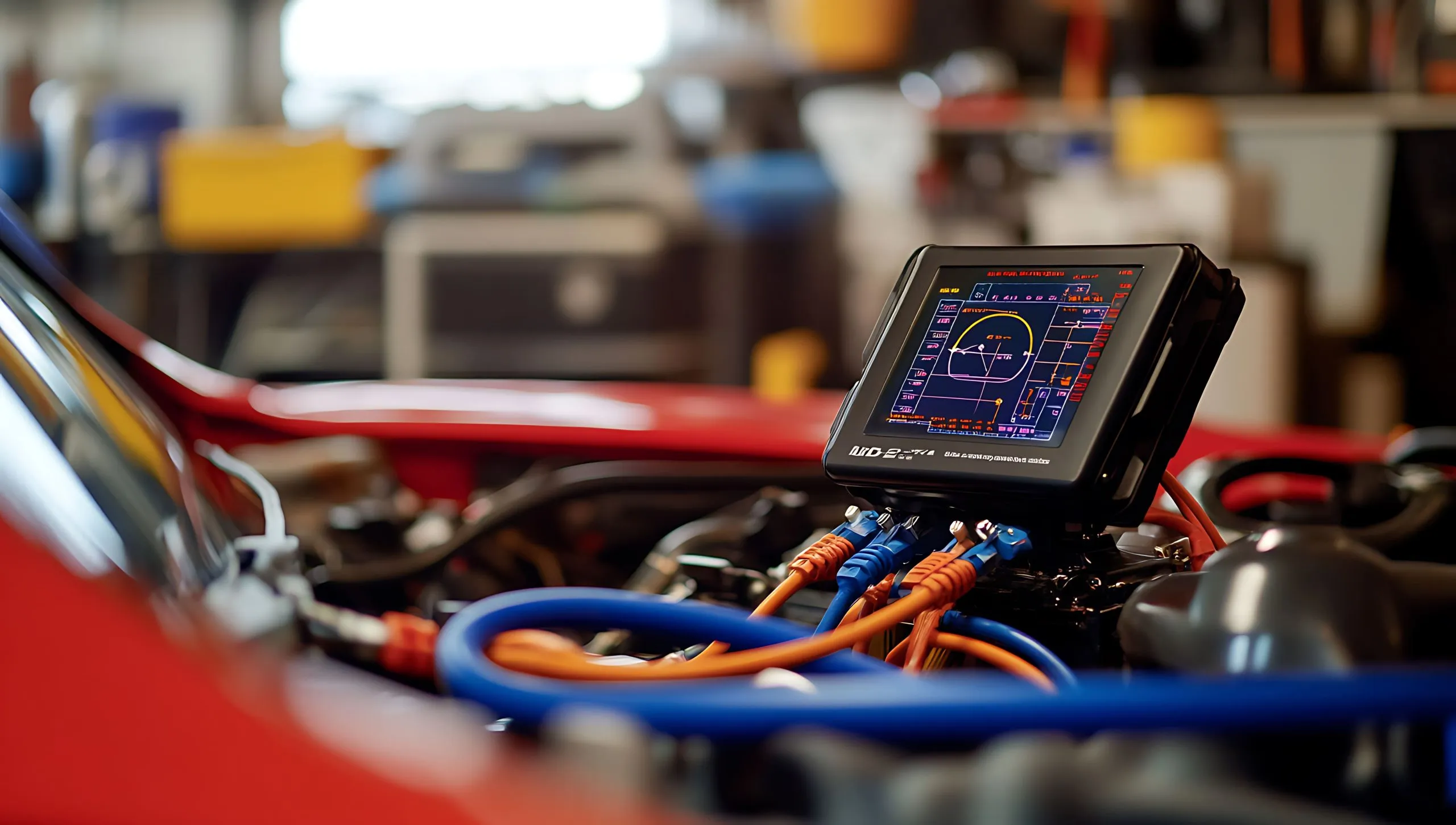
The USA thermal management systems market is entering a decisive phase, shaped by how quickly industries are learning to deal with heat as a limiting factor rather than a side issue. Whether it is electric vehicles, semiconductor fabs, or hyperscale data centers, excess heat now directly impacts performance, safety, and operating costs. By 2025, the U.S. had already established itself as a major contributor to global demand, largely because of its concentration of high-tech manufacturing and digital infrastructure. What stands out is not just the scale, but the shift in mindset. Engineers and operators are no longer asking how to cool systems cheaply, but how to do it efficiently without compromising performance or sustainability. That shift alone is redefining product design and procurement decisions heading toward 2030.
What’s Driving the Thermal Management Systems Market in the USA?
Electric Vehicles Are Redefining Cooling Requirements
Thermal management in EVs is far more complex than in traditional vehicles. Batteries operate within narrow temperature bands, and even slight deviations can affect range or long-term degradation. On the ground, automakers are experimenting with liquid cooling loops, refrigerant-based systems, and even direct cell cooling. Tesla and other manufacturers have shown that better thermal control can translate into measurable performance gains. As EV adoption spreads beyond early adopters into mass-market segments, the expectation for reliability in different climates is pushing manufacturers to refine these systems further.
Data Centers Are Facing a Heat Problem at Scale
Anyone working around large data centers will tell you that heat management has quietly become one of the biggest operational headaches. AI workloads, in particular, generate far more heat than traditional computing tasks. Air cooling, once the default, is starting to hit its limits in dense server environments. This has led to a noticeable shift toward liquid cooling and immersion techniques. These systems are not cheap, and retrofitting existing facilities can be complicated, but the alternative often means higher energy bills and reduced hardware lifespan.
Miniaturization in Electronics Is Tightening the Margins
Consumer electronics continue to pack more power into smaller footprints. That creates a design trade-off: more performance in less space inevitably leads to heat concentration. In practice, this means manufacturers are relying on advanced materials such as vapor chambers, graphite sheets, and even emerging nano-materials to manage thermal loads. The challenge is subtle but real, keeping devices cool without increasing weight, cost, or thickness. It is a balancing act that requires constant iteration.
Government-Led Initiatives and Sustainability Push
Public policy is playing a quieter but important role here. Incentives tied to clean energy, EV adoption, and domestic semiconductor production are indirectly shaping demand for better thermal systems. For example, federal support for chip manufacturing has triggered a wave of new fabrication plants, each requiring precise temperature control to maintain yield and quality. Energy efficiency standards are also nudging operators to rethink cooling strategies, especially in energy-intensive sectors like data centers. While policy does not dictate technology choices, it does influence the economics behind them.
Market Competition and Key Players
Competition in this space is intense, and it is not limited to traditional HVAC or industrial players. Companies such as Honeywell International Inc. and Emerson Electric Co. bring deep expertise in controls and automation, while Parker Hannifin Corporation focuses on precision fluid systems. Meanwhile, Vertiv Holdings Co. has carved out a strong position in data center cooling solutions. What is interesting is how these companies are converging toward similar goals from different starting points. Some are investing in smart sensors and predictive cooling, others in advanced fluids or modular systems. Partnerships with EV manufacturers and data center operators are becoming common, as end users demand more customized solutions rather than off-the-shelf products.
High Cost of Advanced Cooling Technologies
A common challenge is the cost barrier. Advanced solutions such as liquid immersion cooling or AI-driven thermal optimization systems require significant upfront investment. For large enterprises, the long-term savings in energy and maintenance may justify the expense. Smaller operators, though, often hesitate. The payback period is not always clear, and integration can disrupt existing operations. In some cases, companies continue using less efficient cooling simply because it is already in place and understood by their teams.
Future Outlook
Looking ahead, the market will likely evolve in layers rather than through a single breakthrough. Liquid cooling will become more common, particularly in high-performance computing and EV applications. At the same time, incremental improvements in materials and system design will quietly enhance efficiency across industries. There is also a growing interest in intelligent thermal management, where sensors and software adjust cooling dynamically based on real-time conditions. This approach reduces energy waste but adds complexity to system design. Not every company will adopt it immediately, but the direction is clear.
Consultants at Nexdigm, in their study “USA Thermal Management Systems Market Outlook to 2030,” suggest that companies focusing on practical efficiency gains rather than expensive overengineering will stand out. In reality, the winners may not be those with the most advanced technology, but those who can deliver reliable, cost-effective solutions that work consistently in real-world conditions.
To take the next step, simply visit our Request a Consultation page and share your requirements with us.
Harsh Mittal
+91-8422857704