
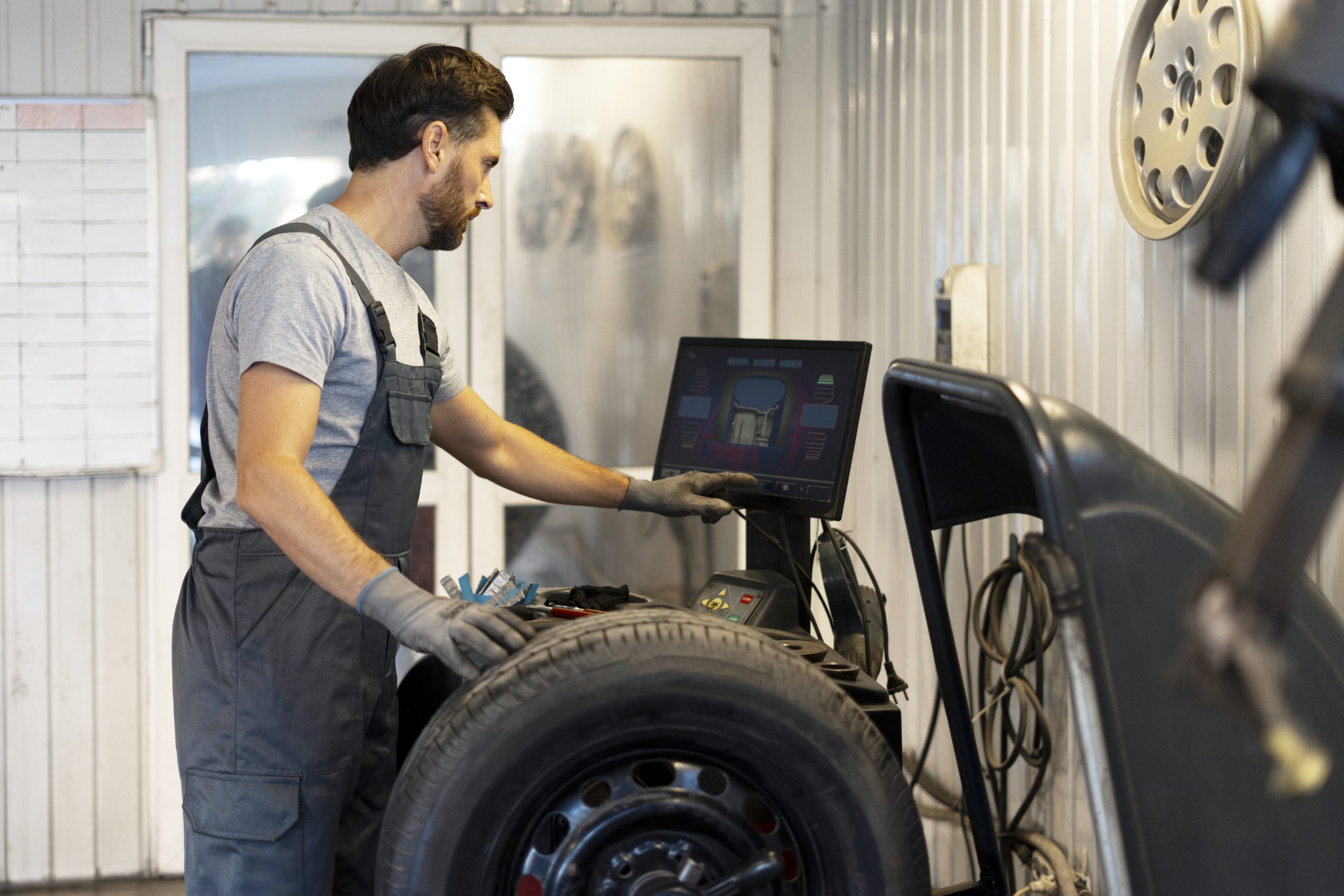
The USA tire balancing equipment market is experiencing steady growth as vehicle ownership continues to rise and maintenance needs increase. Tire balancing plays a crucial role in improving vehicle safety, reducing tire wear, and enhancing driving comfort. With over 290 million vehicles on U.S. roads, the demand for efficient servicing equipment remains strong. The broader tire and wheel equipment market is growing at around 4% CAGR, reflecting consistent demand from automotive workshops and service centers.
In addition, increasing awareness about vehicle safety and performance is encouraging regular maintenance practices. Consumers are becoming more conscious of tire health, which is driving demand for balancing services. As workshops modernize and adopt automation, tire balancing equipment is becoming an essential part of the automotive service ecosystem.
What are the key factors driving the Market?
Growing Vehicle Ownership and Maintenance Needs
The U.S. has one of the largest vehicle fleets globally, which directly increases the demand for maintenance services. Regular tire balancing is essential for vehicle performance and safety, making it a routine requirement. As vehicle usage increases, service centers are seeing higher volumes of maintenance work, driving demand for reliable balancing equipment.
Additionally, longer vehicle lifespans mean more frequent servicing over time. Consumers are also driving more miles annually, increasing wear and tear on tires. This is further boosting the need for regular balancing and maintenance solutions.
Expansion of Automotive Service Centers
The growth of independent garages, dealerships, and fleet maintenance centers is another key factor. Automotive service centers account for a significant share of equipment demand, with workshops continuously upgrading tools to improve efficiency.
Fleet operators and logistics companies are also investing in advanced equipment to maintain large vehicle fleets more effectively.
Moreover, the rise of quick-service repair chains is increasing the demand for faster and more efficient equipment. Service providers are focusing on reducing turnaround time while maintaining high service quality. This is encouraging investment in modern tire balancing systems.
Shift Towards Automation and Advanced Equipment
Modern workshops are adopting automated and digital tire balancing machines to reduce manual effort and improve accuracy. Advanced systems help detect imbalances quickly, improving productivity and customer satisfaction. The rise of electric vehicles (EVs) is also increasing the need for precise balancing solutions due to different weight distributions.
In addition, digital displays and smart diagnostics are making machines easier to use. Automation is helping reduce human error and improve consistency in service quality. These advancements are making tire balancing faster, more reliable, and more efficient.
How is the Government Supporting the USA Tire Equipment Market?
Government support in the U.S. mainly comes through regulations focused on vehicle safety and emissions standards, which indirectly drive demand for proper tire maintenance. Incentives for domestic manufacturing and adoption of advanced technologies are also encouraging modernization of automotive workshops. Additionally, policies supporting EV adoption are creating new opportunities for advanced tire servicing equipment.
Regulatory bodies are also emphasizing regular vehicle inspections, which include tire maintenance checks. This is increasing awareness among consumers and service providers. Overall, these regulations are helping maintain high safety standards while supporting market growth.
Who are the key players in the Tire Equipment Market ?
The market includes leading players such as Hunter Engineering Company, Bosch Automotive Service Solutions, Hofmann, Snap-on, and Corghi. These companies are known for offering high-quality, technologically advanced tire balancing systems. Many are focusing on automation, digital interfaces, and improved accuracy to stay competitive.
In addition, these players are investing heavily in research and development to introduce innovative products. They are also expanding their distribution networks to reach more service centers across the country. Strategic partnerships and after-sales services are helping them build strong customer relationships.
Key Challenges faced in the Tire Market High Equipment Costs
Advanced tire balancing machines can be expensive, especially for small workshops. This can limit adoption, particularly among independent service providers. In addition, the cost of maintenance and upgrades can further increase the financial burden. Smaller businesses may delay investing in advanced equipment due to budget constraints.
Skill Gap and Technology Adoption
Operating modern automated systems requires skilled technicians, and there is often a shortage of trained professionals. Additionally, rapid technological changes mean workshops must continuously invest in upgrades. Smaller players may find it difficult to keep up with evolving equipment standards and automation trends. Training staff and adapting to new systems can also take time and resources.
Future Outlook
Looking ahead to 2030, the USA tire balancing equipment market is expected to grow steadily, supported by rising vehicle numbers and increasing demand for efficient maintenance solutions. The shift toward automation, digital diagnostics, and EV-compatible equipment will shape the future of this market.
Workshops are likely to focus more on speed, accuracy, and customer experience. The growing adoption of electric and hybrid vehicles will also create new requirements for balancing equipment. Overall, the market presents stable growth opportunities for companies offering cost-effective, advanced, and easy-to-use solutions.
Consultants at Nexdigm, in their latest publication USA Tire Balancing Equipment Manufacturing Market Outlook 2030, analyze the sector by Automotive Type (Automotive, Commercial, Heavy Duty, Passenger and Light Duty), by operation Mode (Manual, Semi Automatic, Fully Automatic).
Nexdigm suggests that businesses in the USA tire balancing equipment market should focus on adopting advanced and automated solutions to improve efficiency and accuracy. Investing in skilled workforce training, offering cost-effective equipment, and staying aligned with evolving vehicle technologies, including EVs, will help businesses remain competitive and meet changing service demands.
To take the next step, simply visit our Request a Consultation page and share your requirements with us.
Harsh Mittal
+91-8422857704