
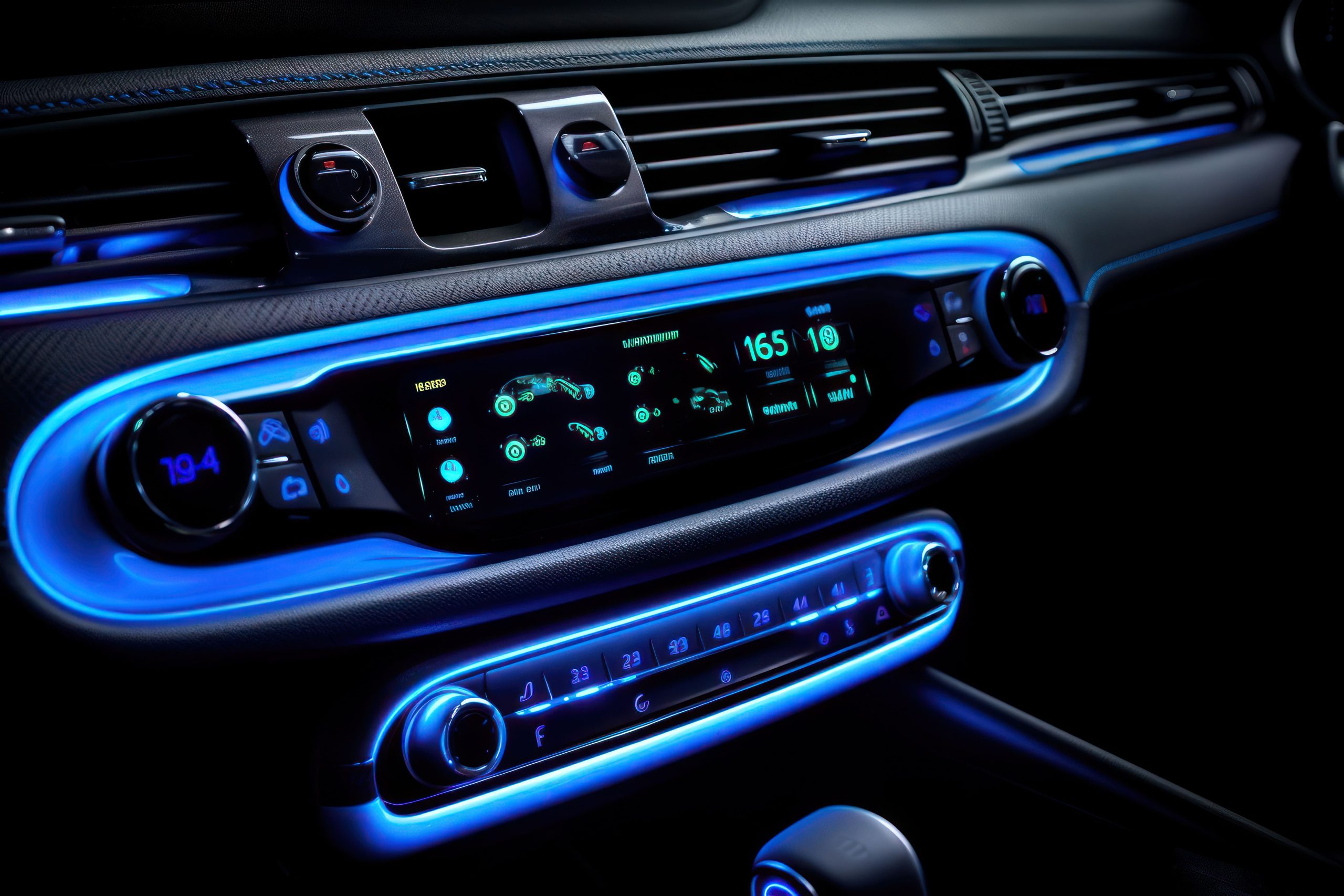
The USA vehicle lighting electronics market is moving well beyond basic headlamps and tail lamps. Lighting has become a serious piece of automotive engineering, tied not just to visibility but also to safety ratings, energy use, styling, and increasingly, software. In 2026, automakers in the U.S. are investing more heavily in LED modules, adaptive front lighting, ambient cabin systems, and electronic control units that can adjust light output in real time. That matters because vehicle buyers today notice lighting in a way they did not a decade ago. It affects first impressions in the showroom, but it also plays a practical role in night driving, pedestrian visibility, and battery efficiency in electric vehicles. By 2030, vehicle lighting electronics in the U.S. will likely become more intelligent, more regulated, and far more central to how cars are designed and sold.
What’s Driving the Vehicle Lighting Electronics Market in the USA?
LED Adoption Is Becoming the Default
One of the clearest shifts in the U.S. market is the move away from halogen and toward LED-based systems. What started in luxury cars has now filtered into mid-range SUVs, pickups, and even fleet vehicles. The reason is fairly straightforward: LEDs consume less power, last longer, and give automakers much more flexibility in design. A thin light bar across the rear of an EV or a sharply shaped daytime running lamp is not just styling flair, it is also made possible by compact electronics and more efficient lighting architecture. There is also a cost logic here. While LED systems are more expensive upfront, manufacturers and fleet operators often find the lifecycle economics more attractive, especially when lower maintenance and energy savings are factored in.
Safety and Visibility Are Getting More Attention
Lighting electronics are also benefiting from a very practical concern: U.S. roads remain dangerous after dark. Nighttime accidents, especially involving pedestrians, have pushed both regulators and automakers to treat lighting as a genuine safety feature rather than a compliance checkbox. Better beam patterns, cornering lights, glare control, and adaptive high beams all improve real-world visibility. In practice, automakers are paying close attention to how their lighting systems perform in safety testing. A poor headlamp rating can quietly hurt a vehicle’s reputation, especially in a market where buyers compare trims and features closely. That has made lighting performance more commercially important than many suppliers anticipated a few years ago.
EVs and Premium Design Trends Are Changing Buyer Expectations
Electric vehicles have added a new layer of demand to the market. Because EVs are often sold as technology-first products, lighting has become part of the storytelling. Full-width light bars, animated welcome lighting, illuminated badges, and highly stylized rear signatures are no longer rare. Buyers increasingly associate these features with innovation, even when the underlying hardware is a mix of standard LEDs and software-controlled modules. That said, not every lighting upgrade is purely functional. Some of it is visual theatre. But in the auto industry, perception matters, and suppliers that can deliver both efficiency and design flexibility are likely to win more OEM contracts.
Government-Led and Regulatory Developments
Regulation is beginning to open the door for more advanced lighting systems in the U.S. One of the most important developments has been the approval of adaptive driving beam (ADB) headlight technology under federal safety rules. This allows vehicles to automatically shape and redirect light around other road users instead of simply switching between high and low beams. That sounds technical, but the impact is very real. It gives suppliers a reason to invest in smarter control units, camera-linked lighting systems, and software calibration. The challenge, of course, is that regulation often moves slower than technology. So while the legal framework is improving, market rollout may still be uneven across vehicle segments.
Market Competition
The USA vehicle lighting electronics market remains moderately concentrated, with a handful of global suppliers controlling much of the high-value segment. Companies such as Forvia Hella, Valeo, Marelli, Koito Manufacturing, and Stanley Electric continue to supply major OEMs, while semiconductor firms support LED drivers, thermal management, and control electronics behind the scenes. Competition is no longer just about who can make a brighter lamp. It increasingly comes down to who can package lighting into scalable, software-ready modules that work across multiple vehicle platforms. That favors suppliers with strong engineering depth, not just manufacturing scale.
Cost and Aftermarket Quality Gaps
A common challenge in this market is the gap between advanced OEM lighting systems and what happens in the aftermarket. Many lower-cost replacement LED products sold in the U.S. still struggle with beam alignment, glare, and regulatory compliance. On the ground, that creates frustration for consumers and safety concerns for regulators. At the same time, genuinely advanced systems such as matrix LEDs or adaptive beam modules remain expensive. That limits adoption outside premium trims and higher-end EVs. So while the technology is impressive, affordability still decides how far and how fast it spreads.
Future Outlook
By 2030, the U.S. vehicle lighting electronics market will likely look more sophisticated and more software-dependent than it does today. LED systems should dominate new vehicle production, while adaptive front lighting, dynamic signaling, and interior ambient electronics become more common across mainstream models. The bigger shift may be less visible: lighting will increasingly operate as part of the vehicle’s broader electronic architecture, linked to sensors, cameras, and driver assistance systems. That makes this market more important than it appears at first glance. For suppliers and OEMs alike, lighting is no longer a finishing touch. It is becoming core vehicle technology.
Consultants at Nexdigm, in their latest publication “USA Vehicle Lighting Electronics Market Outlook to 2030”, analyze the market by Product Type (Headlamps, Rear Lighting, Interior Lighting, Signal Lighting, Ambient Lighting), By Technology (Halogen, HID/Xenon, LED, Matrix LED, Adaptive Lighting), By Vehicle Type (Passenger Cars, SUVs, Pickup Trucks, Electric Vehicles, Commercial Vehicles), and By Sales Channel (OEMs and Aftermarket). Nexdigm believes that businesses should prioritize adaptive lighting technologies, compliant LED solutions, and software-integrated lighting electronics as the key growth levers in the U.S. market.
To take the next step, simply visit our Request a Consultation page and share your requirements with us.
Harsh Mittal
+91-8422857704