
Competitive intelligence services evaluate fleet efficiency gains and data utilization through telematics adoption, offering structured insights into performance improvements. The global fleet telematics market is expected to exceed $150 billion by 2030, with over 70% of commercial fleets adopting connected solutions.
Telematics-driven analytics can reduce fuel consumption by 10–15% and improve route efficiency by up to 20%. These services benchmark metrics such as vehicle uptime, driver behavior, and operational costs, helping organizations measure performance against competitors and optimize fleet operations using real-time data.
Vehicle telematics insights leverage sensors, GPS, and onboard systems to deliver actionable data on performance and diagnostics. Companies using predictive maintenance report up to 30% reduction in maintenance costs and 25% less downtime. Competitive intelligence highlights best practices in data utilization, enabling businesses to enhance productivity, improve safety, and make informed decisions in a rapidly evolving, data-driven mobility ecosystem.
Elements of Competitive Intelligence for Fleet Efficiency and Telematics Adoption
Competitive intelligence services help organizations evaluate fleet efficiency gains and data utilization as telematics adoption increases. These elements provide structured insights into performance metrics, operational improvements, and competitive positioning in a data-driven fleet management environment.
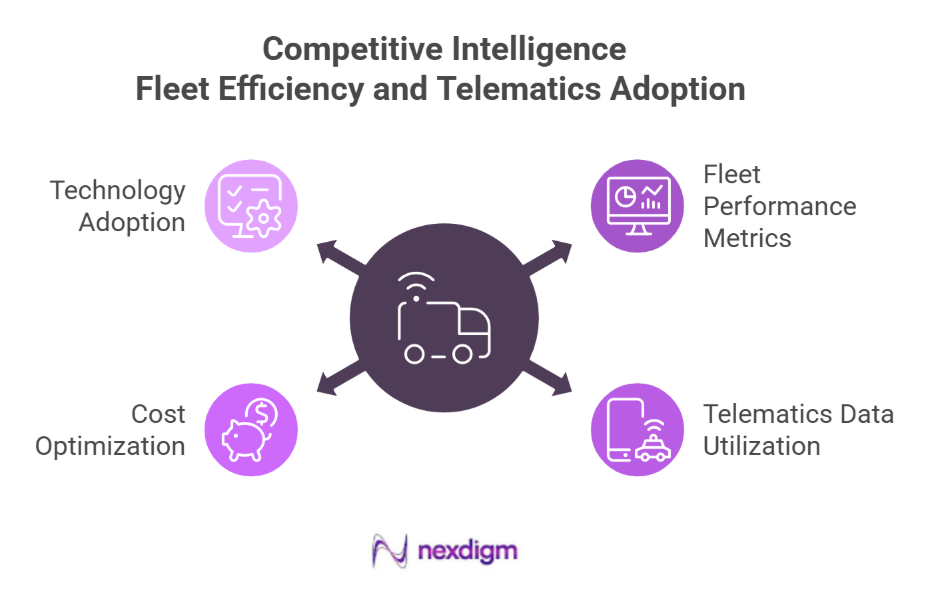
1. Fleet Performance Metrics Analysis
Competitive intelligence focuses on analyzing key performance indicators such as fuel consumption, vehicle utilization, idle time, and maintenance cycles. These metrics help businesses benchmark fleet efficiency and identify opportunities for operational improvements.
2. Telematics Data Utilization Assessment
Services evaluate how effectively companies use telematics data for decision-making. This includes insights on route optimization, driver behavior monitoring, and predictive maintenance, helping organizations maximize the value derived from connected fleet systems.
3. Cost Optimization Insights
Competitive intelligence identifies cost-saving opportunities through telematics adoption. By analyzing competitor strategies, businesses can reduce fuel costs, minimize downtime, and optimize resource allocation, improving overall fleet profitability and operational efficiency.
4. Technology Adoption Benchmarking
These services benchmark the level of telematics technology adoption across competitors. Businesses can assess their maturity in using connected systems, identify gaps, and enhance their capabilities to remain competitive in an increasingly data-driven fleet ecosystem.
Changes Driven by Nexdigm’s Competitive Intelligence in Fleet Telematics
Nexdigm’s vehicle telematics benchmarking services enable organizations to adapt to telematics-driven fleet management. By evaluating efficiency gains and data utilization, businesses adopt strategic and operational changes that improve performance, reduce costs, and enhance decision-making in a connected fleet ecosystem.
1. Shift to Data-Driven Operations
Organizations move from manual processes to data-driven fleet management, using telematics insights to optimize routes, monitor vehicle performance, and improve operational efficiency across fleets.
2. Enhanced Predictive Maintenance Practices
Companies adopt predictive maintenance strategies using telematics data, reducing unexpected breakdowns, minimizing downtime, and extending vehicle lifecycles through proactive servicing and condition-based monitoring.
3. Improved Driver Behavior Monitoring
Businesses implement driver monitoring systems to track driving patterns, improve safety, reduce fuel consumption, and ensure compliance with safety standards through actionable telematics insights.
4. Integration of Advanced Telematics Systems
Organizations upgrade to advanced telematics platforms, integrating GPS, IoT, and analytics tools to enhance real-time tracking, fleet visibility, and data utilization for better decision-making.
5. Cost Reduction and Efficiency Optimization
Companies adopt strategies to reduce operational costs by leveraging telematics insights, optimizing fuel usage, reducing idle time, and improving asset utilization across their fleet networks.
6. Strategic Benchmarking and Performance Tracking
Businesses continuously benchmark fleet performance against competitors, using competitive intelligence insights to track improvements, identify gaps, and implement best practices in telematics-driven fleet management.
Nexdigm’s Case:
Nexdigm helped a logistics firm improve fleet efficiency by 30% and reduce fuel costs by 25% within 12 months by leveraging telematics data insights, benchmarking competitors, and optimizing route planning and predictive maintenance strategies.
To take the next step, simply visit our Request a Consultation page and share your requirements with us.
Harsh Mittal
+91-8422857704