

Supplier compliance is becoming harder to manage as organizations operate across larger and more complex third-party ecosystems. Recent 2026 Global Third-Party Risk Management Survey, covering 851 organizations, found that 48% identify regulatory compliance as a primary driver of third-party risk management, while 37% cite cyber risk.
Only 18% report full integration between third-party risk management and enterprise risk management, and just 17% rate their third-party risk data as fully reliable. The challenge extends beyond initial onboarding: the study found that 83% of executives plan to expand their partner networks over the next one to three years, increasing the need for scalable supplier oversight.
These developments make vendor compliance tracking important for monitoring standards, identifying performance gaps, and maintaining visibility across the supplier base.
Why Supplier Compliance Requires Continuous Attention
Supplier compliance cannot be treated as a one-time onboarding exercise. Requirements can change as regulations, certifications, cybersecurity expectations, sustainability standards, and contractual obligations evolve. Supplier performance can also deteriorate after onboarding through missed deliveries, quality issues, incomplete documentation, or control failures. Continuous monitoring helps procurement and risk teams identify these changes earlier and determine where corrective action or deeper review is required.
The Areas That Shape Supplier Compliance
A useful compliance view should combine formal requirements with actual supplier performance.
- Standards and Controls: Track certifications, regulatory requirements, contractual obligations, audit findings, and documentation to identify gaps before they become material compliance issues.
- Operational Performance: Monitor delivery, quality, responsiveness, corrective actions, and service-level adherence to determine whether suppliers are meeting agreed operational expectations.
Together, these measures create a broader view of whether suppliers are compliant on paper and performing effectively in practice.
How Nexdigm’s Experts Assess Supplier Compliance
Nexdigm’s experts assess supplier compliance by bringing documentation, performance, risk, and business context together. This helps distinguish areas that could materially affect supply continuity or supplier relationships:
- Compliance Health: Review certifications, contractual requirements, audit findings, regulatory obligations, and documentation to determine whether suppliers are meeting defined compliance expectations.
- Performance and Risk Signals: Analyze delivery, quality, corrective actions, supplier criticality, geographic exposure, and other indicators to identify patterns that may signal broader supplier risk.
- Priority and Action: Assess the severity and business impact of identified gaps to determine which suppliers require remediation, enhanced monitoring, escalation, or deeper review.
This approach makes vendor compliance tracking more actionable by helping businesses understand not only where gaps exist, but which gaps matter most and what should happen next.
Nexdigm’s Supplier Compliance Assessment Framework
Nexdigm can structure supplier compliance through a practical framework that conducts vendor compliance tracking, connects compliance requirements with supplier performance and business risk. Steps for the framework are:
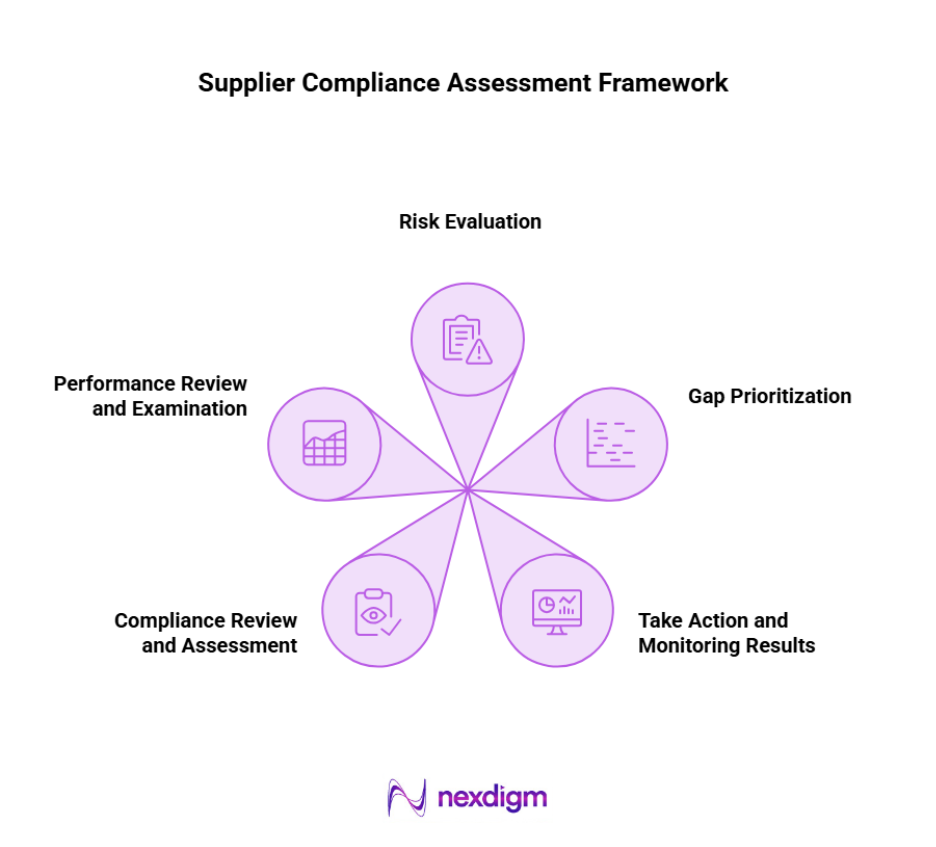
- Compliance Review: Assess certifications, regulatory requirements, contractual obligations, documentation, and audit findings to establish the supplier’s current compliance position.
- Performance Review: Examine quality, delivery, service levels, responsiveness, and corrective-action history to understand how compliance translates into operational performance.
- Risk Evaluation: Consider supplier criticality, geographic exposure, concentration, financial or operational dependencies, and potential business impact to determine overall risk.
- Gap Prioritization: Classify identified gaps according to severity, recurrence, business impact, and remediation requirements to determine where intervention is most important.
- Action and Monitoring: Establish corrective actions, ownership, review timelines, and monitoring indicators to track remediation and maintain ongoing supplier visibility.
This framework helps businesses move from compliance verification to continuous supplier oversight, creating a more structured basis for managing vendor risk and performance.
Nexdigm’s Compliance Assessment Helping with Vendor Risk Management
Nexdigm’s framework helps businesses translate supplier findings into a clearer view of vendor risk and performance. By connecting compliance status with operational and strategic factors, the assessment can support with:
- Risk Visibility: Bring compliance gaps, performance issues, supplier criticality, and exposure factors together to identify where vendor risk is concentrated.
- Performance Improvement: Use recurring findings and supplier trends to identify areas for corrective action, supplier development, or closer performance management.
- Governance Prioritization: Help procurement teams determine which vendors require enhanced monitoring, periodic reviews, remediation, or escalation based on their overall risk profile.
This creates a practical link between supplier compliance, risk management, and performance improvement, enabling businesses to manage vendors with greater consistency and focus.
Nexdigm’s Case
Nexdigm assessed 120 suppliers across compliance, performance, and risk indicators, identifying 18% of vendors requiring enhanced monitoring and 11% with material compliance or performance gaps. The assessment also highlighted a 15% opportunity to improve corrective-action closure, helping the client strengthen vendor oversight and focus risk-management efforts on higher-priority suppliers.
To take the next step, simply visit our Request a Consultation page and share your requirements with us.
Harsh Mittal
+91-8422857704