
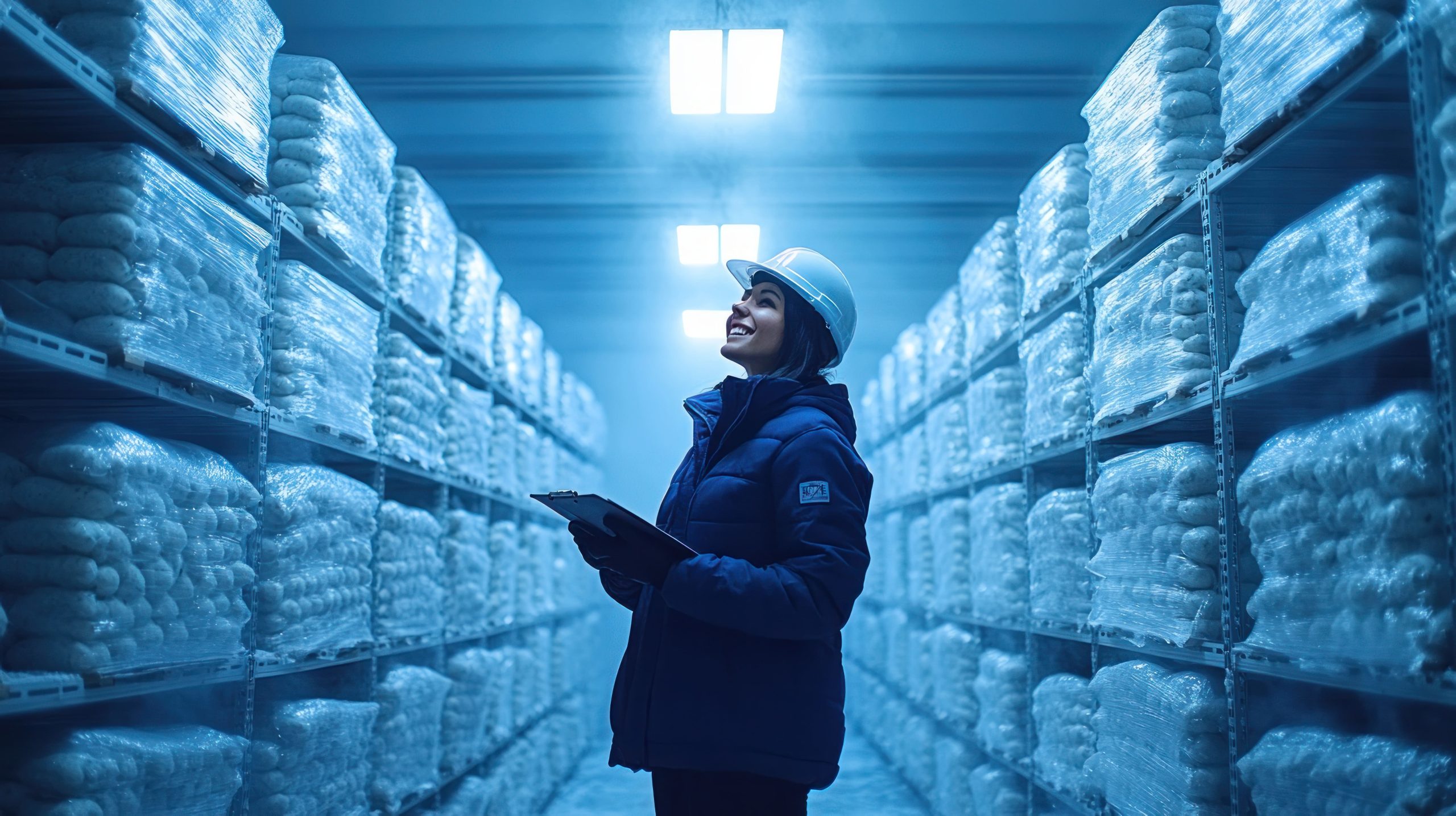
Vietnam’s cold chain logistics market is moving into a far more important role than it held even a few years ago. What was once treated as a support function for seafood exporters is now becoming central to how the country handles food, pharmaceuticals, and modern retail distribution. By 2026, the pressure on logistics providers is no longer just about moving products faster. It is about keeping them usable, compliant, and commercially viable from origin to end customer. For a country that exports large volumes of shrimp, pangasius, dragon fruit, mangoes, and processed food products, weak temperature control can quietly wipe out margins. Looking ahead to 2035, the opportunity is substantial, but so is the operational complexity.
What’s Driving the Cold Chain Logistics Market in Vietnam?
Seafood and Fresh Produce Exports Need Better Handling
Vietnam’s export profile naturally creates demand for temperature-controlled logistics. Seafood remains one of the clearest examples. Shrimp and pangasius exporters cannot afford breaks in refrigeration when shipping to markets such as Japan, the EU, and the US, where compliance is strict and rejected consignments are expensive. The same applies to fresh fruit exports, especially as Vietnam pushes more produce into higher-value regional and international channels. In practice, this means cold chain is no longer limited to storage near ports. It starts much earlier – often at harvesting, grading, pre-cooling, and inland transportation. A truck delayed by traffic or poor route planning can compromise an entire shipment. That is one reason processors and exporters are paying more attention to logistics partners than they used to.
Modern Retail and Food Consumption Are Changing Fast
Urban food habits in Vietnam are changing in a very visible way. Supermarkets, convenience stores, quick-service restaurants, and app-based grocery delivery have expanded the market for frozen meats, dairy, imported produce, ready meals, and chilled snacks. Consumers in Hanoi and Ho Chi Minh City now expect product variety and freshness that traditional supply chains often struggle to deliver. That shift sounds straightforward, but it creates a difficult logistics problem. A single retailer may need frozen, chilled, and ambient products delivered to the same outlet on tight schedules. Warehousing and transportation providers that can handle multi-temperature operations have a clear edge. Smaller operators, by contrast, often find themselves stuck with narrow service capabilities and limited scale.
Pharma and Healthcare Logistics Are Becoming More Relevant
Food still dominates the sector, but pharmaceuticals are quietly becoming a serious growth area. Vaccines, biologics, specialty drugs, and some diagnostic products all require tighter temperature control than conventional distribution networks can reliably offer. This part of the market may be smaller today, but it is more quality-sensitive and often more profitable. There is also less room for improvisation. A seafood shipment can sometimes be rerouted or discounted. A temperature-sensitive medicine batch that falls outside compliance may simply become unusable. That makes pharmaceutical cold chain far less forgiving, and it is one of the areas where Vietnam still has room to improve in monitoring, documentation, and validated handling.
Government-Led Infrastructure Push
Vietnam’s logistics story has improved because infrastructure has improved, though not evenly. Investments in highways, industrial zones, inland transport links, and port connectivity are making it easier to move perishables across production and consumption centers. For cold chain players, that matters more than headline GDP numbers. Still, there is a gap between transport development and temperature-controlled readiness. Building a road is one thing. Building an integrated cold logistics corridor with packhouses, reefer fleets, and modern warehousing is another. The government’s broader focus on reducing post-harvest losses and improving export quality should help, but execution on the ground will decide how much of that ambition translates into actual capacity.
Market Competition
The market remains fairly fragmented, and that creates both opportunity and inconsistency. International logistics firms bring process discipline, stronger warehouse systems, and better temperature-monitoring capabilities. Domestic players, meanwhile, often have stronger local relationships and more flexible pricing. Both matter in Vietnam. What is changing is customer expectation. Exporters and large retailers are less willing to tolerate basic cold storage without traceability, service visibility, or contingency planning. Over time, operators with integrated offerings – storage, transport, last-mile coordination, and digital monitoring – are likely to pull ahead. This may not happen overnight, but the direction is fairly clear.
Uneven Infrastructure Beyond Major Hubs
One of the biggest constraints is the uneven spread of modern cold chain facilities. Ho Chi Minh City and a few industrial clusters are relatively better served, but many agricultural and seafood-producing regions still lack reliable cold storage close to source. That raises spoilage risk and pushes up logistics costs before products even reach export gateways or urban distribution centers. A common challenge is that businesses often invest in one link of the chain while neglecting the others. A modern cold warehouse does not solve much if the trucking network is inconsistent or if loading practices are poor. Cold chain only works when every step holds together.
Future Outlook
Vietnam’s cold chain logistics market has a long runway ahead, but growth alone will not guarantee efficiency. By 2035, the stronger players will likely be those that treat cold chain as a precision business rather than a storage business. That means investing in route optimization, sensor-based monitoring, energy-efficient refrigeration, and facilities closer to production clusters. There is also a wider commercial shift underway. Cold chain in Vietnam is moving from being a cost center to something that protects export quality, supports retail expansion, and reduces waste. That is a meaningful transition.
Consultants at Nexdigm, in their latest publication “Vietnam Cold Chain Logistics Market Outlook to 2035”, believe that companies should focus on integrated infrastructure, stronger regional coverage, and technology-led monitoring if they want to stay competitive in a market that will reward reliability more than just capacity.
To take the next step, simply visit our Request a Consultation page and share your requirements with us.
Harsh Mittal
+91-8422857704