
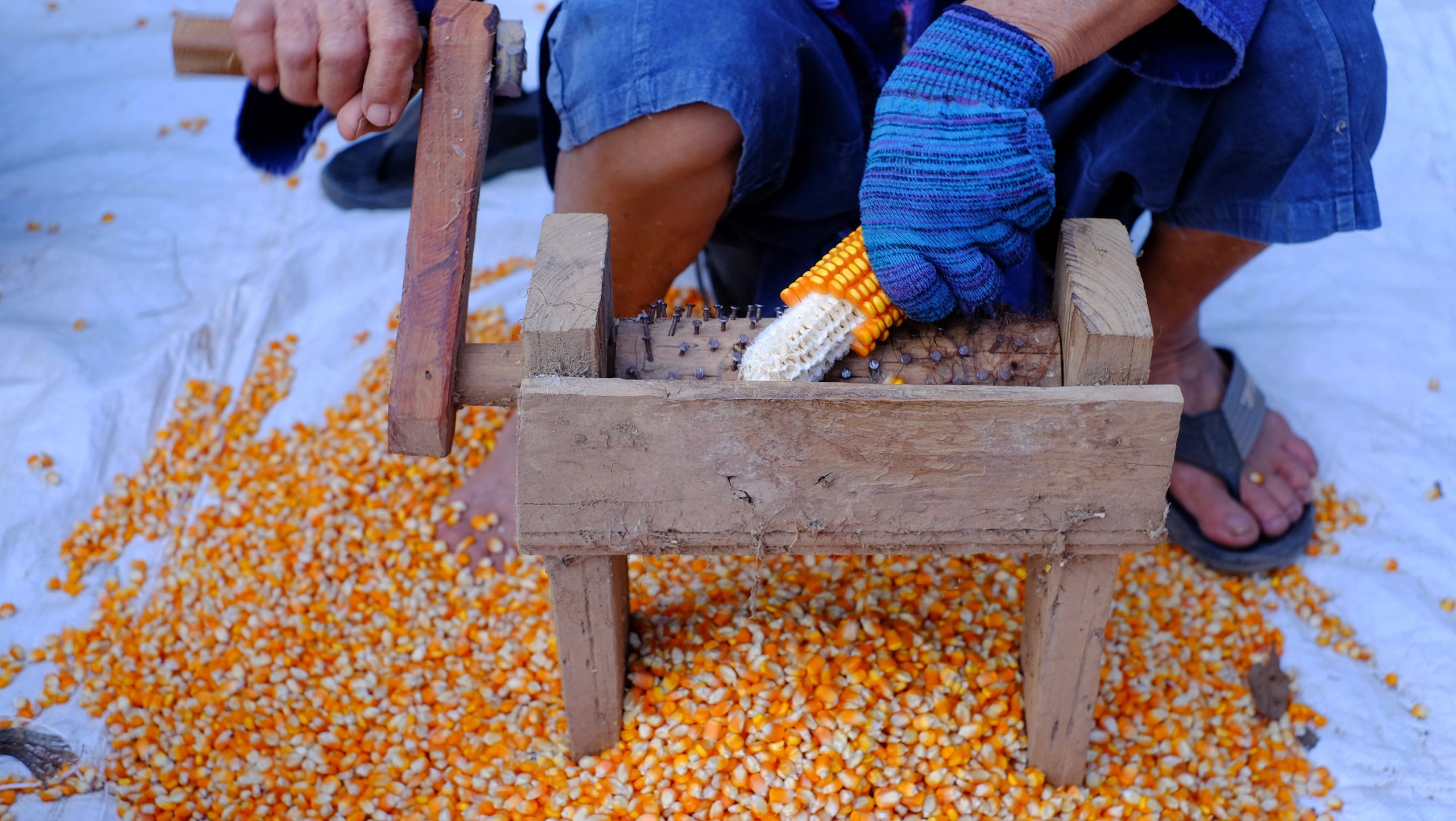
Vietnam’s corn seed market is going through a steady transition as the country seeks to strengthen domestic feed crop production and improve agricultural productivity. While rice remains the dominant staple crop, corn plays a critical role in supporting Vietnam’s rapidly expanding livestock and aquaculture sectors. As of 2026, Vietnam continued to rely heavily on imported corn for animal feed, with domestic production constrained by limited arable land, fragmented farm holdings, and relatively low yields compared to regional peers. The adoption of hybrid corn seeds, improvements in seed distribution networks, and government support for crop diversification are gradually reshaping the market. Seed companies and agribusinesses are increasingly focusing on high-yield, pest-resistant hybrids to enhance farm incomes and reduce Vietnam’s long-term dependency on feed grain imports.
What’s Driving the Corn Seed Market in Vietnam?
Rising Demand from Livestock and Aquaculture Feed Industries
Vietnam’s livestock and aquaculture sectors continue to expand in response to rising domestic protein consumption and export demand for seafood products. Corn remains a key input in compound animal feed formulations, alongside soybean meal and other feed grains. The growing scale of commercial poultry, swine, and aquaculture farms is driving demand for higher and more consistent domestic corn output. This, in turn, is encouraging farmers to shift from traditional open-pollinated varieties to hybrid corn seeds that offer better yields and uniformity.
Shift Toward Hybrid Seeds and Improved Agronomic Practices
Hybrid corn seeds are gaining wider acceptance among Vietnamese farmers due to their higher yield potential, better disease resistance, and improved tolerance to drought and variable climatic conditions. Private seed companies and multinational agribusiness firms are actively promoting hybrid varieties tailored to Vietnam’s diverse agro-climatic zones, particularly in the Central Highlands and Northern Midlands. Alongside seed adoption, the diffusion of better agronomic practices such as precision fertilization and improved irrigation methods is improving productivity per hectare, making corn cultivation more commercially viable for smallholder farmers.
Crop Diversification and Rural Income Support Policies
The Vietnamese government’s push to diversify cropping patterns away from mono-cropping of rice in certain regions is indirectly supporting corn cultivation. Programs promoting upland crop development and rural income diversification are encouraging farmers to allocate more land to maize in suitable agro-ecological zones. Extension services and demonstration farms are also helping farmers understand the yield and income advantages of certified hybrid seeds over saved seeds, expanding the formal seed market.
Government-Led Initiatives Supporting Seed Quality and Adoption
The Vietnamese government has been strengthening seed certification standards, varietal registration processes, and quality control mechanisms to improve farmer confidence in commercially available corn seeds. Public–private partnerships with seed producers and agricultural research institutes are facilitating the development of locally adapted hybrid varieties. In addition, rural credit programs and input subsidies in selected provinces are lowering the upfront cost barriers for smallholders adopting improved seed varieties. These policy measures aim to improve national corn productivity while stabilizing farmer incomes amid climate variability.
Market Competition and Distribution Landscape
The Vietnam corn seed market is moderately competitive, with a mix of multinational seed companies, regional agribusiness players, and domestic seed producers. Multinational firms dominate the hybrid segment due to stronger R&D capabilities and established distribution networks, while local companies primarily serve price-sensitive farmers in remote provinces. Distribution is increasingly shifting toward organized agri-input retailers and cooperative-based channels, improving last-mile access to certified seeds. The growing presence of digital agri-platforms is also enhancing farmer awareness of seed performance and pricing, contributing to greater market transparency over time.
Import Dependence and Climate Risks
Vietnam continues to depend heavily on imported feed grains, limiting the immediate impact of domestic corn seed improvements on overall feed security. Corn cultivation also faces structural constraints such as small farm sizes, soil degradation in upland areas, and increasing climate volatility, including irregular rainfall and heat stress. These factors create yield variability and discourage large-scale mechanized corn farming. Additionally, the relatively higher cost of hybrid seeds compared to traditional varieties remains a barrier for resource-constrained farmers, especially in remote rural areas.
Future Outlook
Vietnam’s corn seed market is expected to experience steady but moderate growth through 2035, supported by rising hybrid seed penetration, feed industry expansion, and policy-backed crop diversification. By 2035, hybrid and improved seed varieties are expected to account for a dominant share of commercial corn cultivation in key producing regions. The market will gradually become more structured, with stronger quality enforcement, wider adoption of climate-resilient seed traits, and deeper integration of digital advisory services for farmers. While Vietnam is unlikely to become self-sufficient in corn production, improvements in seed technology and farm productivity will play a critical role in narrowing the domestic supply gap and stabilizing feed input costs over the long term.
Consultants at Nexdigm, in their latest publication “Vietnam Corn Seed Market Outlook to 2035”, analyzed the market by Seed Type (Hybrid Seeds, Open-Pollinated Varieties), By Trait (Conventional, Pest-Resistant, Drought-Tolerant), By Application (Feed Corn, Industrial Corn, Fresh Consumption), and By Distribution Channel (Agri-Input Retailers, Cooperatives, Direct Company Sales, Online Platforms). Nexdigm believes that businesses should prioritize localized hybrid development, farmer education programs, and last-mile distribution partnerships, while integrating digital advisory tools and climate-resilient traits as key differentiators in Vietnam’s evolving corn seed market.
To take the next step, simply visit our Request a Consultation page and share your requirements with us.
Harsh Mittal
+91-8422857704