
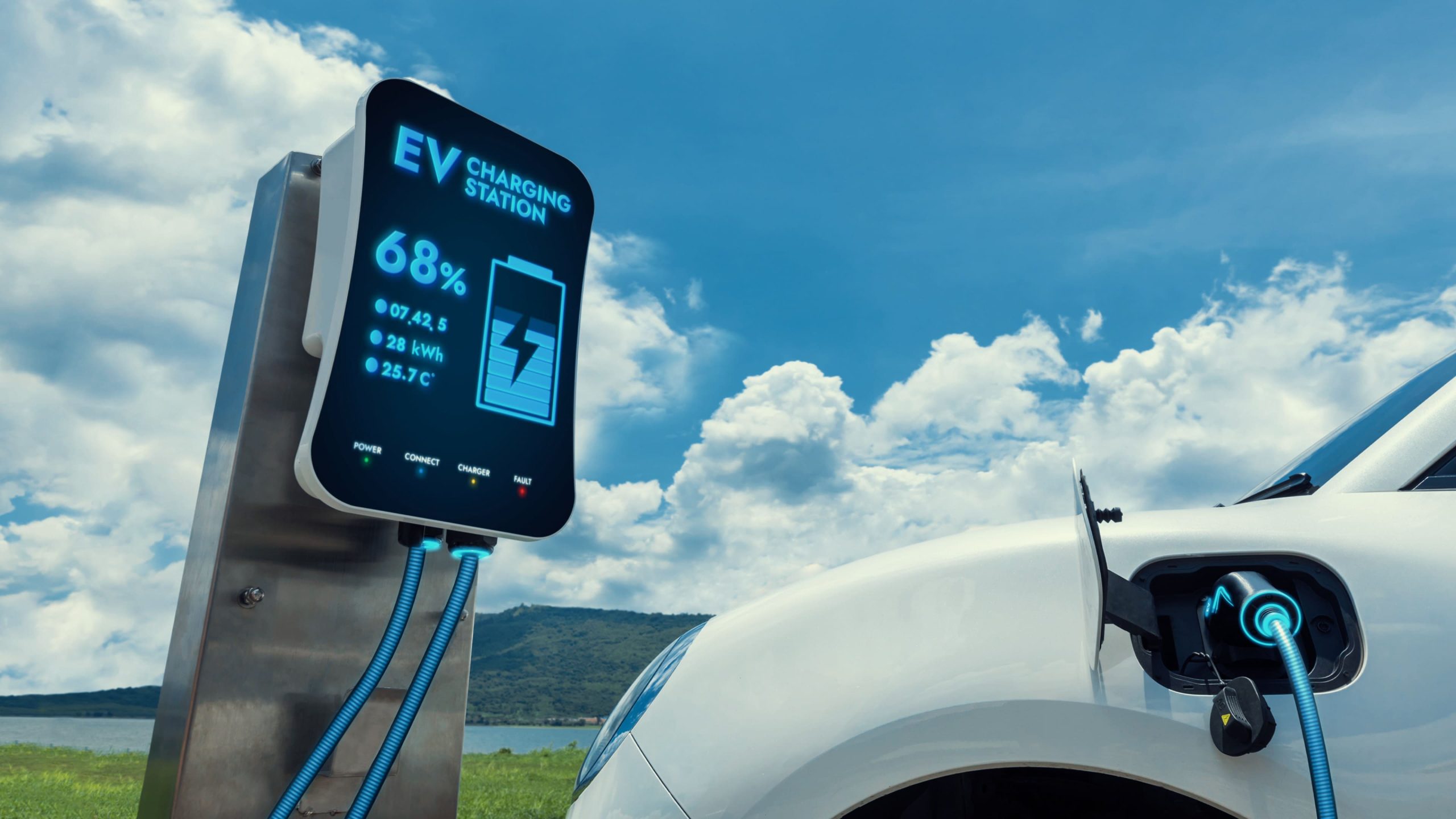
Vietnam’s EV battery market is entering a far more serious phase than it was even three or four years ago. What began as a mobility trend tied mainly to electric scooters is now turning into a broader industrial story involving automotive manufacturing, battery assembly, charging infrastructure, and long-term energy planning. By 2026, Vietnam has already established itself as one of Southeast Asia’s more closely watched EV markets, largely because local vehicle production is moving faster than many expected. Still, there is a gap between assembling EVs and building a truly competitive battery industry. On the ground, Vietnam has momentum, but not yet full control over the value chain. That tension will shape the market all the way to 2035.
What’s Driving the EV Battery Market in Vietnam?
Electric Two-Wheelers Are Creating Volume Early
If anyone wants to understand Vietnam’s battery market, they should start with scooters rather than sedans. Vietnam’s roads are dominated by two-wheelers, and that makes electric scooters one of the most practical entry points for electrification. For urban commuters, especially in dense cities like Hanoi and Ho Chi Minh City, an electric scooter is often more realistic than an EV car. Lower operating costs, easier maneuverability, and shorter daily travel distances all work in its favor. This matters commercially because battery demand scales faster when a product fits everyday consumer behavior. A country does not need millions of electric cars to build battery volume. In Vietnam’s case, two-wheelers are already doing a large part of that work.
Domestic Manufacturing Is Pulling Battery Demand Forward
A second force comes from Vietnam’s local EV manufacturing push. Once domestic automakers begin expanding output, the need for battery packs, modules, and eventually cells rises almost immediately. This creates a more durable industrial base than a market that depends mostly on imported finished vehicles. Vietnam has an edge here because it already has established capabilities in electronics assembly, industrial manufacturing, and export-oriented production. That said, not all localization is equal. Putting together battery packs domestically is useful, but it is not the same as controlling higher-value steps such as cathode production or cell chemistry development. Vietnam has made a start, though there is still a long way to go before it can claim real battery independence.
Energy Storage Is Quietly Becoming Part of the Story
One part of the market that gets less attention, but probably deserves more, is stationary battery storage. Vietnam has invested heavily in renewable energy over the last several years, particularly solar. As more intermittent power comes into the grid, battery storage becomes harder to ignore. That opens another lane for battery manufacturers beyond passenger mobility and two-wheelers. In practical terms, this is useful for the industry because it broadens demand. A battery supplier serving both transport and power storage has more flexibility, and usually a stronger business case for scaling local operations.
Government-Led Initiatives Supporting Battery Development
Vietnam’s government has played a meaningful role in creating early confidence around EVs and battery manufacturing. Tax support for EV purchases, lower registration fees, and cleaner transport incentives have helped reduce adoption barriers, especially in the early stages. The country’s broader commitment to net-zero emissions by 2050 has also made electrification harder to treat as a passing trend. Still, there is a familiar policy challenge here. Demand-side incentives often move faster than industrial depth. Vietnam has done a decent job encouraging EV uptake, but building the upstream battery supply chain takes more time, more capital, and far more technical complexity. That part cannot be rushed with tax breaks alone.
Market Competition and Industry Landscape
The Vietnam EV battery market is still relatively concentrated, with a small number of domestic firms and international manufacturers accounting for most of the meaningful activity. Local players have one clear advantage – proximity to EV assembly and a better understanding of domestic demand patterns. International firms bring something equally important: manufacturing know-how, chemistry expertise, and quality control systems that take years to build. In reality, the market will probably not be won by one side or the other. Partnerships, technology licensing, and selective joint ventures are likely to matter more than standalone expansion plans.
Import Dependence for Materials and Advanced Battery Components
The most obvious weakness in Vietnam’s battery story is its reliance on imported raw materials and advanced battery components. Lithium, cobalt, nickel, separator materials, and high-performance cells still come largely from outside the country. That leaves manufacturers vulnerable to pricing swings, supply disruptions, and foreign supplier concentration. A second issue is recycling. Vietnam still has limited large-scale battery recycling infrastructure, which means valuable materials are not being recovered efficiently. In a market that wants to scale sustainably, that is more than just an environmental issue – it is also a cost and supply problem.
Future Outlook
Vietnam’s EV battery market has a credible runway through 2035, but success will depend on whether the country can move beyond assembly and into deeper industrial capability. Electric two-wheelers will likely remain the volume backbone in the near term, while passenger EVs, commercial fleets, and storage systems gradually take a larger share. Over time, local battery pack production should become more sophisticated, and domestic cell manufacturing may become commercially viable if investment and demand remain aligned. The more important point is this: Vietnam does not need to dominate the global battery industry to become relevant. It simply needs to capture more value at home. If it can reduce import exposure, build recycling capacity, and strengthen technical capabilities, Vietnam could become one of Southeast Asia’s more important battery manufacturing markets by 2035.
Consultants at Nexdigm, in their latest publication “Vietnam EV Battery Market Outlook to 2035”, analyze the market by Battery Type (Lithium-ion, LFP, Solid-state), By Vehicle Type (Electric Two-Wheelers, Passenger EVs, Commercial EVs), and By End Use (Automotive, Energy Storage Systems, Industrial Applications). Nexdigm believes that businesses should focus on local sourcing partnerships, battery recovery infrastructure, and technology-led manufacturing improvements to build long-term competitiveness in Vietnam’s EV battery market.
To take the next step, simply visit our Request a Consultation page and share your requirements with us.
Harsh Mittal
+91-8422857704