

Vietnam tourism demand has accelerated, lifting hotel stays and visitor spending across beach, city, and heritage destinations as competition intensifies. International arrivals rose from nearly 17.6 million to nearly 21.2 million, and January reached nearly 2.5 million foreign visitors. This step up from 2024 through early 2026 increases pressure to win preference fast and reduce costly churn.
Brand perception is the net belief guests hold about your reliability, value, and care. It forms before arrival through reviews, social content, and booking friction, then hardens on property. A strong perception supports premium rates, higher direct bookings, and quicker recovery after issues.
How Brand Perception Makes or Breaks Hospitality Markets
Brand perception survey converts destination interest into booked rooms, or pushes guests to alternatives, especially in high season peaks. In hospitality, small trust gaps scale quickly because choices are abundant and public in Vietnam’s reopening travel cycle.
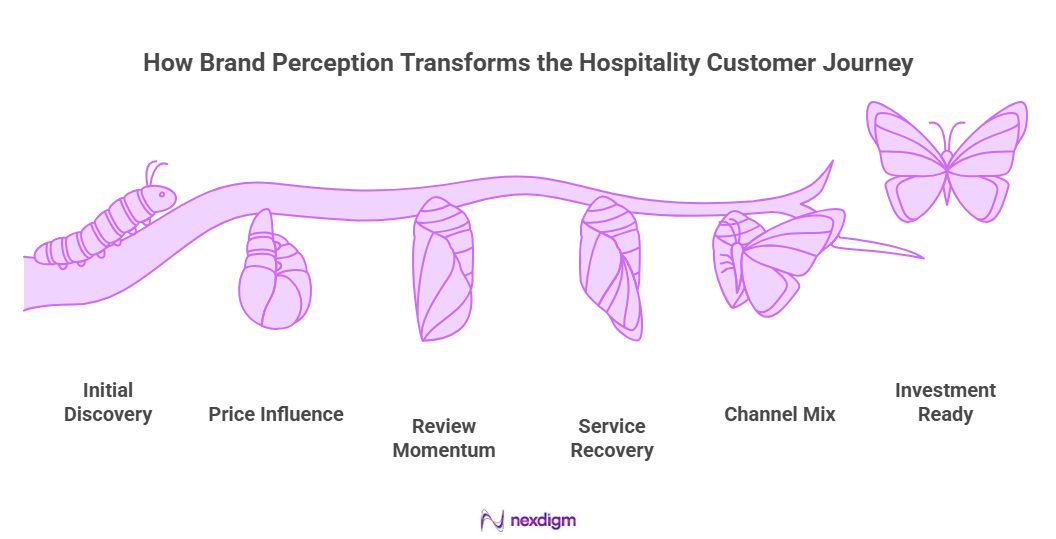
-
Discovery to booking
Clear perception lifts click through, shortlists, and conversion across mobile search, maps, and OTAs, and raises share of voice versus similar properties.
-
Price premium or discounting
Strong brands protect average daily rate, while weak brands rely on deals that train bargain seeking and preserve occupancy without eroding perceived value.
-
Review momentum
Guests use recent reviews as a proxy for quality, so sentiment shifts occupancy faster than advertising, including for new brands without long histories.
-
Service recovery leverage
Brands seen as fair and responsive can recover trust with one gesture, not repeated compensation, because guests assume intent is good.
-
Channel mix and margins
Better perception drives direct bookings, loyalty sign ups, and corporate contracts, reducing commission dependence and improving repeat stays across key source markets.
-
Investment readiness
Owners, lenders, and operators back brands with consistent promise delivery, easing approvals for new sites.
Benefits of Using Nexdigm Techniques for Brand Perception Consumer Surveys
-
Localised survey design
Frameworks tailor questions to Vietnam travel contexts, seasonality, and service norms across resort, city, and business stays, with clear rating anchors and translations that keep meaning consistent across languages.
-
Multichannel respondent capture
Sampling blends on property intercepts, post stay email, QR prompts, and vetted panels, balancing domestic and international guests and peak versus off peak periods to improve representativeness for key source markets like Korea and India.
-
Driver and trade off analytics
Advanced analysis isolates the few experience factors that shift preference, willingness to pay, and repeat intent, then quantifies the impact of fixing each, including check in, cleanliness, breakfast, staff empathy, and digital support.
-
Review and social text fusion
Open ended feedback is coded with NLP and merged with public review themes, validating what guests repeat most and spotting emerging issues early so teams can prioritise fixes without waiting for quarterly reports.
-
Action governance and proof
Findings route to owners with actions, timelines, and verification steps, plus pulse checks to confirm resolution and protect brand consistency and deliver readouts that align operations, marketing, and revenue teams.
Nexdigm Case
One mid sized coastal hotel group in Vietnam faced stagnant occupancy despite tourism growth above 12% annually. Nexdigm deployed a structured brand perception survey across 1,200 recent guests, identifying three trust gaps in cleanliness, check in and breakfast value. Targeted fixes improved review ratings from 3.9 to 4.4 within six months, lifted direct bookings by 18%, and increased repeat stay intent by 22%, strengthening rate realization during peak season. Net promoter scores rose by 15 points overall across key source markets.
To take the next step, simply visit our Request a Consultation page and share your requirements with us.
Harsh Mittal
+91-8422857704