
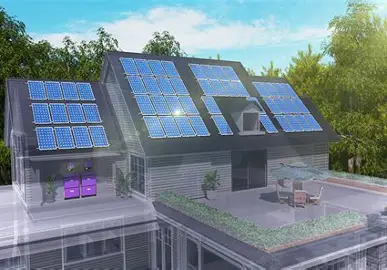
Vietnam’s Off-Grid Solar Energy Market is witnessing significant growth, driven by rising electricity demand, renewable energy expansion, and the need to provide reliable power to remote communities and island regions. Vietnam has emerged as one of Southeast Asia’s leading solar markets, with installed solar capacity exceeding 18 GW, supported by strong investments in clean energy infrastructure. Off-grid solar systems are increasingly deployed across rural households, agricultural operations, fisheries, telecom towers, tourism facilities, and remote industrial sites. As energy security and sustainability become national priorities, decentralized solar solutions are expected to play an increasingly important role in Vietnam’s future energy landscape.
Key Market Drivers for Vietnam’s Off-Grid Solar Energy Market
Expanding Solar Capacity Strengthens Adoption of Off-Grid Energy Systems
Vietnam has emerged as one of Southeast Asia’s fastest-growing solar markets, with installed solar photovoltaic capacity exceeding 18 GW, accounting for a significant share of the country’s renewable energy portfolio. The rapid development of solar infrastructure has improved technology accessibility, reduced equipment costs, and increased awareness of solar energy solutions among consumers and businesses. As a result, off-grid solar systems are increasingly being deployed in remote provinces, island communities, mountainous regions, and locations where grid extension remains economically challenging. The growing availability of solar modules and battery storage technologies continues to support wider adoption of decentralized energy systems.
Agriculture, Aquaculture, and Remote Economic Activities Drive Demand
Agriculture contributes approximately 11–12% of Vietnam’s GDP, while rural areas account for nearly 60% of the national population. Off-grid solar systems are increasingly used for irrigation pumps, agricultural processing facilities, cold-storage units, livestock operations, and aquaculture farms. Vietnam’s extensive coastline of more than 3,200 kilometers and strong fisheries sector also create substantial demand for standalone solar solutions that support remote coastal facilities, fishing communities, and island-based economic activities. These applications reduce dependence on diesel generators while improving energy reliability and operating efficiency.
Battery Storage Advancements Improve Reliability of Decentralized Power
The declining cost and improving performance of lithium-ion battery technologies are making solar-plus-storage systems more attractive across Vietnam. Battery integration allows off-grid users to access reliable electricity during evening hours, cloudy weather conditions, and grid outages. Demand is rising from telecommunications towers, tourism resorts, rural businesses, and community energy projects seeking energy independence and operational resilience. As energy storage deployment accelerates and battery costs continue to decrease, the economics of off-grid solar systems are expected to improve significantly, supporting broader adoption across residential, agricultural, and commercial sectors.
Government Initiatives Supporting Vietnam’s Off-Grid Solar Energy Market
The Vietnamese government continues to promote renewable energy as part of its long-term energy transition strategy. Under Power Development Plan VIII (PDP8), Vietnam aims to expand renewable energy deployment and strengthen energy security while reducing carbon emissions. Investments in solar power, energy storage systems, rural electrification, and transmission infrastructure are creating favorable conditions for off-grid solar deployment. Government efforts to improve electricity access in remote areas and support sustainable development objectives are expected to further stimulate market growth.
Competitive Landscape of Vietnam’s Off-Grid Solar Energy Market
Vietnam’s Off-Grid Solar Energy Market is becoming increasingly competitive as demand rises across rural communities, farms, fisheries, telecommunication sites, tourism facilities, and commercial applications. Competition is centered on system affordability, battery performance, energy efficiency, remote monitoring capabilities, and long-term reliability. Market participants are focusing on integrated solar-plus-storage solutions, modular energy systems, and smart energy management platforms to meet diverse customer requirements. Growing investments in renewable energy and decentralized power infrastructure continue to support innovation across the market.
Major Challenges Facing Vietnam’s Off-Grid Solar Energy Market
High Initial System Costs Remain a Challenge
While solar technology costs have declined significantly over the last decade, off-grid systems still require upfront investment in solar modules, batteries, inverters, and energy management equipment. Affordability can remain a challenge for certain rural and small-scale users.
Battery Maintenance and Technical Support Constraints
Remote installations require reliable maintenance services and battery replacement support to ensure long-term system performance. Expanding technical expertise and after-sales service networks remains important for sustaining adoption rates across underserved regions.
Future Outlook
Vietnam’s Off-Grid Solar Energy Market is expected to witness strong growth through 2035, supported by the country’s 18 GW+ installed solar capacity, a rural population accounting for nearly 60% of total residents, and rapidly increasing investment in decentralized renewable energy solutions. Growing demand from agriculture, aquaculture, telecommunications, and remote island communities will continue to drive adoption of solar-plus-storage systems. Additionally, Vietnam’s Power Development Plan VIII (PDP8) emphasizes renewable energy expansion and energy security, creating favorable conditions for off-grid deployment. Falling battery costs, expanding microgrid projects, and increasing use of solar-powered irrigation, cold storage, and rural infrastructure are expected to further strengthen market growth. Companies investing in affordable storage technologies, smart energy management systems, and localized service networks will be well-positioned to capitalize on Vietnam’s evolving decentralized energy ecosystem.
Consultants at Nexdigm, in their latest publication “Vietnam Off-Grid Solar Energy Market Outlook to 2035,” analyse the sector By Product Architecture (Pico-Solar Laterns, Solar Lighting Kits and Multi-Appliance Home Kits), By Consumer Segment (Residential Households and Agricultural Cooperative Farms) and By Battery Storage Chemistry (Lead-Acid Deep Cycle, Lithium Iron Phosphate LFP and Lithium Nickel Manganese Cobalt).
Nexdigm suggests that businesses in Vietnam’s Off-Grid Solar Energy Industry prioritize integrated solar-plus-storage solutions, solar-powered agricultural technologies, smart remote-monitoring platforms, and localized service networks to capitalize on the country’s 18 GW+ solar capacity, expanding rural electrification initiatives, growing agricultural and fisheries sectors, and increasing demand for reliable, decentralized, and sustainable energy solutions across residential, commercial, and remote infrastructure applications.
To take the next step, simply visit our Request a Consultation page and share your requirements with us.
Harsh Mittal
+91-8422857704