
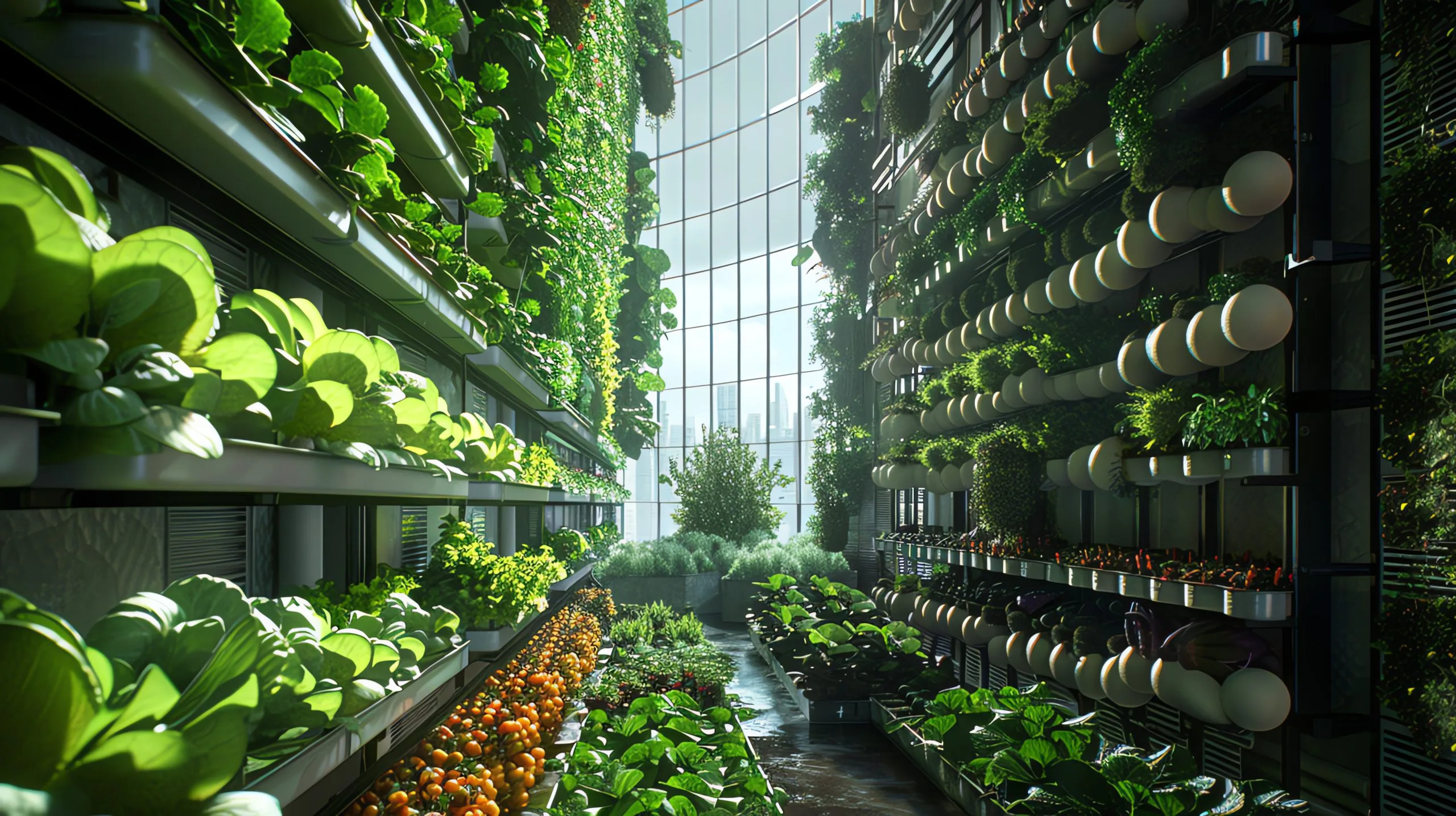
The Vietnam vertical farming market is expanding as growers, agritech companies, retailers, restaurants, and urban consumers look for cleaner, fresher, and more reliable food production models. Vertical farming uses stacked growing systems, hydroponics, aeroponics, LED lighting, climate control, sensors, automation, and nutrient management to grow crops in controlled environments. Vietnam’s vertical farming market is projected to reach USD 242.2 million, growing at 21.08% CAGR. Demand is being supported by urbanization, climate variability, food safety concerns, limited urban land, and rising interest in pesticide-light vegetables, herbs, and leafy greens.
Key market drivers are strengthening vertical farming demand in Vietnam
Urban food demand is encouraging local and safer crop production
Vietnam’s major urban centers, including Ho Chi Minh City, Hanoi, Da Nang, Can Tho, and Hai Phong, are creating stronger demand for fresh, safe, and traceable produce. Vertical farming can help supply leafy greens, herbs, microgreens, and specialty vegetables closer to consumers, reducing dependence on long-distance logistics and improving freshness. This is important for supermarkets, restaurants, hotels, premium food stores, and health-conscious households that want consistent quality. Controlled environment systems can also reduce crop exposure to pests, polluted soil, and unpredictable weather. As consumers become more attentive to food safety, vertical farms can offer a cleaner and more reliable production model.
Hydroponics is improving water and nutrient efficiency
Hydroponics is becoming an important part of Vietnam’s controlled farming ecosystem because it allows crops to grow without soil while using carefully managed water and nutrient solutions. Vietnam’s hydroponics market was valued at USD 58.45 million and is expected to reach USD 64.07 million, growing at 4.50% CAGR. Hydroponic systems are useful for leafy greens, herbs, vegetables, and urban farm setups where land is limited and water efficiency matters. With sensors, pumps, nutrient dosing, and climate-control systems, growers can manage crop cycles more precisely and reduce wastage.
Climate-smart agriculture is supporting controlled-environment models
Vietnam’s agriculture sector faces risks from heavy rainfall, flooding, heat, salinity intrusion, and seasonal disruptions. Vertical farming provides a controlled production model that can reduce weather-related uncertainty and support more predictable output throughout the year.
Government digital agriculture and sustainability initiatives are supporting adoption
Government priorities around high-tech agriculture, food safety, digital transformation, climate resilience, and sustainable farming are creating a supportive environment for vertical farming in Vietnam. Public interest in smart agriculture and technology-led production can help improve awareness of hydroponics, controlled-environment farming, sensors, and automation. Research institutions, universities, and agritech partnerships are also supporting knowledge-sharing around crop science, greenhouse systems, and soilless cultivation. While the market remains largely private-sector driven, policies that encourage safer food production, efficient resource use, and climate-smart agriculture can improve adoption over time.
Competitive landscape is shaped by growers, agritech firms, and hydroponic suppliers
The Vietnam vertical farming market includes indoor farm operators, hydroponic system suppliers, greenhouse technology companies, LED lighting providers, nutrient solution suppliers, automation firms, farm software platforms, restaurants, supermarkets, and agritech startups. Competition is shaped by crop quality, price, system reliability, energy efficiency, water-use savings, food safety standards, distribution reach, and brand trust. Companies are targeting leafy greens, herbs, microgreens, strawberries, tomatoes, and premium vegetables. Operators that combine affordable growing systems, consistent crop quality, reliable service support, and strong buyer partnerships are better positioned to scale.
Market challenges continue to affect profitability and wider adoption
High setup and energy costs can pressure margins
Vertical farms require investment in racks, lighting, climate control, pumps, sensors, nutrient systems, skilled labor, and backup power. Electricity and equipment costs can affect profitability, especially when competing with lower-cost traditional produce.
Technical skills and consumer pricing remain key barriers
Successful vertical farming requires knowledge of crop nutrition, lighting, humidity, water quality, disease prevention, and system maintenance. Consumers may also hesitate if vertical farm produce is priced too far above conventional alternatives.
Future outlook
The future outlook for the Vietnam vertical farming market remains positive, supported by urban food demand, food safety concerns, hydroponics, climate-smart agriculture, agtech partnerships, and controlled-environment farming. Globally, vertical farming is projected to grow from USD 10.61 billion to USD 70.89 billion at 26.80% CAGR, reinforcing strong momentum behind indoor agriculture. Opportunities are expected across hydroponic farms, aeroponic systems, container farms, leafy greens, herbs, microgreens, strawberries, AI-based crop monitoring, LED lighting optimization, nutrient management, and retail-linked production. Businesses that improve affordability, energy efficiency, crop economics, technical training, and distribution partnerships will be better positioned for long-term growth.
Consultants at Nexdigm, in their latest publication “Vietnam vertical farming market outlook to 2035,” analyze the sector By Crop Type (Lettuce, Spinach, Herbs (Basil, Mint, Cilantro, Parsley), Microgreens), By Farming Structure (Building-Based Vertical Farms,Shipping Container Farms, Greenhouse Vertical Farms)
Nexdigm suggests that businesses in the Vietnam vertical farming market should focus on affordable, energy-efficient, and technology-enabled indoor farming solutions that support demand for fresh, safe, pesticide-light, and year-round produce across urban retail, foodservice, and premium consumer channels.
To take the next step, simply visit our Request a Consultation page and share your requirements with us.
Harsh Mittal
+91-8422857704