
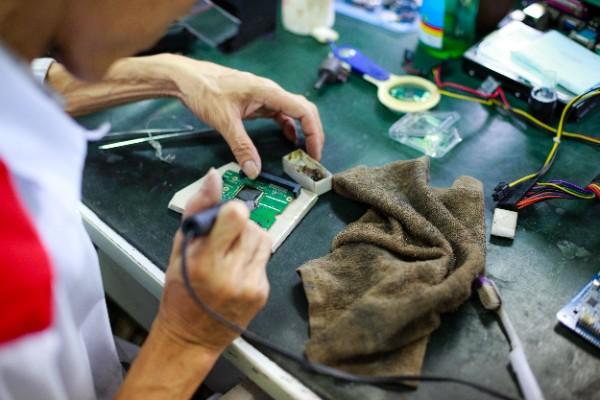
Vietnam is steadily strengthening its position in the global electronics manufacturing landscape, with flexible electronics and flexible circuits emerging as important contributors to industrial growth. Rising demand for foldable smartphones, wearable devices, compact electronic components, and advanced sensors is encouraging manufacturers to expand their production capabilities. According to the industry report, the sector was valued at USD 1.42 billion in 2025 and is projected to grow at a CAGR of approximately 12.4% through 2035, reaching nearly USD 4.58 billion. This expansion reflects changing consumer preferences and increasing manufacturing investments.
Market Drivers Advancing Vietnam’s Flexible Electronics and Flexible Circuits Industry
Growing Demand for Foldable Smartphones and Consumer Electronics
Consumer electronics remain a major demand generator for flexible circuits in Vietnam. Smartphone manufacturers increasingly require lightweight, compact, and bendable circuit components to support foldable displays, thinner device designs, and improved internal connectivity. Flexible printed circuits help manufacturers accommodate complex electronic layouts while reducing space and weight. Vietnam’s established electronics manufacturing ecosystem, particularly in Bac Ninh and Thai Nguyen, provides a strong foundation for this demand. The presence of major international manufacturers, including Samsung Electronics, has strengthened the country’s role in smartphone and electronic component production. As product designs become more sophisticated, demand for advanced single-sided, double-sided, multilayer, and rigid-flex circuits is expected to increase.
Expansion of Wearable Technology and Healthcare Electronics
Wearable technology is creating another promising avenue for flexible electronics manufacturers. Smartwatches, fitness trackers, health-monitoring devices, and compact medical equipment require circuits that can accommodate curved surfaces and repeated movement without compromising performance. Flexible substrates support the integration of sensors and electronic connections into smaller devices. Healthcare applications are also gaining attention as manufacturers explore flexible sensors for monitoring body temperature, movement, heart activity, and other health indicators. This growing demand encourages investment in thinner substrates, improved conductive materials, and reliable circuit assembly processes.
Investment in Domestic Manufacturing and Advanced Materials
Vietnam’s manufacturing ecosystem is benefiting from investments in supporting industries and localized material production. Greater domestic availability of polyimide films, conductive materials, and advanced circuit components can help reduce dependence on imported inputs and improve production efficiency. Manufacturers are also focusing on automation, precision fabrication, and advanced lamination technologies. These improvements can strengthen quality control, shorten production cycles, and support the manufacturing of increasingly complex flexible circuits.
Government Initiatives Supporting Vietnam’s Flexible Electronics and Flexible Circuits Sector
The Vietnamese government is encouraging high-tech manufacturing through investment incentives, industrial development policies, and initiatives supporting electronics and semiconductor production. High-tech activities, supporting industries, and the production of key electronic components are among the sectors eligible for investment incentives. Additionally, Decision No. 1018/QD-TTg, issued in September 2024, established a national semiconductor development strategy targeting stronger domestic capabilities, skilled workforce development, and deeper integration into global electronics supply chains. These measures create a supportive environment for flexible circuit manufacturers and technology investors.
Competitive Landscape of Vietnam’s Flexible Electronics and Flexible Circuits Industry
Competition is shaped by international electronics manufacturers, component suppliers, and emerging domestic supporting industry companies. Global players benefit from established manufacturing capabilities, technical expertise, and strong relationships with electronics brands. Samsung Electronics’ manufacturing presence in northern Vietnam also contributes to the country’s electronics ecosystem. Companies are increasingly competing through production quality, material efficiency, customization, manufacturing capacity, and delivery of reliability. Suppliers investing in advanced fabrication technologies and stronger local sourcing networks are better positioned to meet evolving customer requirements.
Challenges Impacting Vietnam’s Flexible Electronics and Flexible Circuits Industry
Dependence on Imported Raw Materials
Despite improvements in local manufacturing, sourcing specialized polyimide films, copper foils, adhesives, and advanced conductive materials remains a concern. Dependence on overseas suppliers can expose manufacturers to currency fluctuations, shipping delays, and changing material prices.
Environmental Compliance and Production Costs
Flexible circuit manufacturing involves chemical processing, etching, and wastewater treatment. Meeting environmental standards requires investment in treatment facilities, chemical recovery, and waste management systems. Smaller manufacturers may find these compliance requirements particularly challenging while maintaining competitive production costs.
Future Outlook
The future of the Vietnam Flexible Electronics and Flexible Circuits Industry, opportunities are likely to emerge for domestic suppliers specializing in flexible substrates, circuit assembly, and precision electronic components. Government support for high-tech manufacturing and semiconductor development could further strengthen the supporting industry ecosystem. With projected growth of 12.4% CAGR, Vietnam is well positioned to attract additional investment and strengthen its role in regional electronics manufacturing.
Consultants at Nexdigm, in their latest publication “Vietnam Flexible Electronics and Flexible Circuits Market Outlook to 2035 ,” analyze the sector By (Define Vietnam Flexible Electronics Scope, Primary Stakeholder Interview Cycles, Secondary Ministry Trade Data Aggregation, Bottom-Up Production Volume Analysis,).
Nexdigm suggests that businesses in the Vietnam Flexible Electronics and Flexible Circuits Industry focus on developing advanced, lightweight, and high-performance circuit solutions that cater to rising demand from consumer electronics, electric vehicles, wearable devices, and healthcare applications while supporting domestic manufacturing and technological innovation.
To take the next step, simply visit our Request a Consultation page and share your requirements with us.
Harsh Mittal
+91-8422857704