

A virtual classroom can host a live lesson. That does not mean it can sustain one.
Teachers need to know whether students are following the material. Learners need ways to ask questions, work with peers, and demonstrate understanding. Administrators may need attendance records, assessment results, and evidence that a programme is meeting its objectives. When these functions sit in disconnected tools, the learning experience becomes harder to manage.
The opportunity for virtual learning providers lies in making digital instruction more effective, not simply moving classroom activity onto a screen.
Virtual Learning Platform Features and Buyer Requirements
Different buyers expect different things from virtual learning software. Schools may need live classes, assignments, attendance, and parent communication. Universities may require breakout discussions, digital assessments, lecture recording, and integration with existing course systems. Corporate training providers may prioritise instructor-led sessions, participation records, and reporting for distributed teams.
These requirements create several product categories, even when platforms compete for the same budget.
- Collaboration tools support discussion, group work, shared documents, and instructor interaction.
- Assessment features help teachers check understanding through quizzes, assignments, and feedback.
- Engagement functions can include polls, interactive activities, and participation prompts.
- Analytics provide information about attendance, progress, and patterns of learner activity.
A platform may offer all four, but the quality of implementation matters more than the feature count. A crowded interface can make lessons harder to follow. Too many notifications can distract learners. A participation metric may also mislead if it counts clicks without showing whether students understood the material.
Online Learning Engagement and Assessment: What Creates Value?
UNESCO’s Global Education Monitoring Report 2023 stresses that technology’s contribution to education depends on how it is used and whether it supports learning. It also highlights unequal access to connectivity and devices. Virtual learning providers therefore need to consider both instructional value and the conditions in which their products will be used.
Low-bandwidth performance, mobile access, captions and accessible controls can influence whether learners participate at all. For institutions serving different age groups, regions, or accessibility needs, these are procurement requirements rather than optional extras.
Assessment is equally important. Attendance can establish that a learner joined a session, but not that they understood it. Quizzes, submitted work, feedback, and demonstrations of skill provide stronger evidence, provided the assessment matches the learning objective.
For providers, the commercial implications are clear. Buyers may pay for a platform that improves instructor visibility, reduces administrative work, or supports reliable assessment. They are less likely to sustain spending on features that generate activity without helping teachers or learners.
Virtual Learning Platform Demand Assessment: Which Markets Are Most Attractive?
A Virtual learning platform demand assessment should map each buyer segment to the problems it needs to solve and the systems it already uses.
- Schools: Live teaching, assignments, attendance, parent communication and tools that support teachers with limited technical time.
- Higher education: Large-class delivery, breakout collaboration, digital assessment, recordings, and integration with learning management systems.
- Corporate training: Instructor-led programmes, participation tracking, compliance records and reporting across employee groups.
- Independent educators and training providers: Simple course delivery, learner communication, payment options and tools to manage repeat sessions.
The buying process also matters. Institutions may require procurement approval, security reviews, and integration testing. Independent educators can adopt tools faster but often have smaller budgets and higher sensitivity to monthly costs. Corporate buyers may pay more for reporting and administration, but expect reliability, support and access controls.
Virtual Learning Platform Growth Strategy Framework
The Virtual Learning Platform Market Fit Framework helps providers identify where to compete and what to build.
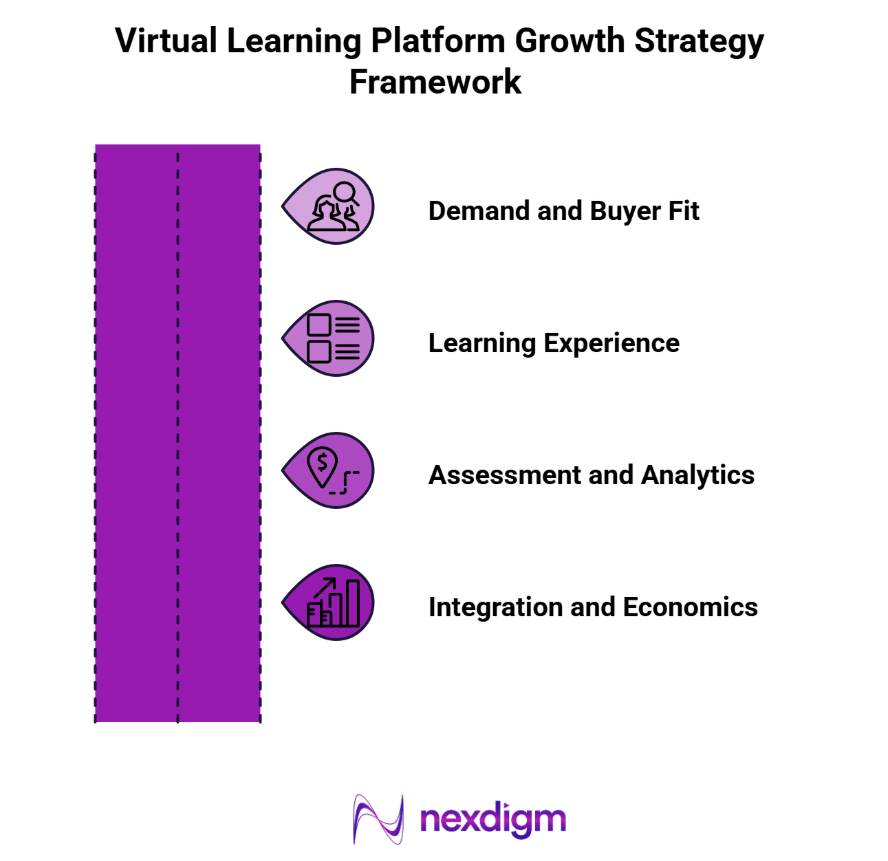
- Demand and Buyer Fit: Define the target segment, procurement process and problems that existing tools do not solve.
- Learning Experience: Evaluate live interaction, collaboration, mobile access, accessibility and ease of use.
- Assessment and Analytics: Determine whether the platform can measure meaningful progress rather than attendance alone.
- Integration and Economics: Assess system compatibility, implementation costs, pricing, support needs and renewal potential.
A focused product can compete without replicating every feature in the market. A platform designed for small-group tutoring, for example, may win through interaction and feedback, while one targeting universities may need robust assessment and integration capabilities.
Nexdigm Case Study: Identifying Virtual Learning Platform Priorities
Nexdigm assessed virtual learning requirements across schools, universities and corporate training providers. Buyer interviews and competitor comparisons highlighted four recurring needs: more reliable collaboration, simpler assessment workflows, clearer engagement reporting, and easier integration with existing systems. The client prioritised collaboration and assessment improvements for its initial target segment, postponing broader analytics development until buyer demand was validated.
To take the next step, simply visit our Request a Consultation page and share your requirements with us.
Harsh Mittal
+91-8422857704