
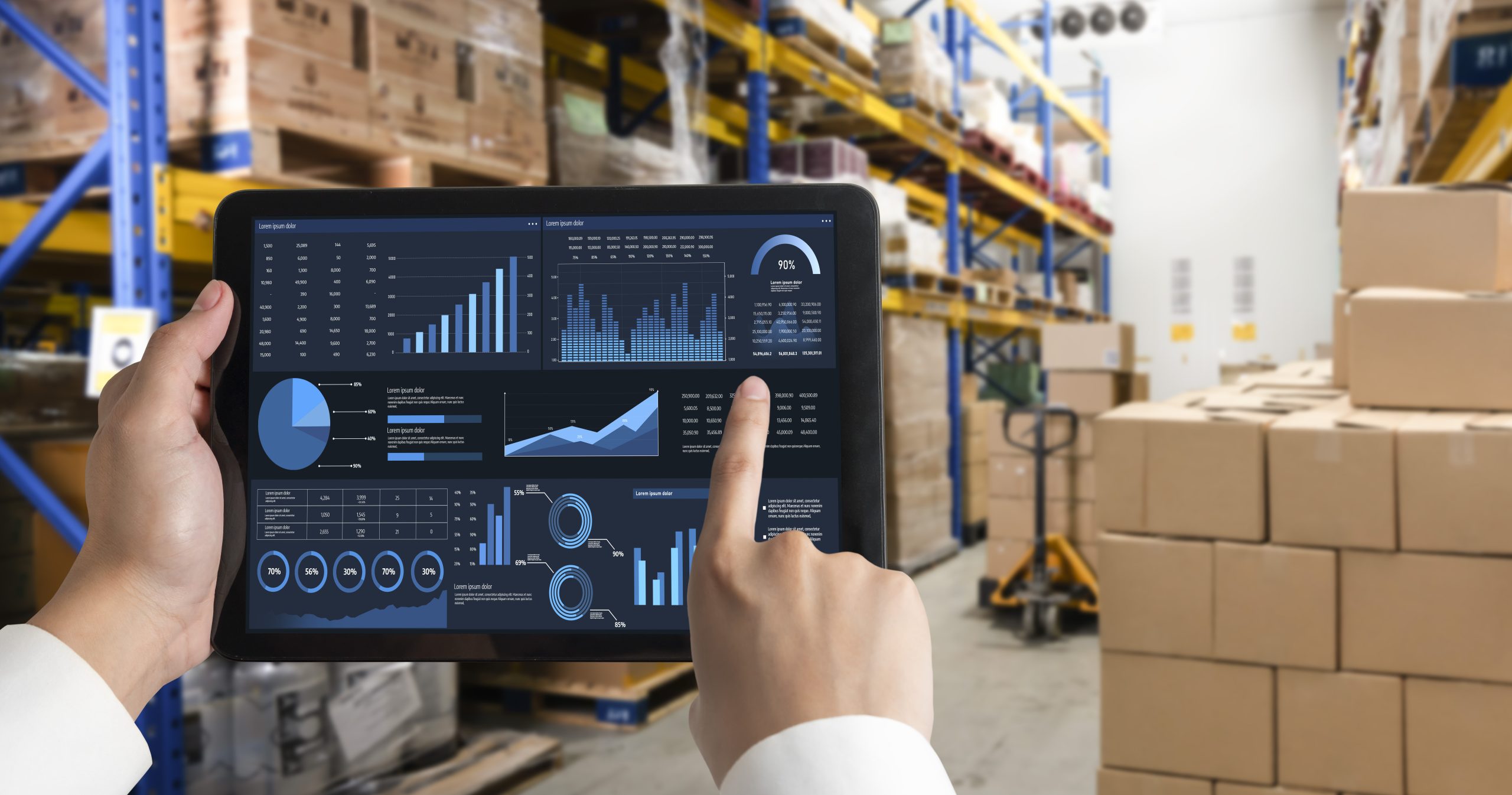
Warehouse automation is becoming a practical response to rising labor costs, increasing order volumes, faster delivery expectations, and growing operational complexity.
However, automation does not deliver the same value across every warehouse process. Picking, sorting, storage, packing, receiving, and material movement each have different levels of volume, repetition, labor intensity, and technology readiness.
For retailers, manufacturers, e-commerce companies, 3PL providers, logistics operators, warehouse developers, investors, and technology vendors, the priority is identifying where automation can solve a genuine operational problem and generate measurable value.
A Warehouse automation demand assessment helps evaluate these opportunities.
Nexdigm combines labor requirements, process volumes, workflow characteristics, facility conditions, technology readiness, and investment economics to identify the processes most suitable for automation.
Understanding the Labor Pressure
Labor availability and productivity can strongly influence automation decisions. Nexdigm evaluates labor-related challenges to identify processes where automation can improve productivity, reduce operational pressure, and support sustainable growth.
- Workforce Availability and Staffing Requirements: Nexdigm analyzes labor availability across locations, staffing requirements, and recruitment challenges to determine whether workforce constraints could affect operational capacity, service levels, and future expansion plans.
- Wage Levels and Labor Costs: The assessment examines wage trends, overtime expenses, and labor cost structures to identify areas where automation can improve cost efficiency and support long-term operational sustainability.
- Employee Turnover and Workforce Stability: Nexdigm evaluates turnover rates, retention challenges, and workforce stability to understand how labor disruptions affect productivity, training requirements, operational consistency, and overall business performance.
By understanding labor pressures and workforce dynamics, Nexdigm helps organizations make informed automation decisions. The assessment identifies opportunities to improve productivity, reduce operational risks and create scalable operations that balance technology with human expertise.
How Nexdigm Measures Process Activity
Automation economics depend heavily on utilization. Nexdigm studies order volumes, SKU movement, picking frequency, receiving activity, shipment volumes, storage requirements, and seasonal peaks.
High-volume and predictable processes often provide stronger opportunities because automated systems can operate consistently and generate value across a larger number of transactions.
The analysis also evaluates process standardization and workflow complexity, helping determine whether automation can be deployed efficiently and scaled as operational volumes grow.
Nexdigm’s Warehouse Automation Demand Assessment Framework
The Warehouse automation demand assessment evaluates four connected areas. These major areas help determine which processes are ready for automation, and which should remain manual or semi-automated. The following are the focused areas:
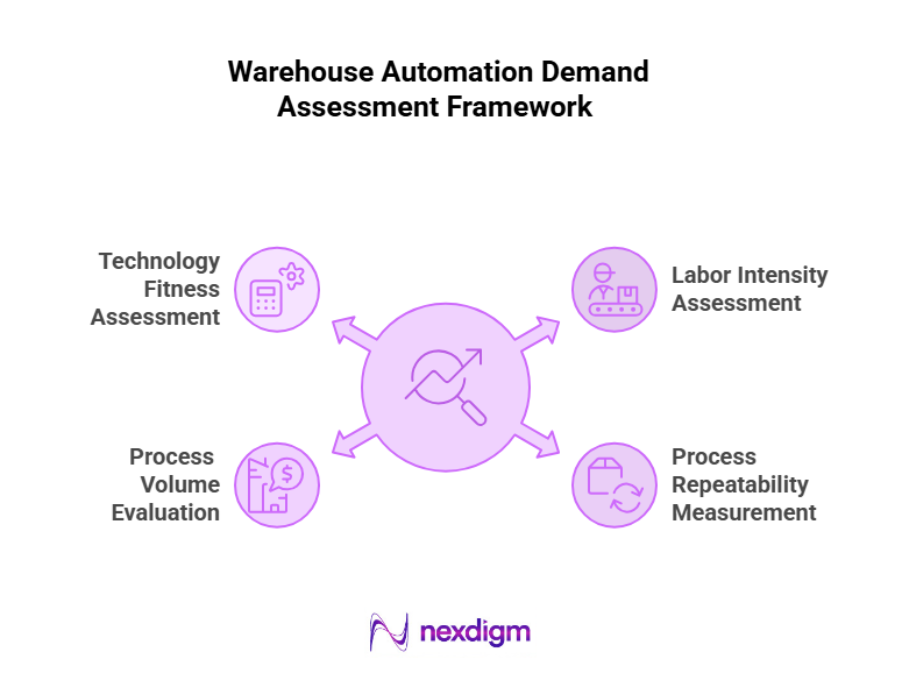
- Labor Intensity: Assess the level of manual effort involved in warehouse operations, including material handling, workforce dependency, physical workload, and labor availability, to identify areas where automation can improve productivity, safety, and operational resilience.
- Process Volume: Evaluate transaction volumes, SKU movement patterns, and operational throughput to determine whether automation can deliver meaningful efficiency gains, increase capacity, and support business growth requirements.
- Process Repeatability: Measure the consistency, predictability, and stability of warehouse workflows. Processes with standardized execution and limited exceptions are generally more suitable for automation and can achieve higher performance benefits.
- Technology Fit: Assess the suitability of warehouse operations for various automation technologies by considering product characteristics, facility layout, process requirements, and the readiness of supporting digital systems and infrastructure.
Outcomes of Nexdigm’s Demand Assessment Framework
The assessment provides a comprehensive view of warehouse automation readiness by evaluating operational processes across labor intensity, process volume, workflow repeatability, and technology suitability.
The assessment helps identify high-impact automation opportunities, prioritize areas with the strongest business case, and highlight operational constraints that may need to be addressed before implementation.
The resulting insights enable organizations to develop a phased automation roadmap, optimize capital investments, improve productivity and service levels, and align automation initiatives with long-term business growth and operational objectives.
Nexdigm’s Key Assessment Findings
Based on the Warehouse Automation Demand Assessment, Nexdigm identifies the key operational insights, improvement areas, and automation opportunities that can help enhance warehouse efficiency, scalability, and overall performance.
- Labor-Intensive Operations: Processes involving significant manual handling, movement, and repetitive activities may benefit from automation to improve productivity, reduce dependency on labor, and enhance workplace safety.
- High-Volume Automation Opportunities: Functions with consistently high transaction volumes and product movement are typically well-positioned for automation, offering stronger returns through improved throughput and resource utilization.
- Process Standardization Gaps: Processes with frequent exceptions, variable workflows, or inconsistent execution may require standardization before automation can be implemented effectively and sustainably.
- Technology Enablement Requirements: Existing warehouse systems, infrastructure, and data capabilities may require enhancement to support seamless integration and operation of automation technologies.
Nexdigm’s Case
A 3PL provider used Nexdigm’s Warehouse automation demand assessment to prioritize high-volume processes. Within 12 months, automated throughput increased 34%, labor productivity improved 27% and operating costs declined 16%, enabling faster fulfillment, stronger capacity utilization, and improved overall warehouse performance.
To take the next step, simply visit our Request a Consultation page and share your requirements with us.
Harsh Mittal
+91-8422857704