

Warehouse service pricing in India varies with location, facility quality, infrastructure, storage requirements, and operating model. According to Knight Frank’s H1 2026 Warehousing Market Report, average monthly rents ranged from ₹19.4 per sq. ft. in Ahmedabad to ₹28.7 in Pune, with Mumbai at ₹26.0 and Chennai at ₹25.7.
Several major markets recorded annual rental increases of 4–7%, reflecting differences in demand and supply conditions. These variations make it important for businesses to assess more than headline warehouse rates.
A structured warehouse service price benchmarking exercise helps organizations compare provider quotations, understand cost components, and evaluate pricing competitiveness across locations and service models.
Why Warehouse Pricing Varies Across Markets and Providers
Warehouse pricing is influenced by more than the rental value of a facility. Location, connectivity, property grade, storage configuration, labour availability, handling requirements, and value-added services all affect the final cost. Businesses using dedicated facilities may also face different cost structures from those outsourcing operations to third-party logistics providers. Comparing quotations without accounting for these differences can lead to misleading cost assessments and sourcing decisions.
Factors to Consider When Comparing Warehouse Prices
A meaningful price comparison should account for the following variables:
- Location and Facility Grade: Compare rental rates across logistics hubs, industrial corridors, and facility grades while considering connectivity, infrastructure quality, and proximity to customers.
- Provider Service Scope: Examine storage charges, labour, material handling, inventory management, technology, and additional services included in provider quotations.
- Operating and Contract Models: Compare dedicated warehousing, shared storage, and outsourced 3PL arrangements based on utilisation, contract duration, flexibility, and cost commitments.
Considering these factors helps businesses distinguish genuine pricing advantages from differences in service scope and operating requirements.
The Impact of Warehouse Operating Models on Overall Costs
Warehouse operating models influence how businesses distribute fixed costs, manage resources, and pay for logistics services. Nexdigm can help organizations compare dedicated facilities, shared warehousing, and outsourced models by examining their cost structures, utilization levels, and service requirements. This assessment helps businesses identify commercially viable arrangements, balance operational flexibility with financial efficiency, and make informed warehouse sourcing decisions.
Making Warehouse Pricing Easier to Evaluate with Nexdigm
Nexdigm’s warehouse service price benchmarking can help businesses understand how warehouse costs differ across markets and providers. The research can provide insights across four key areas:
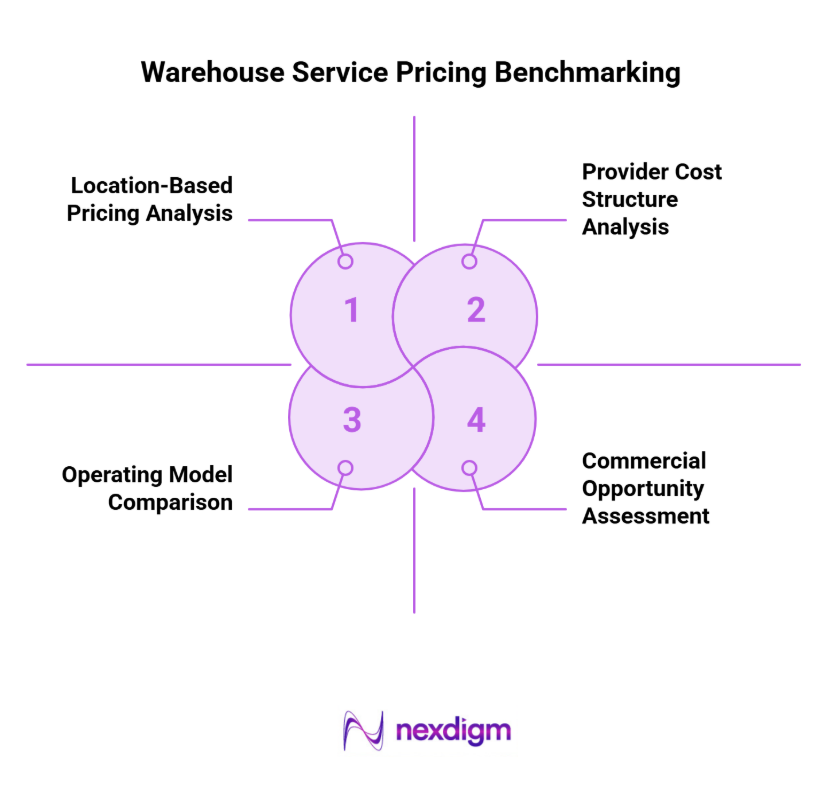
- Location-Based Pricing: Compare warehouse rates across cities and regions to identify cost differences and competitive locations.
- Provider Cost Structures: Assess how service scope, facility specifications, and additional charges influence provider quotations.
- Operating Model Comparison: Evaluate the cost implications of dedicated, shared, and outsourced warehousing arrangements.
- Commercial Opportunities: Identify pricing gaps and areas where supplier negotiations or alternative operating models could improve cost efficiency.
These insights help businesses make informed sourcing decisions, evaluate warehouse partners, and identify opportunities to manage logistics costs more effectively.
How Nexdigm’s Experts Identify Gaps in Warehouse Market Offerings
Beyond comparing prices, Nexdigm’s market research can help businesses understand whether available warehouse services align with their operational requirements. Our assessment can focus on:
- Infrastructure Availability: Identify gaps in modern warehousing facilities, storage capacity, and supporting infrastructure across key markets.
- Service Availability: Understand where specialised handling, inventory management, or value-added warehouse services may be limited.
- Regional Supply Gaps: Assess markets where warehouse availability may not adequately meet business or distribution requirements.
- Emerging Requirements: Track changing customer and industry needs that could influence future warehouse demand.
By connecting these findings with warehouse service price benchmarking, Nexdigm can help businesses identify underserved markets, assess potential sourcing opportunities, and plan their warehouse networks more effectively.
Where Nexdigm’s Warehouse Research Adds Strategic Value
Nexdigm’s market intelligence can help businesses look beyond immediate rental costs and understand the commercial factors influencing warehouse decisions. Our research supports organizations in the following areas:
- Hidden Cost Identification: Examine additional charges related to handling, utilities, labor, maintenance, and other warehouse services.
- Capacity Utilization Insights: Assess whether available storage capacity and facility configurations align with business requirements.
- Price-to-Service Evaluation: Compare the value offered by providers based on pricing, infrastructure, service scope, and operational capabilities.
- Procurement Opportunity Mapping: Identify areas where alternative providers, locations, or contract structures may offer better commercial terms.
These insights help businesses connect warehouse pricing with operational value and develop more informed procurement strategies.
Nexdigm’s Case
A retail company planning to expand its distribution network wanted to compare warehouse costs across multiple locations. Nexdigm’s assessment examined regional pricing, facility capabilities, service offerings, and operating models. The analysis identified opportunities for 12% potential cost optimization and improved alignment between warehouse capacity and distribution requirements.
To take the next step, simply visit our Request a Consultation page and share your requirements with us.
Harsh Mittal
+91-8422857704