

Wealth management fee pricing analysis helps advisory firms evaluate how asset-based, fixed, hourly, performance-linked, and subscription models influence affluent client acquisition, retention, trust, and profitability. Through Pricing Analysis, wealth managers can compare competitor fees, relationship value, and cost-to-serve across segments.
Such strategic insights support transparent fee structures, differentiated advisory propositions, stronger revenue quality, and improved client outcomes. A disciplined approach also enables firms to align pricing with regulatory expectations, digital capabilities, personalized advice, and sustainable growth across evolving wealth markets globally and successfully.
A Recent Report of 2026 found global high-net-worth wealth rose 8.7% to $98.3 trillion, while the HNWI population increased 7.9% to 25.3 million in 2025, creating positive opportunities for differentiated advisory models, transparent fees, and value-based pricing strategies worldwide and globally.
Value-Based Pricing Analysis for Affluent Wealth Management Clients
Value-based pricing analysis helps wealth managers align advisory fees with client complexity, service quality, perceived value, and outcomes, strengthening trust, differentiation, retention, profitability, and sustainable affluent client relationships globally and effectively. Advantages of wealth management pricing analysis are:
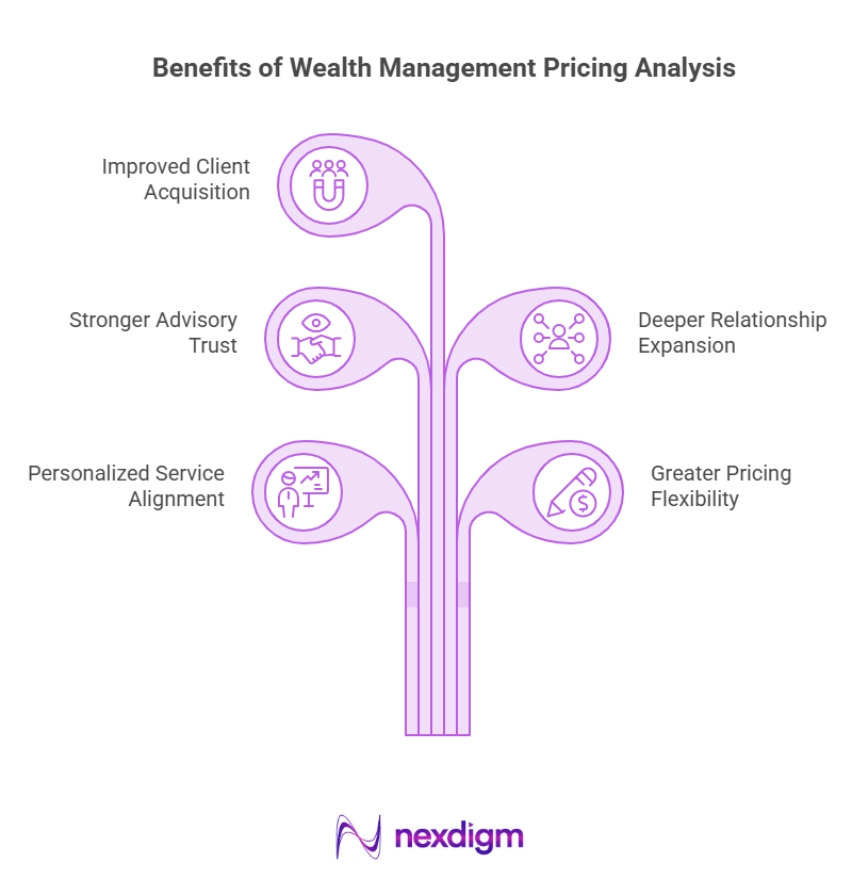
- Personalized Service Alignment: Match advisory fees with customized investment planning, report frequency, specialist access, and relationship support, increasing perceived fairness and client satisfaction.
- Greater Pricing Flexibility: Enable firms to adjust fee structures according to client complexity, engagement preferences, portfolio requirements, and changing expectations across affluent market segments.
- Stronger Advisory Trust: Connect pricing directly with clearly defined services and outcomes, helping affluent clients understand value and strengthening confidence in long-term advisory relationships.
- Deeper Relationship Expansion: Encourage broader use of investment, tax, estate, retirement, and succession services by demonstrating the additional value delivered across the client relationship.
- Improved Client Acquisition: Create differentiated and transparent pricing propositions that attract affluent clients seeking personalized advice, measurable value, and greater flexibility than standardized advisory models.
Nexdigm’s Strategic Pricing Assistance for Differentiated Wealth Advisory Models
Nexdigm helps wealth management firms design differentiated advisory models through advanced Pricing Analysis, wealth management fee pricing analysis, customer segmentation, and competitive benchmarking. Its strategic pricing services combine value-based pricing, profitability assessment, fee optimization, and pricing intelligence to align advisory fees with client expectations and service complexity. By leveraging data-driven pricing analytics and market insights, Nexdigm enables stronger client retention, transparent fee structures, improved profitability, and sustainable growth across affluent wealth management segments.
Nexdigm’s End-to-End Pricing Analysis Model for Wealth Management Firms
Nexdigm’s end-to-end pricing analysis model helps wealth management firms evaluate fees, client value, service complexity, profitability, and market dynamics, enabling continuous optimization in the following areas:
- Client Value Segmentation: Segment clients by wealth, needs, complexity, engagement, and willingness to pay, enabling differentiated pricing aligned with relationship value and service expectations.
- Advisory Fee Benchmarking: Compare asset-based, fixed, hourly, subscription, and performance-linked fees against competitors, improving market positioning, transparency, and pricing confidence across affluent segments.
- Service Complexity Assessment: Evaluate advisory effort, specialist involvement, reporting demands, regulatory requirements, and customization needs to align fees with actual delivery costs and client value.
- Profitability and Cost-to-Serve Analysis: Measure revenue, advisor time, technology usage, servicing costs, and relationship potential, helping firms protect margins while maintaining competitive and equitable pricing.
Nexdigm’s Case
Nexdigm supported a financial institution in benchmarking fee structures, customer preferences, and competitor pricing to strengthen value-based pricing decisions. The engagement reduced customer churn by 18%, increased satisfaction by 25%, and improved retention by 15% within six months, demonstrating stronger pricing transparency, client loyalty, competitiveness, and sustainable commercial performance.
To take the next step, simply visit our Request a Consultation page and share your requirements with us.
Harsh Mittal
+91-8422857704