

 Download PDF
 Download PDF
Market overview
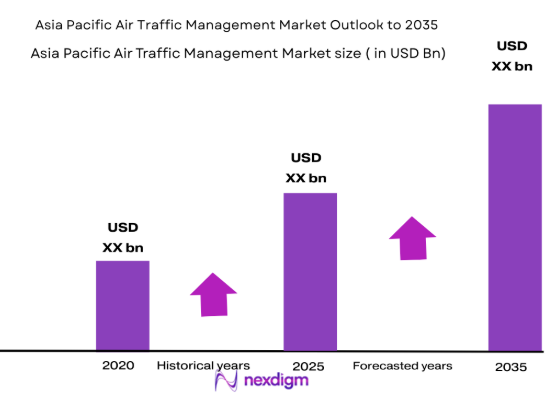
The Asia Pacific air traffic management market has experienced substantial growth, driven by the expansion of air traffic and the increasing need for efficient and safe management systems. Based on recent historical assessments, the market is valued in billions ~ USD, underpinned by increasing air traffic volumes, government investments in modernizing airport infrastructure, and the rising demand for advanced systems that enhance safety and operational efficiency.
Countries such as China, India, Japan, and South Korea are pivotal in the market’s expansion due to their high levels of air traffic and ongoing infrastructure developments. These regions dominate as they continually invest in next-generation air traffic management solutions and enhance their existing systems to accommodate growing air travel demands. The demand for integrated systems in these countries is mainly driven by their large population base, rapid urbanization, and growing airline fleets.
Market Segmentation
By Product Type
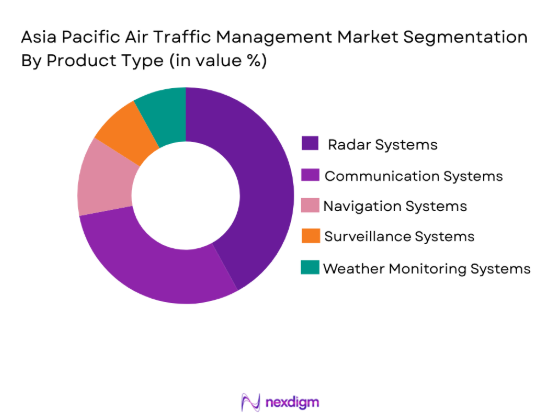
The Asia Pacific air traffic management market is segmented by product type into various sub-segments. Recently, radar systems have dominated the market share, driven by their ability to provide real-time, long-range tracking of aircraft in both controlled and uncontrolled airspace. Radar systems are essential for ensuring airspace safety, especially in regions with dense air traffic. Additionally, advancements in radar technology, such as the development of dual-frequency radar systems and integration with satellite-based technologies, further solidify their dominance.
By Platform Type
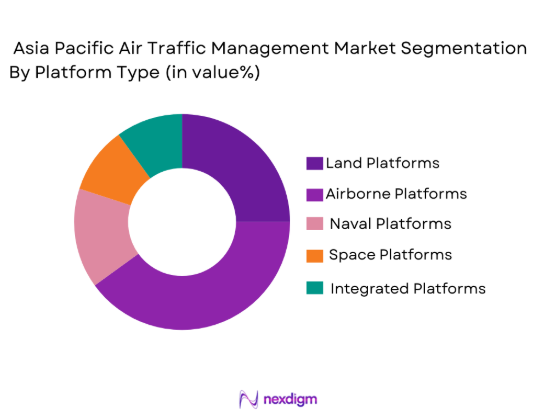
The Asia Pacific air traffic management market is segmented by platform type into various sub-segments. Airborne platforms currently dominate the market share due to the increasing number of aircraft and the need for advanced air traffic management systems to monitor and control air traffic at higher altitudes. With the rapid expansion of airline fleets, particularly in countries like China and India, the demand for efficient airborne management systems has grown substantially. These platforms are essential for the safe and efficient movement of aircraft, and as air traffic increases in this region, airborne systems will continue to play a crucial role in managing the flow of air traffic in both commercial and military sectors.
Competitive Landscape
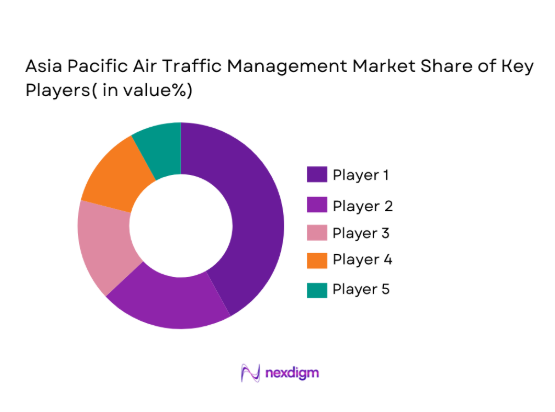
The competitive landscape of the Asia Pacific air traffic management market is marked by a strong presence of both global and regional players. The market is experiencing a period of consolidation, with key players acquiring smaller firms to strengthen their technological capabilities and extend their market reach. These developments ensure enhanced competition and innovation, particularly in the areas of automation and radar technologies.
|
Company Name |
Establishment Year | Headquarters | Technology Focus | Market Reach | Key Products | Revenue (USD) | Innovation Focus |
| Thales Group | 2000 | France | ~ | ~ | ~ | ~ | ~ |
| Lockheed Martin | 1912 | USA | ~ | ~ | ~ | ~ | ~ |
| Raytheon Technologies | 1993 | USA | ~ | ~ | ~ | ~ | ~ |
| Indra Sistemas | 1993 | Spain | ~ | ~ | ~ | ~ | ~ |
| Honeywell | 1906 | USA | ~ | ~ | ~ | ~ | ~ |
Asia Pacific Air Traffic Management Market Analysis
Growth Drivers
Technological Advancements in Air Traffic Management Systems
The ongoing development and integration of advanced technologies such as artificial intelligence, machine learning, and automation into air traffic management systems is driving the market’s growth. These innovations enable more efficient and accurate management of air traffic, particularly in busy airspace, reducing delays and ensuring better safety. AI-powered systems optimize flight routes, reducing fuel consumption and operational costs. With automation playing an increasingly crucial role, air traffic controllers can focus on strategic decision-making while allowing automated systems to handle routine operations. This transition to advanced technologies is increasingly supported by governments and aviation regulators, who are encouraging modernization to meet the rising demand for air travel. As nations in the Asia Pacific region invest heavily in their air traffic management infrastructure, the market is expected to expand further, driving operational efficiencies across the aviation industry. Furthermore, these technologies are central to managing increasingly complex flight schedules as passenger demand surges.
Government Investments in Air Traffic Infrastructure
Another significant growth driver in the Asia Pacific air traffic management market is the substantial investment in air traffic infrastructure by governments. Countries like China, India, and Japan have initiated various projects aimed at modernizing their air traffic control systems. These investments are essential for enhancing capacity, safety, and operational efficiency. Governmental support is also bolstered by the increasing recognition of the air traffic sector’s role in fostering economic growth and enabling smoother air travel across densely populated regions. With the region’s rapid urbanization and expansion of air traffic networks, governments are prioritizing investments to build new air traffic management centers and upgrade existing systems. These investments ensure that airports can handle higher air traffic volumes and ensure greater efficiency, laying a foundation for sustained market growth. Additionally, government collaborations with private sector technology firms are accelerating the pace of development, with integrated solutions being adopted in the air traffic management sector.
Market Challenges
High Capital Expenditure for Infrastructure Development
One of the most prominent challenges faced by the Asia Pacific air traffic management market is the high capital expenditure associated with infrastructure development and system upgrades. Modernizing air traffic management systems requires significant financial investments, particularly for radar systems, communication technologies, and automation infrastructure. These systems are complex, requiring sophisticated technology and specialized personnel to install, maintain, and operate. For governments and private companies, the challenge lies in balancing the demand for increased capacity with the costs involved in developing state-of-the-art systems. As air traffic continues to grow, these capital-intensive projects must be financed without sacrificing the quality or safety of the systems. Moreover, funding these advancements may lead to financial strain on both government budgets and the private sector, making it a significant hurdle in fully modernizing the region’s air traffic management network. Regulatory bodies also play a role, as they impose strict compliance requirements, increasing the costs of development. These barriers present challenges in terms of investment planning and resource allocation, particularly in less developed or emerging markets where resources may be limited.
Technological Integration and Standardization Issues
Another challenge faced by the Asia Pacific air traffic management market is the difficulty in integrating new technologies into existing systems and achieving standardization across different countries and regions. Air traffic management systems are often fragmented, with different nations adopting various technologies and standards that may not be fully compatible. This lack of standardization complicates cross-border operations and reduces the potential for seamless data sharing and coordination between countries. Additionally, the complexity of integrating automated systems with older infrastructure creates operational inefficiencies. Many regions are still reliant on legacy systems, which lack the interoperability required for next-generation air traffic management technologies. This technological divide between new and old systems hampers the effectiveness of air traffic management strategies and increases the risk of system failure or delays. To address these issues, the market needs standardized global frameworks and cooperative efforts to integrate cutting-edge technologies across borders. The integration of new technologies such as AI and machine learning also requires rigorous testing, regulatory compliance, and retraining of personnel, which can lead to delays and added costs.
Opportunities
Expansion of Smart Airports and Digitalization
The ongoing trend toward smart airports and the digitalization of airport operations presents significant opportunities for the Asia Pacific air traffic management market. As the region continues to see a rise in passenger numbers and air traffic, the need for smarter, more efficient systems has never been greater. Digital technologies such as advanced sensors, AI-driven analytics, and IoT-enabled devices are being deployed to automate routine tasks, monitor air traffic in real-time, and provide better predictive capabilities. This transition to smart airport solutions creates new opportunities for air traffic management companies to supply innovative, cutting-edge technologies that can improve operational efficiency, reduce delays, and enhance safety. Moreover, smart airports offer the chance to integrate various air traffic management systems with other infrastructure, improving communication between air traffic control centers, airlines, and ground operations. These advancements will allow for real-time, data-driven decision-making, further enhancing the passenger experience and driving growth in the air traffic management sector. As airports across the Asia Pacific region upgrade to meet modern demands, the market for these integrated solutions is expected to expand rapidly, presenting profitable growth avenues for players in the air traffic management market.
Growth of Regional Connectivity and Expansion of Air Routes
Another significant opportunity in the Asia Pacific air traffic management market is the growth of regional connectivity and the expansion of air routes. Many countries within the Asia Pacific region are experiencing rapid economic development, leading to increased travel demand both domestically and internationally. Airlines are launching new routes to cater to the growing population and the rising middle class, which is contributing to the increased demand for air traffic management services. Governments are also prioritizing investments in regional connectivity, developing infrastructure to support the growing demand for both passenger and cargo flights. As air traffic increases, air traffic management systems will need to adapt to accommodate higher traffic volumes, offering opportunities for advanced solutions such as automated air traffic control systems, real-time monitoring, and data-driven decision-making platforms. The expansion of regional connectivity in the Asia Pacific market is expected to create a favorable environment for market players to offer innovative solutions and services that improve the overall efficiency and safety of air traffic operations. This continued growth in regional air traffic will drive further market opportunities for air traffic management technology providers.
Future Outlook
The future of the Asia Pacific air traffic management market is expected to see continued growth and innovation, fueled by advancements in technology, increasing investments in infrastructure, and rising air traffic demand. Over the next five years, technological developments in automation, AI, and machine learning are likely to play a pivotal role in transforming the way air traffic is managed. Additionally, government initiatives to enhance airspace management efficiency will contribute to the expansion of modern air traffic control systems. As more countries within the region invest in upgrading and expanding their air traffic management infrastructure, the market will continue to experience significant growth, providing numerous opportunities for innovation and collaboration across the aviation sector.
Major Players
- Thales Group
- Lockheed Martin
- Raytheon Technologies
- Indra Sistemas
- Honeywell
- Northrop Grumman
- Leonardo
- SITA
- Harris Corporation
- AT&T
- Saab Group
- L3 Technologies
- Airmap
- Frequentis
- Advanced Navigation Systems
Key Target Audience
- Investments and venture capitalist firms
- Government and regulatory bodies
- Air traffic management solution providers
- Airports and aviation operators
- Airlines and flight operators
- Aviation consulting firms
- Aircraftmanufacturers
- Aerospace engineering firms
Research Methodology
Step 1: Identification of Key Variables
The key variables for this research are identified through a comprehensive market analysis, focusing on key technologies, market drivers, and regional developments.
Step 2: Market Analysis and Construction
The market is constructed by analyzing primary and secondary data, examining the role of each variable, and building market forecasts based on historical trends and expert opinions.
Step 3: Hypothesis Validation and Expert Consultation
Hypotheses are validated through expert interviews, industry surveys, and discussions with market stakeholders to ensure the accuracy of assumptions and forecasts.
Step 4: Research Synthesis and Final Output
The research is synthesized into a final output by integrating all data, trends, and expert feedback into a coherent market analysis, providing actionable insights.

- Executive Summary
- Research Methodology (Definitions, Scope, Industry Assumptions, Market Sizing Approach, Primary & Secondary Research Framework, Data Collection & Verification Protocol, Analytic Models & Forecast Methodology, Limitations & Research Validity Checks)

- Market Definition and Scope
- Value Chain & Stakeholder Ecosystem
- Regulatory / Certification Landscape
- Sector Dynamics Affecting Demand
- Strategic Initiatives & Infrastructure Growth

- Growth Drivers
Technological Advancements in Air Traffic Management Systems
Government Investments in Air Traffic Infrastructure
Rising Air Traffic Demand in Asia Pacific
Integration of AI and Machine Learning in Air Traffic Management
Development of Smart Airports and Integrated Systems\ - Market Challenges
High Capital Expenditure for Infrastructure Development
Technological Integration and Standardization Issues
Regulatory and Compliance Barriers
Cybersecurity Threats in Air Traffic Systems
Operational Challenges in Emerging Markets - Market Opportunities
Expansion of Regional Air Routes
Growth of Smart Airports and Digitalization
Collaboration Between Government and Private Sector - Trends
Increased Adoption of AI and Automation
Growth in Regional Connectivity
Rise in Air Traffic Management Outsourcing
Implementation of Remote Tower Systems
Integration of IoT in Air Traffic Management - Government Regulations & Defense Policy
Data Protection and Privacy Regulations
Export Control and Compliance Policies
Government Funding and Grants for Air Traffic Technologies - SWOT Analysis
- Stakeholder and Ecosystem Analysis
- Porter’s Five Forces Analysis
- Competition Intensity and Ecosystem Mapping

- By Market Value, 2020-2025
- By Installed Units, 2020-2025
- By Average System Price, 2020-2025
- By System Complexity Tier, 2020-2025

- By System Type (In Value%)
Radar Systems
Communication Systems
Navigation Systems
Surveillance Systems
Weather Monitoring Systems - By Platform Type (In Value%)
Land Platforms
Airborne Platforms
Naval Platforms
Space Platforms
Integrated Platforms - By Fitment Type (In Value%)
On-premise Solutions
Cloud-based Solutions
Hybrid Solutions
Modular Solutions
Integrated Solutions - By EndUser Segment (In Value%)
Airlines
Airports
Air Traffic Control Authorities
Government & Regulatory Bodies
Private Aviation Operators - By Procurement Channel (In Value%)
Direct Procurement
Government Tenders
Private Sector Procurement
Online Bidding Platforms
Third-party Distributors - By Material / Technology (in Value%)
Automation Technology
Communication Technology
Radar Technology
Navigation Technology
Weather Technology

- Market share snapshot of major players
- Cross Comparison Parameters (Radar Systems, Communication Systems, Navigation Systems, Weather Systems, Fitment Solutions, Procurement Channels, Technology Adoption, Regulatory Compliance)
- SWOT Analysis of Key Competitors
- Pricing & Procurement Analysis
- Key Players
Thales Group
Lockheed Martin
Raytheon Technologies
Indra Sistemas
Honeywell
Northrop Grumman
Leonardo
SITA
Harris Corporation
AT&T
Saab Group
L3 Technologies
Airmap
Frequentis
Advanced Navigation Systems

- Airlines’ Increasing Demand for Efficient Traffic Management
- Airports’ Focus on Improving Passenger Experience and Safety
- Government Authorities’ Role in Regulating Air Traffic Systems
- Private Operators’ Interest in Cost-Effective Management Solutions

- Forecast Market Value, 2026-2035
- Forecast Installed Units, 2026-2035
- Price Forecast by System Tier, 2026-2035
- Future Demand by Platform, 2026-2035


 Request a Sample
 Ask for Customization
 Get a Quote
 Enquire Now